Quick Answer
Yes, for many children, chew pendants can help with focus and self-regulation by providing safe oral sensory input that meets a real need without disrupting others. They tend to work best as one part of a broader sensory plan, not as a standalone fix. If your child already seeks out chewing on shirts, pencils, or nails, a chew pendant is a practical swap that redirects that urge to a safer tool.
If your child chews on their sleeve during circle time, gnaws pencil ends during homework, or bites their nails when frustrated, you've probably wondered whether a chew pendant could actually help them settle and concentrate. The short answer is that it can, but understanding why it works matters more than the pendant itself.
This FAQ walks through what oral sensory input does, when a chew pendant genuinely supports focus and self-regulation, and how to introduce one without turning it into a distraction. Every answer is short and standalone, so you can jump to the question that fits your situation.
How does oral sensory input actually support focus?
Chewing provides deep pressure and proprioceptive feedback through the jaw, which many occupational therapists describe as organizing input for the nervous system. For a child whose body is seeking that input, chewing can temporarily satisfy the urge and free up attention that was previously going toward managing restlessness. That's the core of the oral sensory input benefits parents hear about: the sensory need gets met, so the child has more capacity to engage with what's in front of them.
It's important to frame this honestly. A chew pendant doesn't create focus out of nowhere, and it isn't a treatment for ADHD or any diagnosis. What it does is give a child a safe, socially acceptable way to meet a sensory need that would otherwise be met by chewing clothing, pens, or fingers, which are less hygienic and often get them in trouble at school.
- Watch for chewing that spikes during transitions, homework, or waiting periods; those are the moments oral input tends to help most.
- Pair the pendant with movement breaks or a fidget option if your child needs more than one sensory outlet.
Which kids tend to benefit most from a chew pendant?
Children who already chew on non-food items are the clearest candidates. If you're constantly saying 'take that out of your mouth,' a chew pendant gives them a designated alternative. Kids who seek oral input when anxious, excited, or overstimulated often settle faster when they have something safe to chew, because the behavior is meeting a need rather than being a bad habit.
Children working on self-regulation with an occupational therapist may also be advised to try one, since pendants are designed to be used independently. That said, a pendant is not the right tool for every child. Some kids find the necklace itself distracting, and some prefer a handheld fidget or a textured teether instead. It's worth trying, but not worth forcing.
- Best fit: kids who chew clothing, pencils, or nails, especially during focused tasks.
- Less ideal: kids who are easily distracted by wearing accessories, or who need heavy movement rather than oral input.
Do chew pendants help with concentration at school or homework?
Many parents report that a chew pendant for concentration works best during seated, quiet tasks like reading, worksheets, or homework, when movement options are limited. The chewing gives the body something to do while the brain engages with the task, which can reduce the fidgeting and off-task behavior that comes from unmet sensory needs. Teachers often notice less pencil-chewing and fewer shirt-collar casualties.
That said, no pendant replaces good instruction, breaks, or a supportive environment. Think of it as a small accommodation that removes one barrier, not a study strategy on its own. If your child's attention struggles are significant, talk with their teacher or pediatrician about a fuller plan.
- Introduce the pendant during a low-stakes task first so it doesn't become a novelty during a test.
- Let teachers know it's a sensory tool, not a toy, so it isn't confiscated.
How is a chew pendant different from a fidget toy for regulation?
Fidget toys primarily engage the hands, while chew pendants engage the mouth and jaw. Both provide sensory input, but they meet different needs. A child who chews their shirt is unlikely to get the same relief from squeezing a putty ball, and a child who needs to keep their hands busy may not care about chewing at all. Some kids benefit from having both options available and choosing based on the moment.
One practical advantage of a pendant is that it stays with the child and doesn't require a table surface, which makes it easier to use in the car, on the couch, or during a sibling's sports practice. The tradeoff is that it's worn around the neck, so safety and fit matter more than they do with a handheld tool.
- Offer both a pendant and a hand fidget for a week and note which one your child reaches for most.
- If your child chews aggressively, look for pendants described as able to withstand strenuous chewing.
What should I look for in a chew pendant for a child who needs to focus?
Safety comes first. Look for food-grade silicone, a BPA-free and non-toxic material, and a breakaway safety clasp that separates under gentle pressure so the necklace can't become a choking hazard. Shape matters too: a pendant with a defined area to chew gives a clearer target than a string of small beads, though both can work depending on your child's preference.
Fit and durability round out the list. The pendant should sit at a comfortable height on the chest, and the material should hold up to repeated chewing without fraying or breaking down. If your child is a heavy chewer, check the product description for language about withstanding strenuous chewing, and inspect the pendant regularly for wear.
- Prioritize a safety clasp over style if you're choosing between two options.
- Replace the pendant at the first sign of cracking, stretching, or a loose clasp.
How do I introduce a chew pendant without it becoming a distraction?
Start at home during a calm activity, not during a test or a big event. Let your child wear it for short periods and model that it's a tool, not a toy. If they ignore it, that's useful information: it may not be the right tool for them right now. If they chew constantly for the first few days, that's common and usually settles as the novelty wears off.
Give it two to three weeks of low-pressure use before deciding whether it helps. Track one or two specific behaviors, like how often they chew their sleeve during homework or how quickly they settle after a frustration, so you're judging based on something concrete rather than a general feeling.
- Keep the first introduction short and positive; don't make it a reward or a punishment.
- If your child refuses it, try a different shape or color before giving up on the idea.
Chew Pendant Focus and Regulation FAQ Cheat Sheet
Does a chew pendant replace therapy or medication?
No. It's a sensory accommodation that can support focus and regulation, not a treatment for ADHD, anxiety, or any diagnosis. Use it alongside professional guidance, not instead of it.
How long until I know if it's helping?
Give it two to three weeks of regular, low-pressure use and track one or two specific behaviors rather than a general impression. If nothing changes after three weeks, consider a different shape or a hand fidget instead.
What's the one safety feature I shouldn't skip?
A breakaway safety clasp that separates under gentle pressure, plus food-grade silicone and a regular wear inspection. Replace the pendant at the first sign of cracking or a loose clasp.
Chew Pendants That Fit a Focus and Regulation Routine
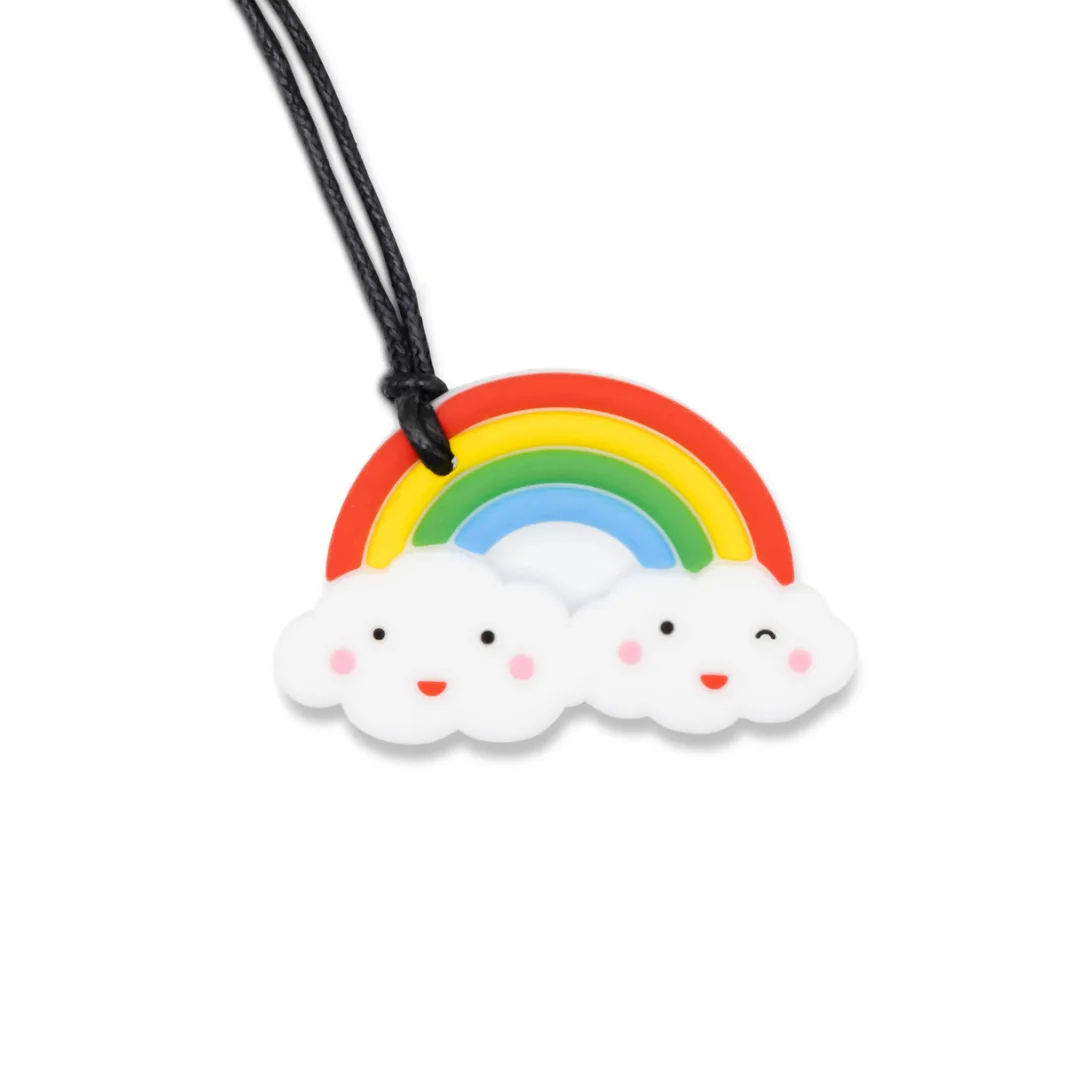
- Rainbow Pendant: Recommended by Occupational Therapists, the rainbow pendant is the ideal tool to help your child self-regulate and self-soothe when big emotions strike. It features a BPA-free, 100% non-toxic food-grade silicone pendant designed to withstand the most strenuous of chews, on a black necklace with a custom-designed safety clasp that separates easily when gently pulled. The safety clasp and durable food-grade silicone make it a practical choice for kids who chew hard and need a pendant that can handle daily use without constant replacement.
- Princess & the Pea Necklace: Comprised of silicone beads of different colours, this necklace doubles as a mobile sensory tool, with each bead made from food-grade silicone that is safe for kids to chew on and redirect their attention from chewing fingers, nails, hair, pencils, and similar items. The multi-bead design gives kids a different chewing target than a single pendant, which can suit children who prefer to mouth along a row of beads rather than one shape.
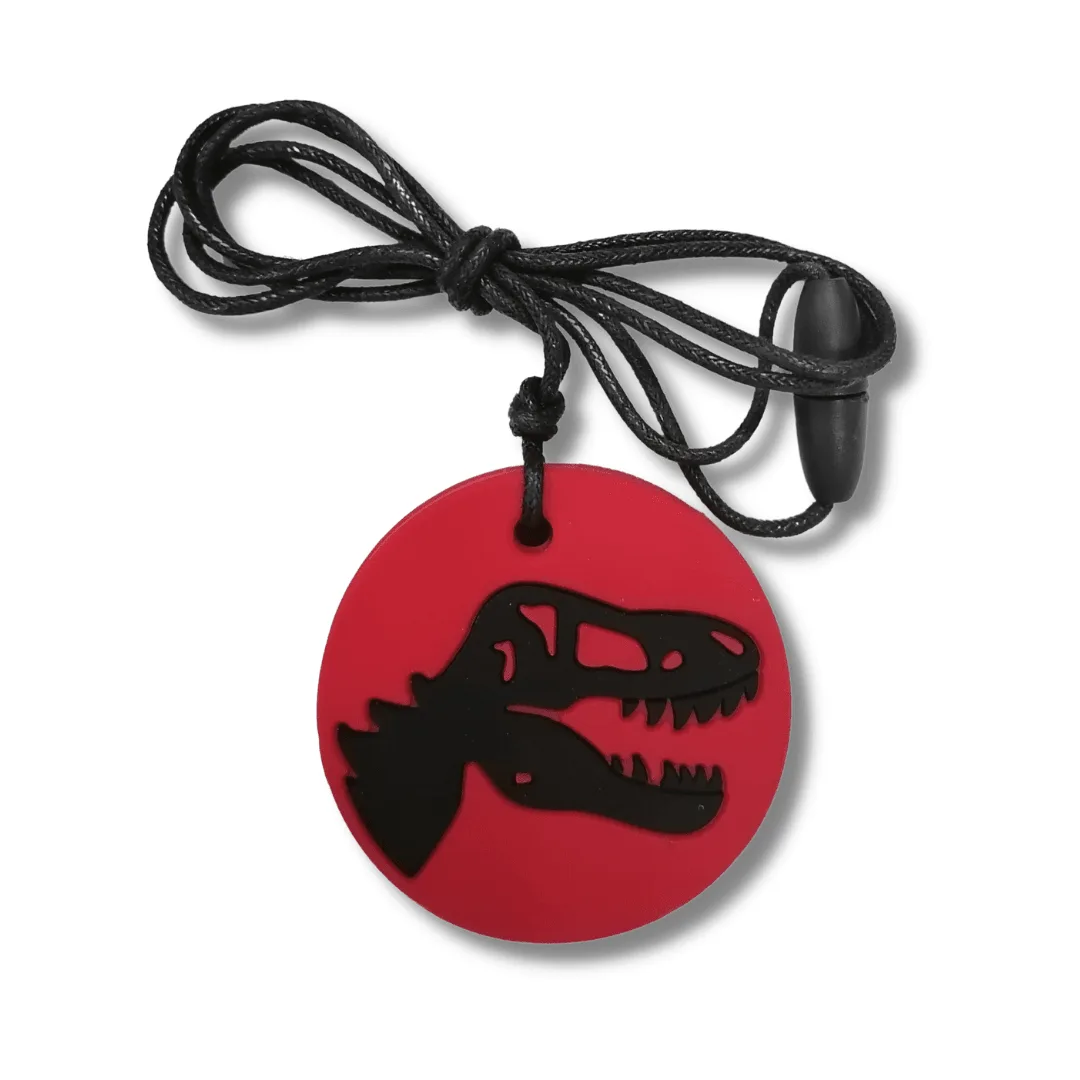
- Dino Pendant: A chew pendant for kids with a love for all things prehistoric, available in a range of favourite colours and recommended by Occupational Therapists as a tool a child can use independently to develop effective control of their nervous system. Interest-led designs like this often make kids more willing to wear and use the pendant consistently, which matters because regulation tools only help when they're actually used.
Chew pendants can genuinely help some children focus and self-regulate by giving them a safe outlet for oral sensory input, especially when chewing on clothing or pencils is already a habit. They work best as one small piece of a larger sensory plan, introduced calmly and judged over a few weeks. If your child is a heavy chewer, start with a durable option like the Rainbow Pendant, and always check the clasp and silicone for wear.