The short answer: boots can stay on, but not by magic
Dog boots stay on when the boot matches each paw's width and the closure is snug. The Weekend Warrior Boots use an adjustable strap that wraps around the boot for a snug fit, and the supplier says to measure the paw at its widest point while your dog is standing. That is the evidence-backed core of the answer.
The rest of this article separates what the supplied product information confirms from what it does not. Where a claim is not supported, we say so rather than filling the gap with guesswork.
Myth 1: 'One size fits all four paws'
- Myth: Owners often assume a single size covers every paw on the same dog.
- What the evidence says: The Weekend Warrior Boots product details state that front paws are often larger than back paws, so each paw should be measured separately. The available sizes are XXS, XS, S, and M, and each package includes two boots, one for the left paw and one for the right.
- Practical takeaway: Measure all four paws while your dog is standing, note the widest point of each paw, and buy boots that match the largest paw in the pair you are covering. If front and back differ, you may need two sizes or two packages.
Myth 2: 'If a boot slips off, the brand is bad'
- Myth: A boot coming off is treated as proof the product is poorly made.
- What the evidence says: The Weekend Warrior Boots secure with an adjustable strap that wraps around the boot for a snug fit. The product information does not claim a universal, slip-proof fit on every paw shape. A loose strap or a paw measured at the wrong point can both cause a boot to come off.
- Practical takeaway: Check the strap tension before every walk and re-measure if a boot keeps rotating or sliding. The supplied information does not include a recommended strap tightness, so use your judgment and watch for rubbing.
What the Weekend Warrior Boots actually claim
-
Weekend Warrior Boots: The boots are quick to slip on and secure with an adjustable strap that wraps around the boot for a snug fit. This is the retention mechanism the product actually documents, so fit checks should focus on the strap and paw measurement.
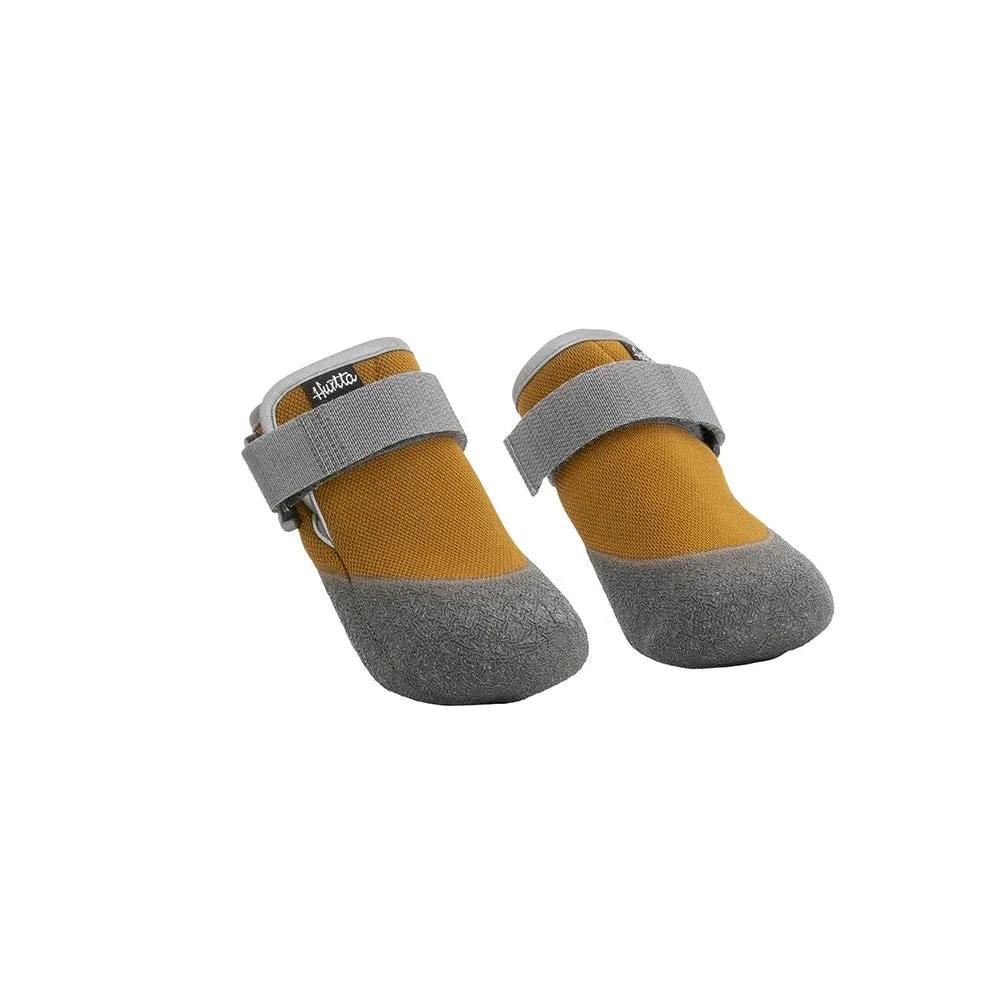
Weekend Warrior Boots
-
Weekend Warrior Boots: Choosing the right size is simple: measure the paw at its widest point while your dog is standing. This is the supplied sizing instruction, and it is the most reliable way to reduce boots falling off.
-
Weekend Warrior Boots: Each package includes two boots, one for the left paw and one for the right. A full set for four paws requires two packages, which affects both cost and how you match sizes.
Myth 3: 'Boots are only for snow'
- Myth: Owners often think dog boots are a winter-only accessory.
- What the evidence says: The Weekend Warrior Boots are described for icy city streets, forest trails with sharp rocks and branches, streets scattered with glass or rough gravel, injured or sore paws, and winter road salt. The neoprene shell and fleece lining are described as weatherproof and warm for any season, but the supplied information does not make a summer heat claim.
- Practical takeaway: These boots are a reasonable choice for winter walks and rough ground, but do not assume they are a cooling product. The supplied record does not confirm breathability or heat performance.
Myth 4: 'Any boot will protect an injured paw'
- Myth: A boot is treated as a substitute for veterinary care.
- What the evidence says: The product information says the boots give protection when a paw needs a little extra care due to an injury. It does not claim to treat, heal, or prevent injury, and it does not give medical guidance.
- Practical takeaway: Use the boot as a cover and support for a sore paw only as your veterinarian advises. The supplied record does not include instructions for wrapping, bandaging, or leaving a boot on for a set time.
Myth 5: 'Grip means you can stop worrying about slipping'
- Myth: A textured sole is read as a guarantee against slips.
- What the evidence says: The Weekend Warrior Boots have a flexible, soft rubber sole with a textured surface that provides a reliable grip on slippery ground. The supplied information does not promise injury prevention or universal traction on every surface.
- Practical takeaway: Treat grip as one useful feature, not a safety guarantee. Check the sole for wear and keep the strap snug, since a loose boot can reduce stability.
How to keep dog boots on: a fit routine that follows the evidence
- Measure each paw standing: Measure the widest point of each paw while your dog is standing, following the supplied sizing instruction.
- Match the size to the largest paw in the pair: Because front paws are often larger than back paws, do not assume one size fits all four.
- Slip on and tighten the strap: The boots are quick to slip on and secure with an adjustable strap that wraps around the boot.
- Do a short test walk: Watch for rotation, slipping, or rubbing. The supplied information does not give a break-in period, so start with short walks and check paws afterward.
- Recheck before each outing: Strap tension can change with movement. Recheck the fit before winter walks, hikes, or rough-ground outings.
What the supplied information does not settle
The Weekend Warrior Boots record does not include a size chart with paw-width ranges, a recommended strap tightness, a break-in period, or care instructions. It also does not confirm waterproofing beyond the weatherproof neoprene shell description, and it does not state how long a boot can be worn.
That matters for myth-busting because it limits what anyone can honestly promise. If a boot keeps coming off after you have measured each paw and tightened the strap, the supplied evidence does not identify a single fix. You may need a different size, a different pair for that paw shape, or advice from the retailer.
The honest bottom line on dog boots falling off
Do dog boots stay on? Often, yes, when the paw is measured correctly and the adjustable strap is snug. The Weekend Warrior Boots give you a documented retention method and a clear sizing instruction, but they do not come with a guarantee against every escape artist.
Use the myths above as a checklist: measure each paw, expect front and back to differ, recheck the strap, and treat grip and protection as practical features rather than absolute promises. That is a more useful standard than any blanket claim that boots never fall off.