Quick answer
Most dogs should wear a lightweight collar with current ID tags all day, and a harness for walks, hikes, and any activity where pulling could strain the neck. The two are not competing tools: the collar carries identification, while the harness handles leash pressure. Keep the collar snug enough that it cannot slip over the head, and never leave a harness on a crated or unsupervised dog.
What each piece of gear actually does
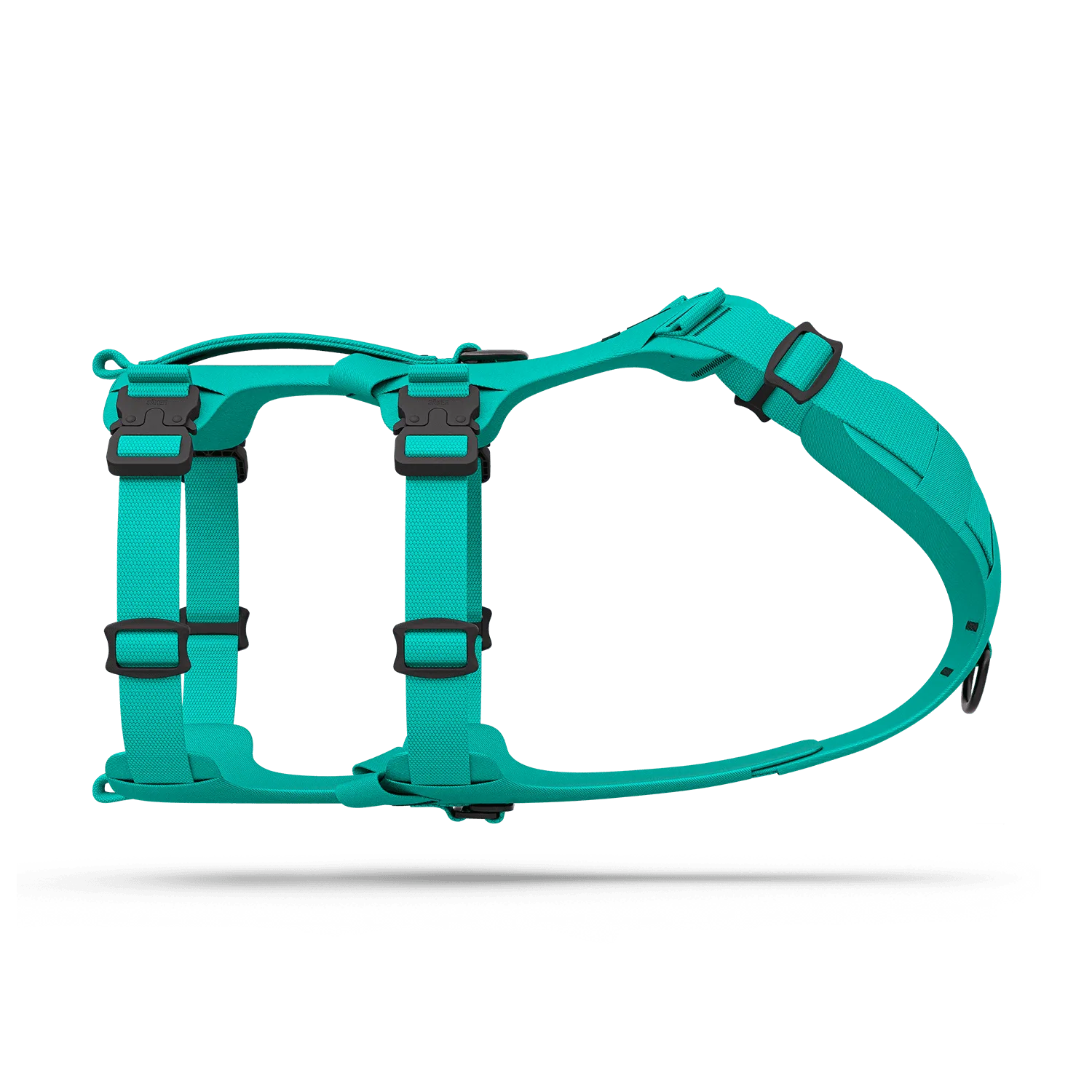
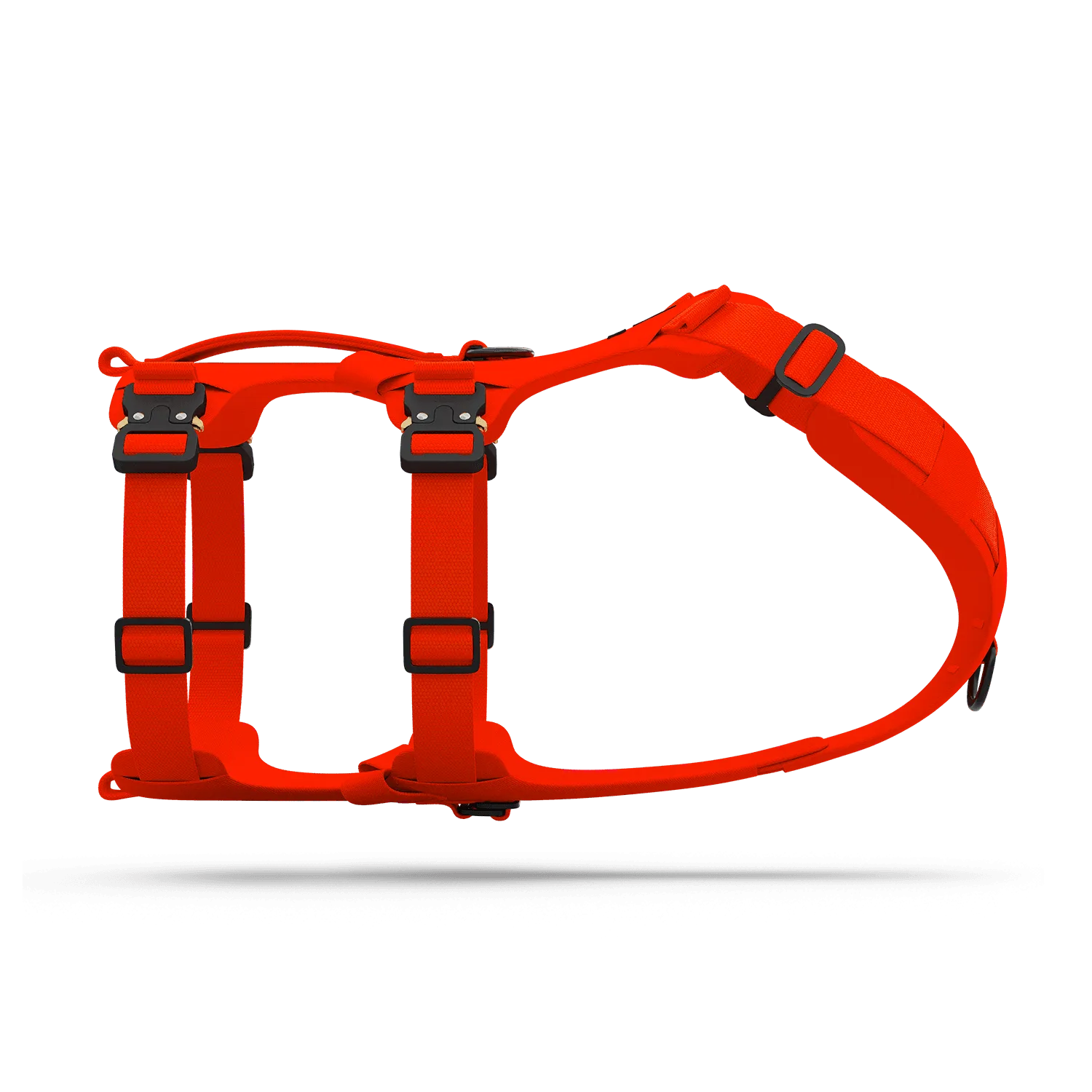
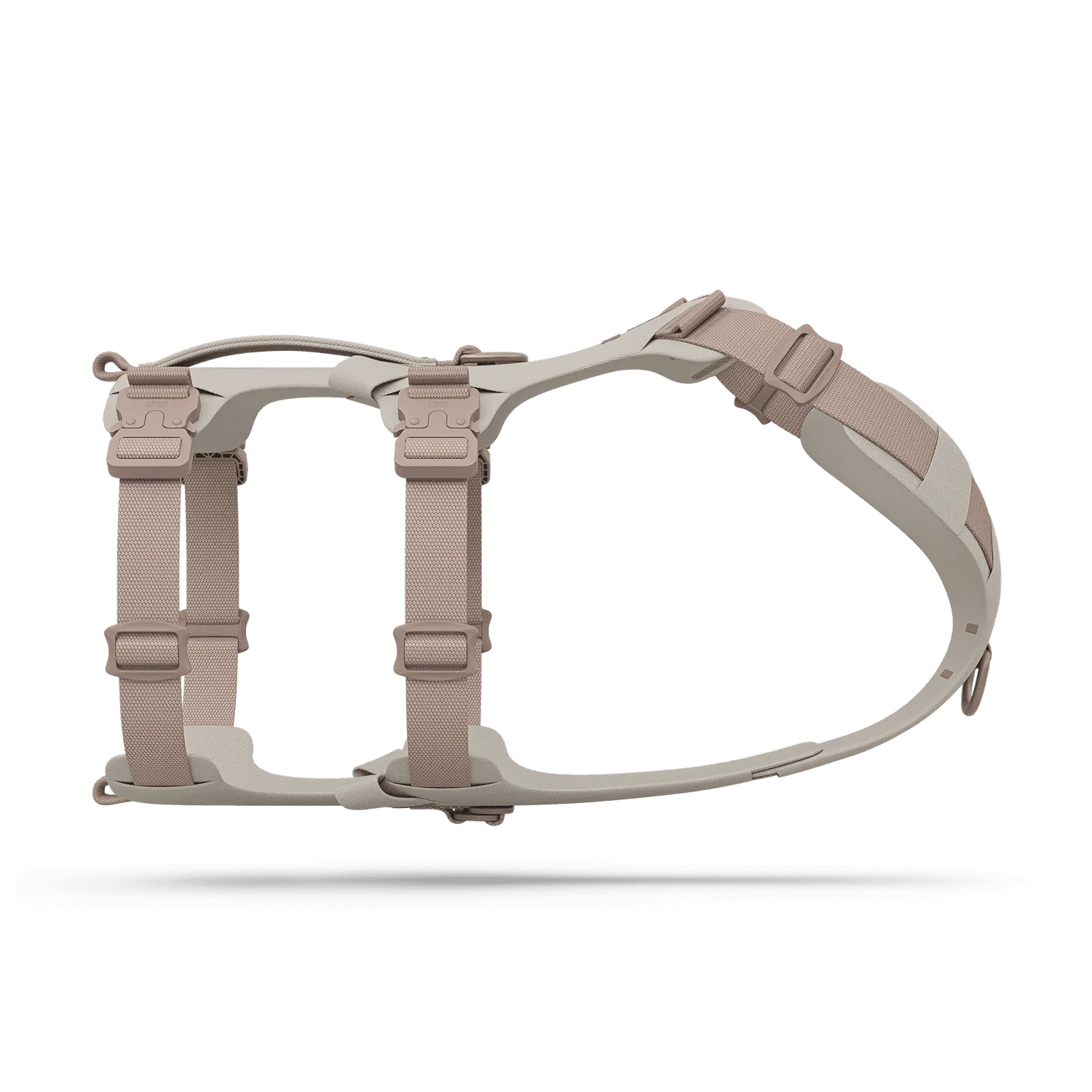
A collar is an identification carrier first. It holds a tag or an AirTag holder so a finder can reach you fast if your dog slips out a door or gate. A harness is a walking tool: it spreads leash pressure across the chest and shoulders instead of the throat, which matters most for dogs who pull, have a history of neck or trachea sensitivity, or are still learning loose-leash skills.
That division of labor is why a dog collar and harness combo is common rather than redundant. You are not choosing one job over the other; you are matching the tool to the task. If your dog only ever walks calmly on a loose leash, a collar alone may be enough for short neighborhood loops. If there is any pulling, lunging, or long-line work, the harness should take the load.
Should my dog wear a collar indoors?
Yes, in most households, because the highest-risk escape moments are ordinary ones: a delivery driver opens the gate, a guest leaves the door ajar, a storm spooks the dog. A collar with visible ID is the fastest way for a stranger to identify and contact you. The exception is multi-dog homes where rough play leads to mouthing at collars, or dogs who are crated, since a collar can catch on crate bars.
If your dog is crated during the day, use a breakaway collar or remove the collar for crate time. Keep the tag quiet with a silicone silencer if the jingle bothers you at night. The goal is a collar your dog forgets about, not one you take off and then forget to put back on before the next door-opening moment.
When to use collar vs harness on a walk
Use the harness as your primary attachment point whenever the walk involves a leash that could go tight. That includes training sessions, busy sidewalks, vet visits, and any dog who has ever bolted. Use the collar as a backup attachment or for quick bathroom breaks in a fenced yard where the leash stays slack.
A common setup is a harness as the main leash point plus a collar carrying ID and a tracker. Some owners also clip a second leash to the collar as a safety backup, but only if the collar is fitted well enough that it cannot slip off if the harness fails. If you use a double-ended leash, check both connection points before every walk.
Adding an AirTag or ID holder to the setup
A harness with an ID tag holder keeps identification on the walking gear, which is useful if your dog is ever walked by someone else or if the collar comes off. The tradeoff is that a harness is usually removed indoors, so an ID holder on the harness alone does not cover the door-dash scenario. The practical answer is ID on the collar, and a tracker or secondary tag on the harness or collar.
If you use an AirTag, remember that it is a Bluetooth tracker, not a GPS device, and it relies on nearby Apple devices to relay its location. It also needs to be protected from water, mud, and impact, which is where a dedicated holder matters more than the tracker itself. Apple's AirTag is sold separately from any holder.
Quick answers to the setup questions owners ask most
Do I really need both a collar and a harness?
For most dogs, yes: the collar carries ID at all times, and the harness handles leash pressure on walks. A dog who never pulls and lives in a securely fenced home can get by with a collar alone for short breaks. Default to both; drop the harness only if walks are reliably slack-leash.
Can I leave the harness on all day instead of a collar?
No. Harnesses are not designed for continuous wear, and straps can rub or catch during play and crating. Use the harness for activity and take it off afterward. Harness on for walks, off for rest.
Where should the ID tag go if my dog wears both?
Put ID on the collar so it stays on indoors, and add a tracker or second tag to the harness if you want redundancy on walks. Check that any holder does not dangle low enough to catch a paw. Collar for ID, harness for tracking and leash attachment.
How tight should the collar be?
Snug enough that it will not slide over the head if your dog backs up, but loose enough to fit two fingers flat under the strap. Recheck fit after a bath or a groom, when fur volume changes. If it can clear the head, it is too loose.
Does my dog legally need a collar?
Identification rules vary by country, state, and city, and many areas require a current license or rabies tag. Check your local ordinance rather than relying on a general rule. Confirm local requirements and keep tags current.
Gear that fits this setup
- Shield™ Airtag Holder: The Shield AirTag Holder has a backplate for attaching to straps and pierce-through screws for fixing it to other surfaces, and it is waterproof and shockproof. The AirTag is not included. The screw-through mounting means you are not limited to a collar loop: you can fix it to a harness strap, a crate, or a travel bag so the tracker stays with the gear you actually use.
- Rodeo™ AirTag Holder: The Rodeo AirTag Holder is designed to protect an AirTag from outdoor hazards, and the AirTag is not included. A good match if you want the tracker on the walking setup and your dog regularly swims, rolls, or crashes through brush.
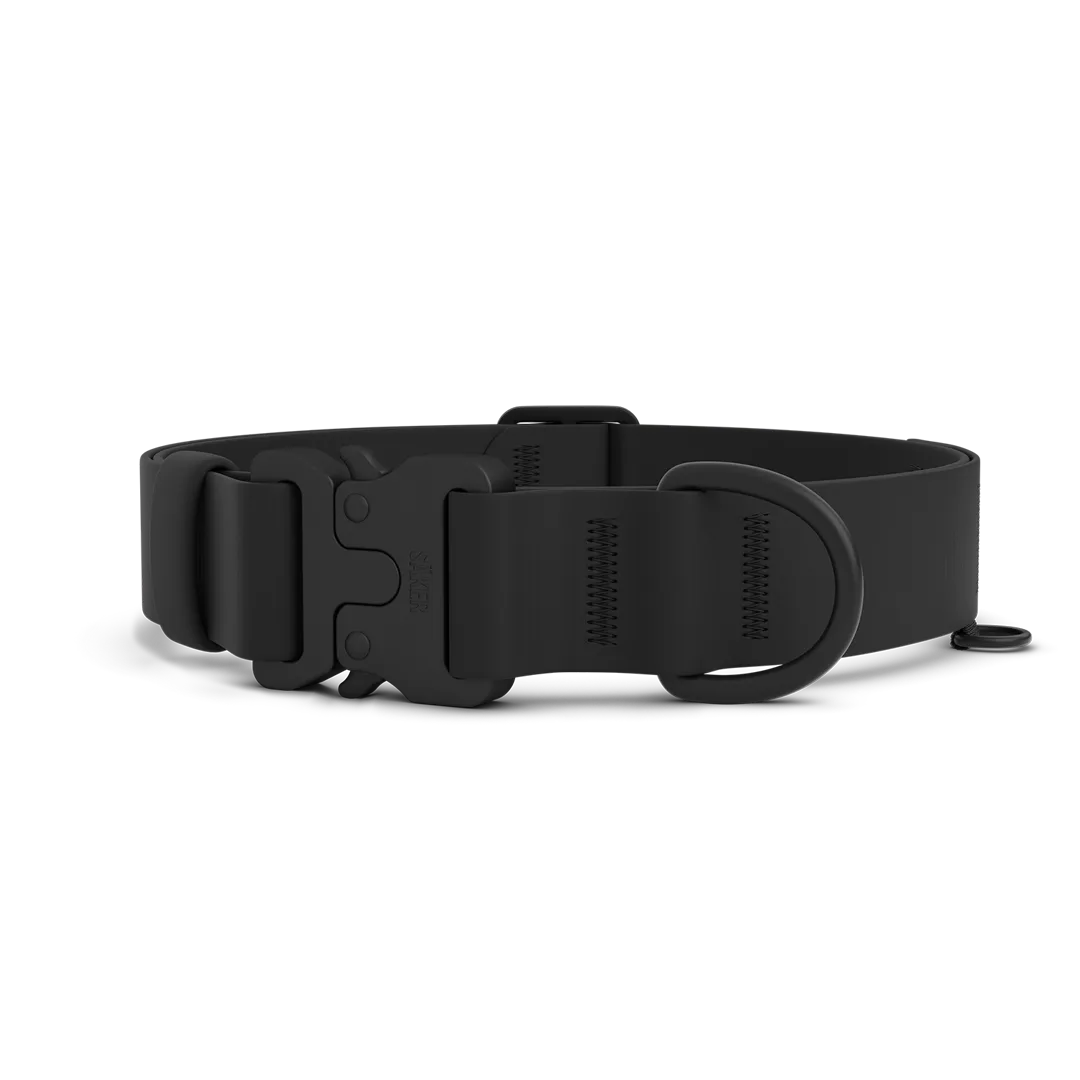
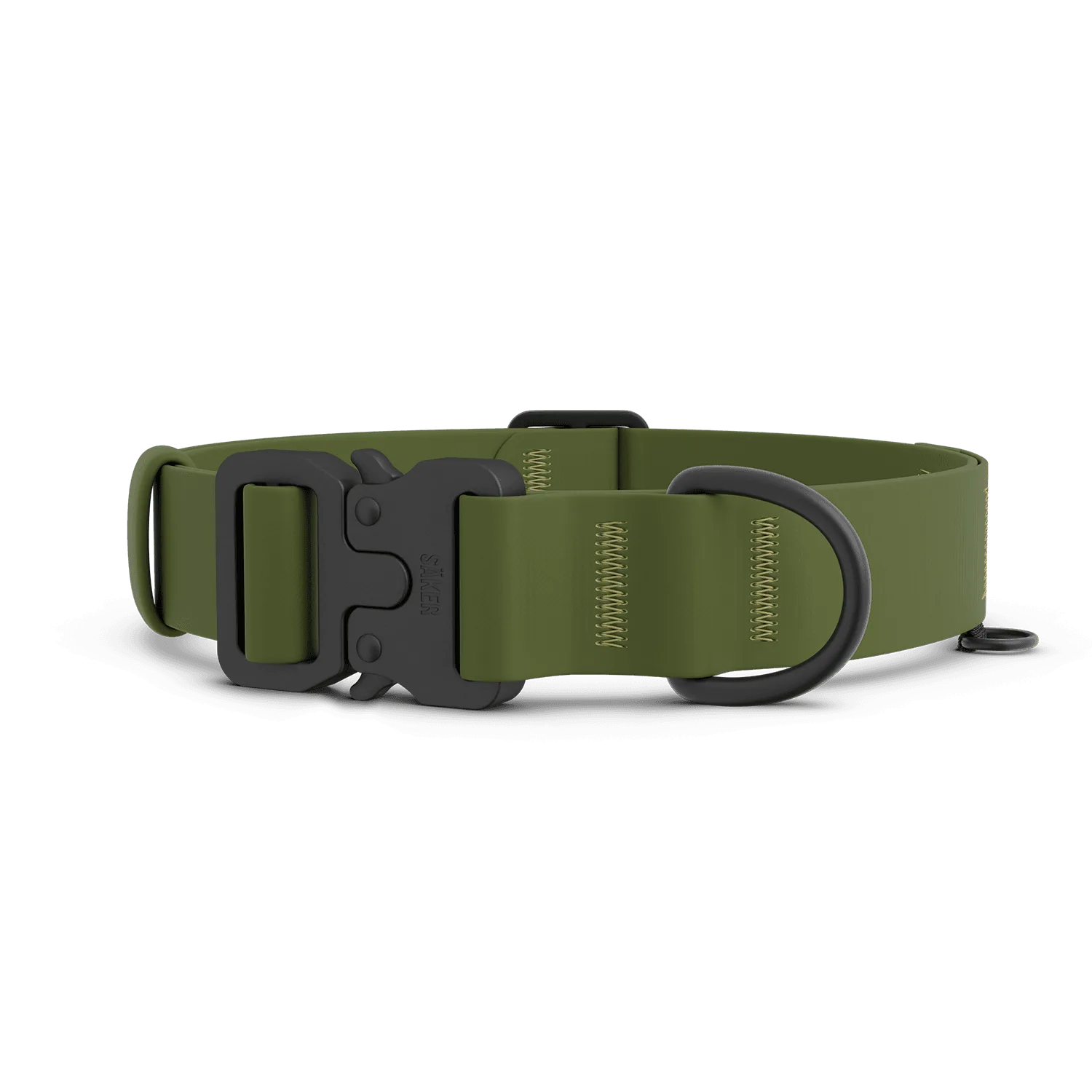
- Kelp™ Collar: The Kelp Collar is 100% waterproof and comes in multiple sizes and colors. If your dog wears a collar all day, a waterproof collar avoids the soggy, smelly strap problem after rain, swimming, or a bath, and the size range helps you get a fit that will not slip over the head.