The short answer: weight and shrinkage are different questions
A heavier fabric feels more substantial, but grams per square metre describe density, not dimensional stability. Nothing about a 330 gsm weight guarantees a tee will or won't shrink — that depends on fibre, yarn, construction and how the garment is washed and dried.
For the CDLP Heavyweight T-Shirt, the supplied product information does not include a shrinkage percentage, a wash-temperature instruction or a drying method. That's a gap in the evidence, not a claim that the tee is shrink-proof or that it will shrink. What the record does confirm is the fibre blend, the fit language and one expected change over time: the fabric will slowly and gracefully fade with age.
What the Heavyweight T-Shirt record actually says
-
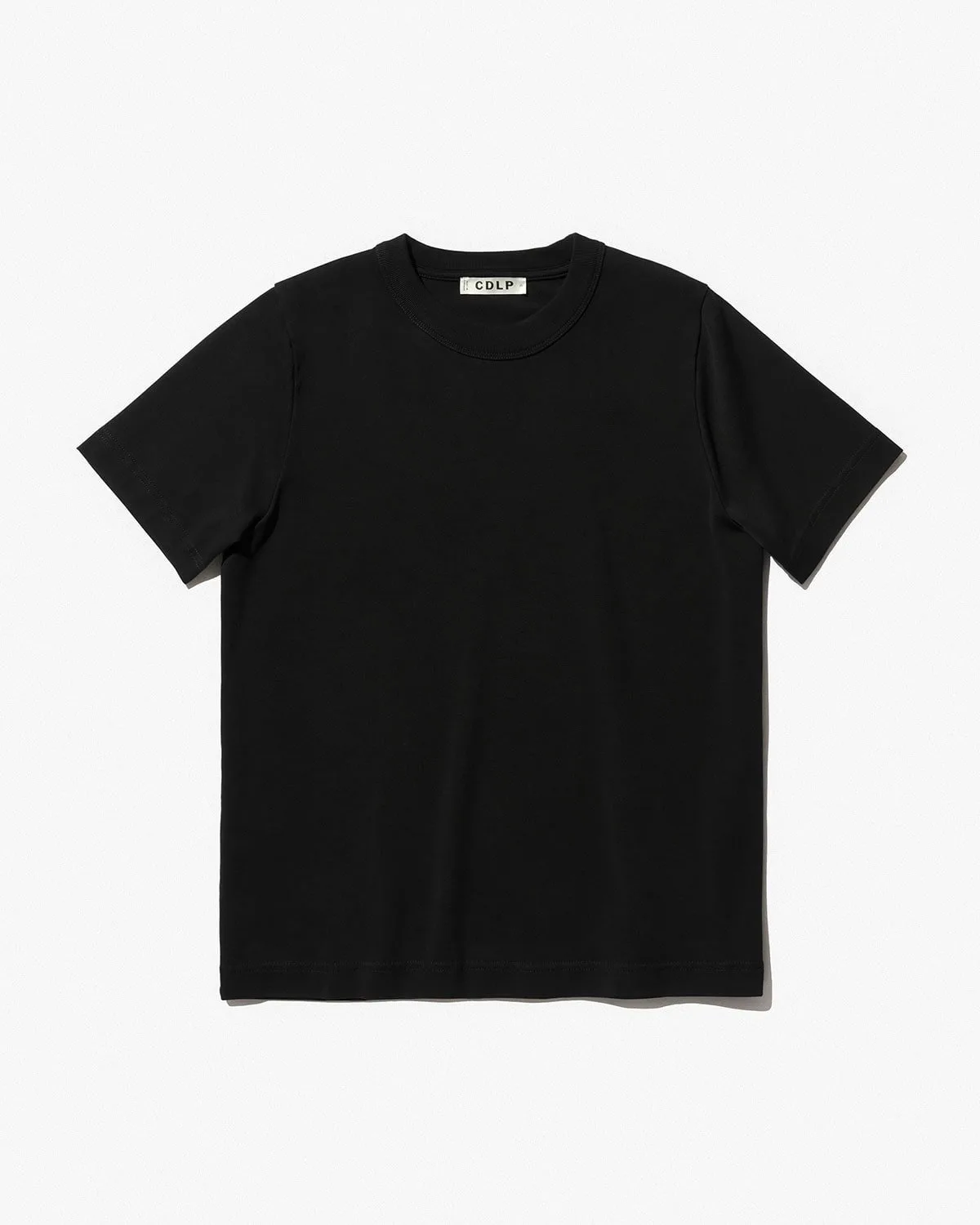
Heavyweight T-Shirt: 330 gsm, regular fit, crew neck. Weight and cut tell you how the tee feels and sits, not how it behaves in the wash.
Heavyweight T-Shirt
-
Heavyweight T-Shirt: 67% lyocell and 33% pima cotton. This is a blended knit, not a pure cotton tee, so generic cotton-shrinkage advice doesn't map onto it directly.
-
Heavyweight T-Shirt: Fits true to size; size up or down depending on fit preference. The brand's own fit guidance is the most reliable starting point when choosing a size.
-
Heavyweight T-Shirt: Due to the natural characteristics of the fabric, this garment will slowly and gracefully fade with age. Some visual change over time is stated as expected, so fading isn't a defect signal.
Why the cotton-shrinkage rule doesn't transfer cleanly
Most cotton t-shirt shrinkage advice assumes a knit that is predominantly cotton. The Heavyweight T-Shirt is 33% pima cotton and 67% lyocell — a fibre derived from certified renewable wood sources, described in the product record as providing silk-like softness and superior breathability, while the pima cotton provides texture and natural drape.
That blend matters for expectations. You can reasonably treat the lyocell share as a reason not to apply pure-cotton assumptions wholesale, but you should not swing to the opposite conclusion and assume the tee cannot shrink. The supplied information simply doesn't quantify it. If shrinkage is your deciding concern, treat it as unconfirmed rather than settled in either direction.
Heavyweight t-shirt washing tips that stay inside the evidence
The product record supplies no wash temperature, cycle, detergent or drying instruction. These are conservative habits for blended knitwear generally — not manufacturer instructions for this tee. Where the brand's own care label disagrees, follow the label.
- Check the garment care label first: It is the only authoritative source for this specific tee. The supplied catalog record does not reproduce it.
- Wash cooler rather than hotter: Heat is a common driver of knit shrinkage and fibre stress. Without a stated temperature, cooler is the lower-risk default.
- Skip the tumble dryer unless the label allows it: The record gives no drying method. Air drying flat or line drying avoids adding heat you can't verify is safe for the blend.
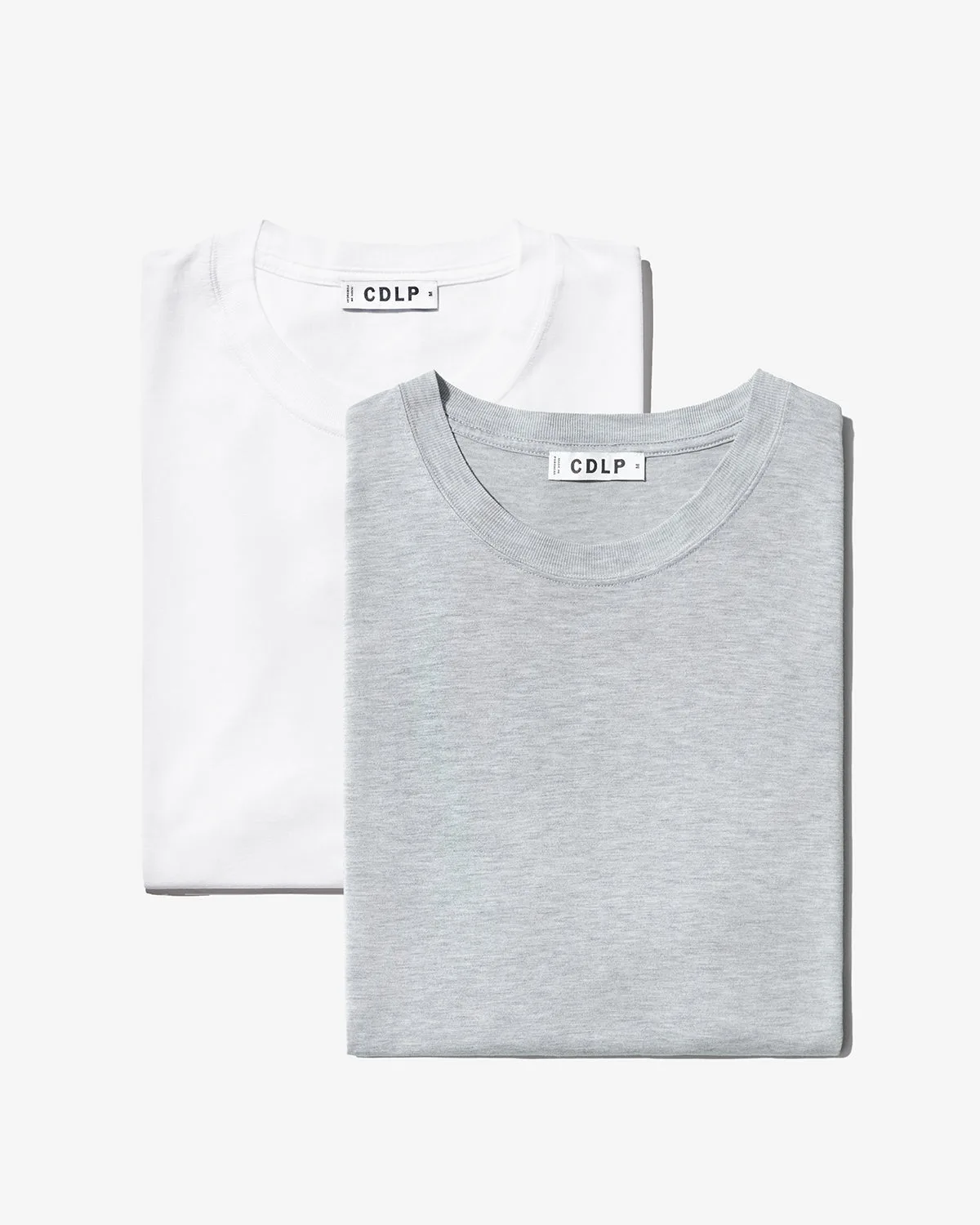
- Wash with similar colours: The tee is offered in Black and White, and fading with age is stated as expected. Separating lights and darks protects the White option and keeps the Black looking consistent.
- Don't treat fading as damage: The record explicitly frames gradual fading as a natural characteristic of the fabric, so a softening tone over time is anticipated rather than a fault.
How to prevent t-shirt shrinking without overpromising
There is no verified method in the supplied information that guarantees a knit won't shrink. What you can do is reduce the variables: choose the right size from the start, wash at a moderate temperature, and avoid drying heat unless the care label sanctions it.
Sizing is the more controllable lever. The record states the tee fits true to size and that you can size up or down depending on fit preference. If you want room for the fabric to relax or for a looser silhouette, sizing up is the option the brand itself names. If you want a closer fit, the same guidance points the other way. The model is 175 cm/5'9'' and wears size S, which gives you one concrete reference point for length and proportion.
What's confirmed versus what's still open
Separating these two columns is the honest way to plan around a garment whose full care documentation isn't in the supplied record.
- Confirmed in the record: 330 gsm; regular fit; crew neck; 67% lyocell / 33% pima cotton; fits true to size; size up or down by preference; gradual fading with age is expected; made in Portugal; sizes XXS–XXL in Black and XS–S in White.
- Not confirmed in the record: Any shrinkage percentage; wash temperature or cycle; drying method; ironing guidance; whether the tee is pre-shrunk. Absence here is a documentation gap, not evidence of a product flaw.
A practical way to decide
If you are replacing a cotton tee that shrank and you want certainty this time, ask the store for the care label wording before you buy — that is the only reliable answer to the shrinkage question for this garment. If you are comfortable with a blended knit and a stated expectation of graceful fading, choose your size using the true-to-size guidance and your own fit preference, then wash it gently and air dry it until you have label confirmation.
The Heavyweight T-Shirt's case for itself rests on its 330 gsm weight, its lyocell-and-pima-cotton blend and its regular-fit crew-neck cut — not on a shrink-proof promise the record doesn't make.