Quick answer
Most kids do not need a separate pair of winter sneakers if they already own insulated, water-resistant boots for wet or snowy days. Winter sneakers earn their place when your child walks to school, plays outside at recess, or spends hours in cold but mostly dry conditions and refuses bulky boots. Buy them only if the pair is warm-lined, has a grippy outsole, and fits with the socks your child actually wears in winter.
When winter sneakers make sense for kids
Winter sneakers are not a replacement for snow boots. They are a middle layer for cold, dry pavement, school hallways, and long walks where boots feel heavy or get refused. If your child changes into indoor shoes at school, a winter sneaker can handle the commute and recess without the bulk.
Skip them if your winter is mostly slush, deep snow, or salt-covered sidewalks. In those conditions, a taller waterproof boot with a deep tread does more for comfort than any sneaker. Winter sneakers are a convenience purchase, not a safety requirement.
The warmth test: lining, coverage, and sock fit
A winter sneaker only works if the lining traps warmth without squeezing the foot. Shearling and wool linings are the two most common warm options, but the fit matters more than the material name. If the lining presses against the toes, circulation drops and feet feel colder, not warmer.
Bring the socks your child wears in winter when you try shoes on. A thin summer sock can make a winter sneaker feel roomy in the store and then too tight at home. There should be about a thumb's width between the longest toe and the front of the shoe, and the heel should stay put when your child walks.
Traction and weather limits you should check before buying
Look at the outsole pattern, not the marketing language. A shallow, smooth sole is fine for dry cold but slides on frost and wet leaves. A deeper, grippier tread handles mixed winter surfaces better. No sneaker is fully waterproof unless the product says so, so treat water resistance as a bonus, not a guarantee.
If your child walks through puddles or slush daily, plan on boots for those days and keep the sneakers for dry cold. Rotating two pairs also gives each pair time to dry inside, which prevents odor and lining breakdown.
How many pairs a child actually needs
One pair of winter sneakers is enough for most kids. A second pair only makes sense if the first gets soaked regularly or if your child has two very different routines, such as a school commute and a weekend outdoor activity. Buying two pairs in the same size usually wastes money because kids outgrow them before they wear out.
If you are choosing between a winter sneaker and a winter shoe, pick the one your child will actually put on without a fight. The warmest pair in the closet does nothing for cold feet.
Decision rules for buying kids winter sneakers
- Rule 1: Match the shoe to your winter, not the calendar: If your child faces slush, deep snow, or salted sidewalks, buy boots first. Choose winter sneakers only for cold, mostly dry conditions. Dry cold: sneakers work. Wet cold: boots win.
- Rule 2: Fit with winter socks or do not buy: Try shoes on with the socks your child wears in winter. Check for a thumb's width at the toe and a heel that does not lift when walking. A tight winter sneaker is colder than a roomy one.
- Rule 3: Treat lining as the warmth signal: Shearling and wool linings are the catalog's stated warm options. If a product does not list a warm lining, do not assume it has one. No lining listed means plan for milder days.
- Rule 4: Check the sole before the style: A deeper tread handles frost and wet leaves better than a smooth sole. The catalog does not list waterproofing for these styles, so do not treat them as rain shoes. Grip matters more than color.
- Rule 5: Buy one pair, not two: Most kids outgrow winter shoes before they wear them out. A second pair only helps if the first gets soaked regularly. One good pair beats two average ones.
Product facts that matter for winter
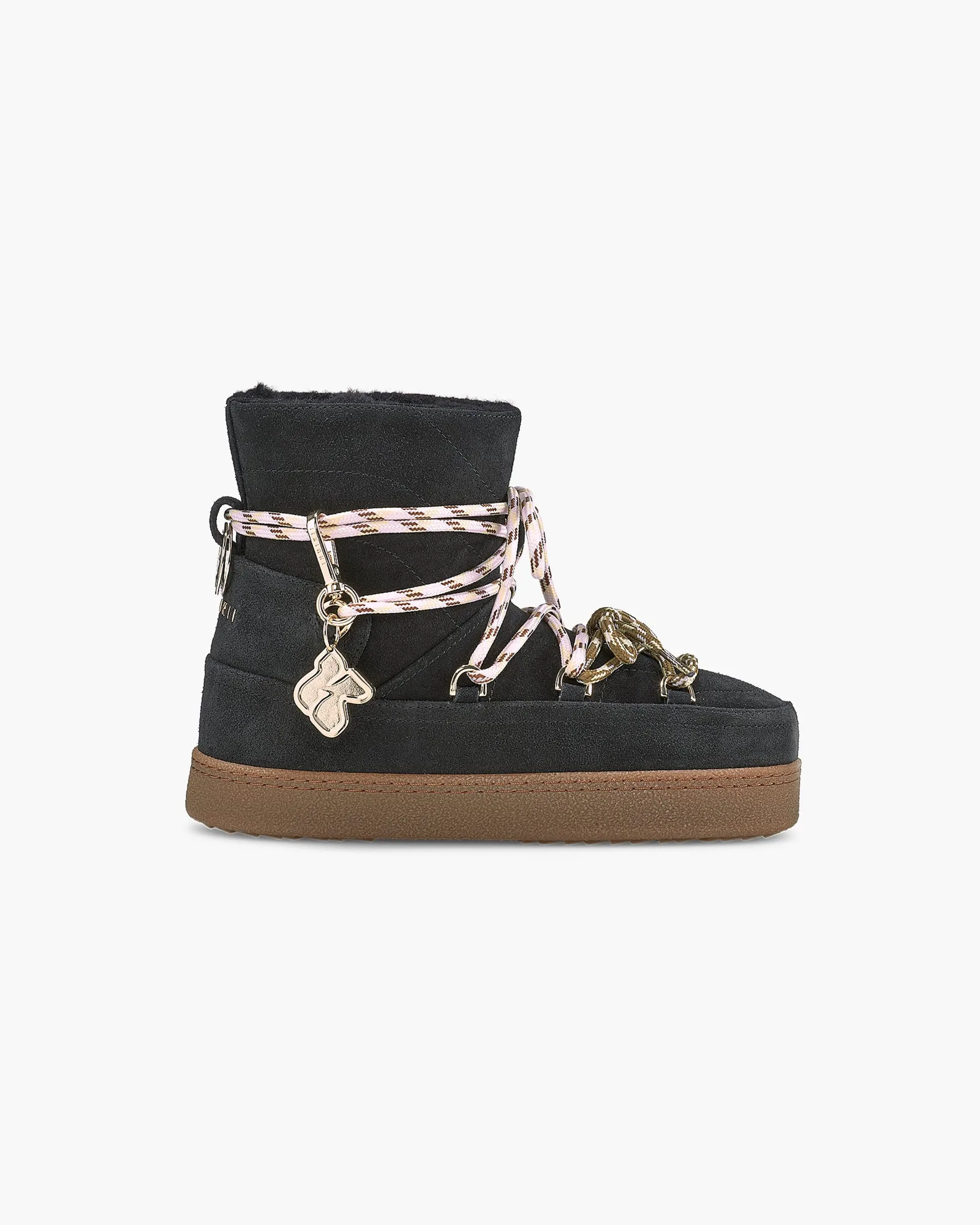
- Quilted Suede: The Quilted Suede is designed for cold days and winter conditions, crafted from premium leather and fully lined with soft shearling, with two sets of patterned laces and an attached metal INUIKII icon. The full shearling lining and winter-specific build make it a strong choice for a child who needs warmth on dry cold days, and the extra laces let you adjust the look without buying a second pair.
- Cozy Loafer: The Cozy Loafer has a chunky mule shape with a lightweight 4 cm platform sole, crafted from premium leather and wool and lined with warm wool. The wool lining and platform sole suit transitional and colder seasons, but the mule shape means it is easier to slip off, so it works better for short errands than active playground time.
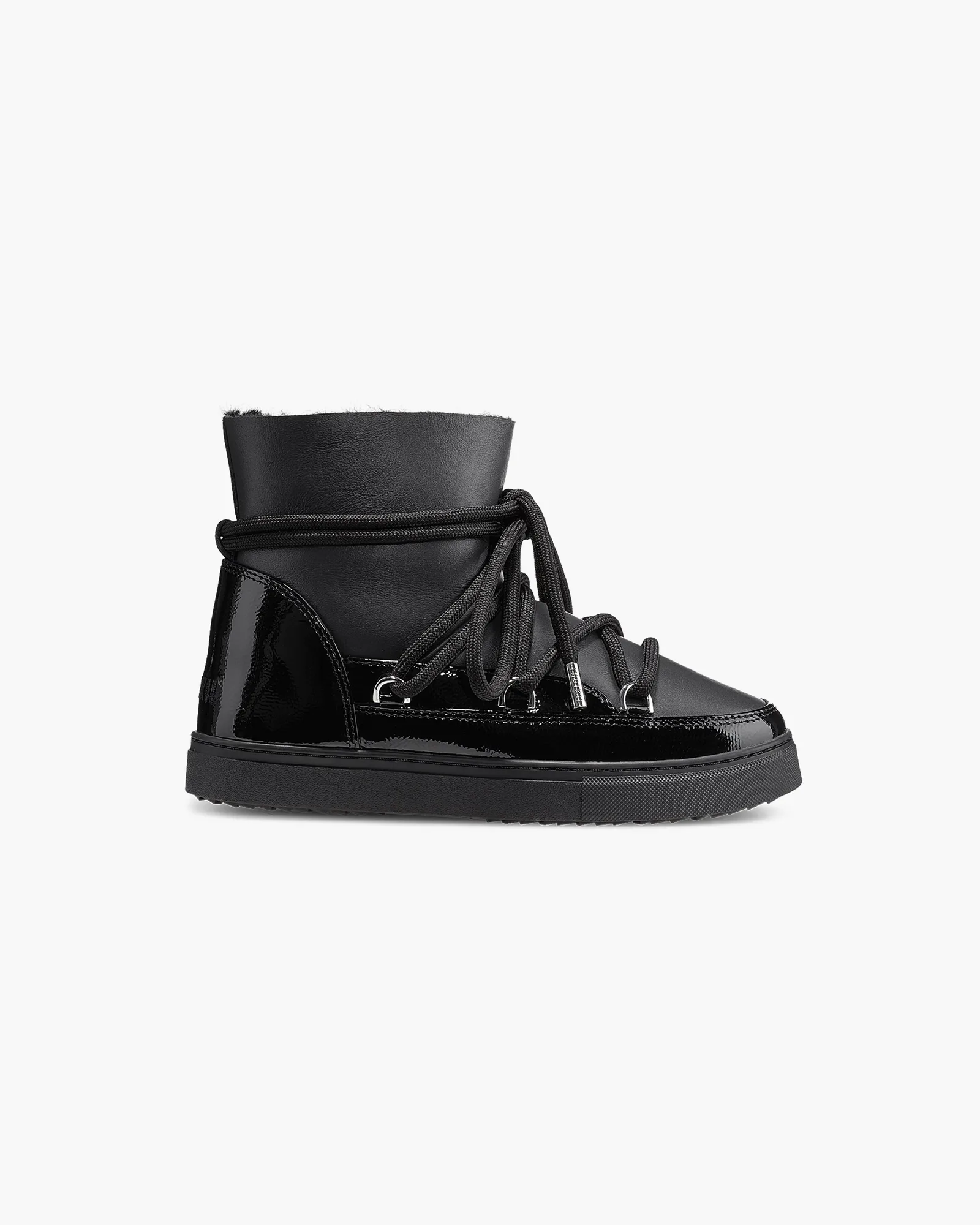
- Gloss: The Gloss is crafted from premium leather and shearling and fully lined with soft shearling, with a glossy finish designed for colder days and transitional seasons. The full shearling lining provides warmth for cold, dry conditions, while the glossy surface is a style choice rather than a weatherproofing feature, so it pairs best with dry winter days.
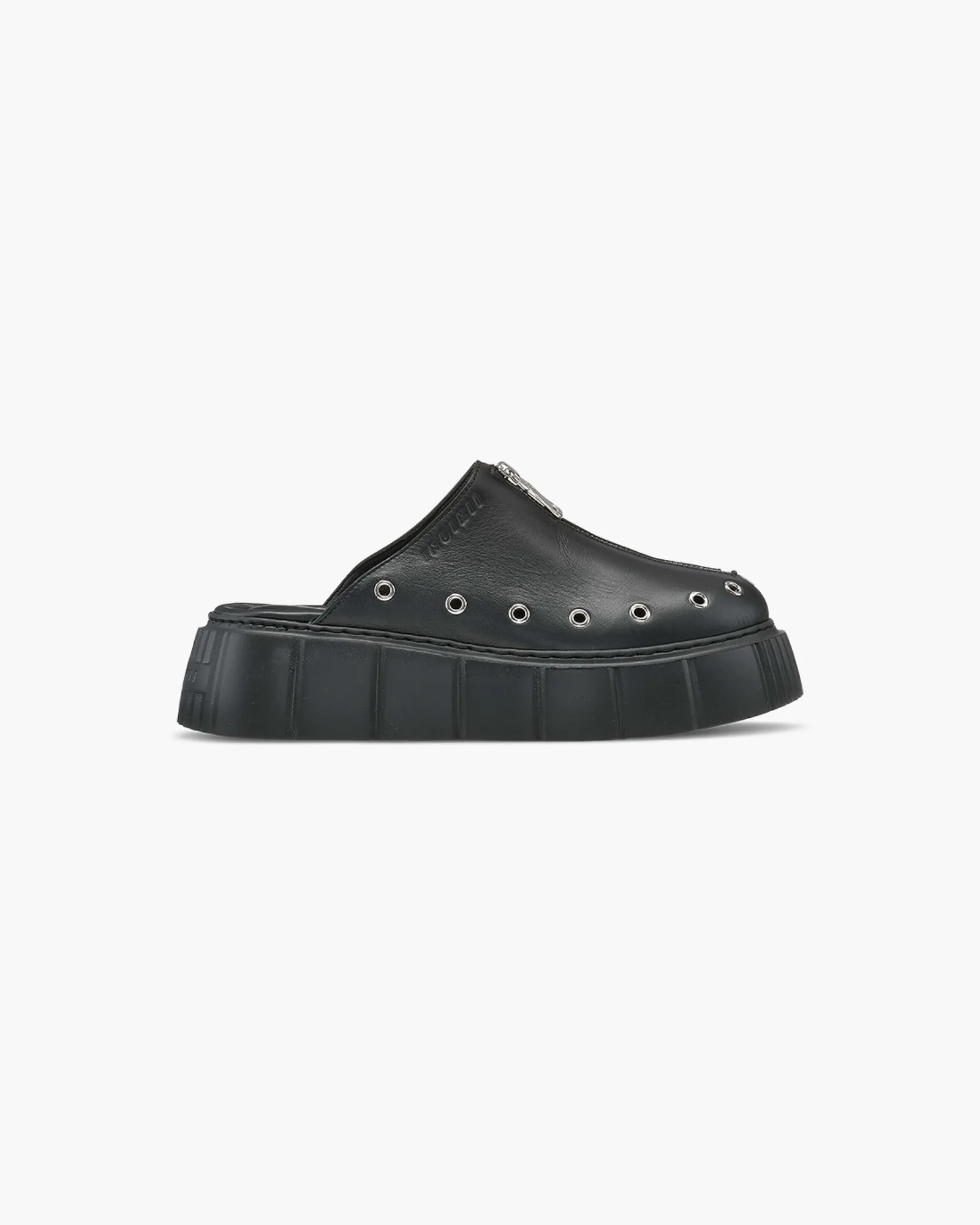
- Matilda Mule: The Matilda Mule is a slip-in shoe with silver studs, handcrafted from premium leather, with a lightweight platform sole and a non-openable zipper on the upper. It is a slip-in design without a warm lining stated in the catalog, so it is better for milder days or indoor-to-outdoor transitions than for deep winter warmth.
Who these winter styles suit
Best for
- Kids who walk to school in cold, dry weather and refuse bulky boots
- Children who need a warm-lined shoe for recess and short outdoor time
- Parents who want a winter option that still looks like everyday footwear
Not for
- Kids who spend hours in snow, slush, or deep puddles
- Children who need fully waterproof footwear for wet winter commutes
- Families looking for a single shoe to replace snow boots entirely