Quick answer
Light-up bath toys can support sensory play, but they are not a developmental program. They add light, water, color, and a simple cause-and-effect response to bath or bin time. Whether that helps your child depends on how you use them and what your child needs — not on the toy alone.
Search "light up toys sensory development" and you will find confident claims in both directions: that glowing toys are essential sensory tools, and that they are overstimulating plastic. Most of those claims are stated with more certainty than the evidence behind them deserves.
So let's do this properly. Below are five claims parents hear often, each with a clear verdict and an explanation grounded in what these toys actually do. Where a question needs research we do not have, we say so instead of guessing.
Myth 1: "Light-up toys are a proven sensory development tool"
Verdict: overstated. There is no single category called "light-up toys" that has been validated as a developmental intervention. What matters is the specific toy and the specific play it invites. A toy that responds to water with light gives a child a visible result from an action they took — that is cause-and-effect play, and it is one of the experiences parents commonly look for in sensory toys.
That is a description of the play, not a promise about outcomes. If a product page or a video tells you a glowing cube will improve attention, language, or motor skills, treat that as marketing rather than a finding. The honest version is narrower and still worthwhile: these toys create a repeatable, low-pressure sensory moment you can share with your child.
- Ask what the toy actually does — light up, float, change color — rather than what it promises to develop.
Myth 2: "Light-up bath toys help because of the light alone"
Verdict: partly true, but incomplete. Light is only one input. In a bath or sensory bin, your child is also processing water temperature, wet texture, sound, and movement. A toy that lights up when it touches water layers a visual reward on top of those inputs, which is why the effect feels bigger than a plain floating toy.
This is also why the same toy can land differently for two children. A child who seeks visual stimulation may fixate on the glow; a child who is easily overwhelmed may need the lights dimmed or the toy used outside the bath first. The toy is the same — the sensory load is not.
- Try the toy in a shallow bin of water before a full bath if your child is sensitive to busy environments.
Myth 3: "More lights and features mean more sensory benefit"
Verdict: false. More stimulation is not the same as better stimulation. A toy that flashes, plays music, and changes color simultaneously competes for attention rather than directing it. Simple, predictable feedback is usually easier for a young child to notice, repeat, and understand.
This is where product design choices matter more than feature counts. A character that holds a light-up cube and glows when it enters water gives one clear signal: I did something, and the toy responded. That predictability is the useful part, not the number of modes.
- Choose one clear effect over three competing ones, especially for children under three.
Myth 4: "Sensory toys only matter for children with sensory needs"
Verdict: false. Every child takes in and organizes sensory information; some just need more support or more practice than others. Bath time is a daily routine that already involves water, temperature, and touch, so adding a predictable visual response is a low-effort way to make that routine more engaging for any child.
That said, a toy is not a substitute for professional guidance. If your child shows consistent distress around textures, water, or noise, talk to your pediatrician or an occupational therapist. A glowing bath toy can be part of a comfortable routine, but it is not an assessment and it is not therapy.
- Keep expectations modest: the goal is a calmer, more playful routine, not a milestone.
Myth 5: "Any light-up toy is fine as long as it glows"
Verdict: false. How a toy is powered, sealed, and cleaned determines whether it survives bath time and whether you can keep using it safely. A toy that leaks or corrodes becomes a frustration, and a toy you cannot dry properly becomes a hygiene problem.
Check the care instructions before you buy, and treat drying as part of the routine rather than an afterthought. If a toy's care requirements are not stated clearly on the product page, that absence is itself useful information — it means you cannot plan for it, so ask before purchasing.
- Wipe and dry light-up pieces after each use, and store them dry rather than leaving them in a wet bin.
The verdicts at a glance
- Light-up toys as a proven developmental tool: The category has not been validated as an intervention, and claims about outcomes usually outrun the evidence. Verdict: overstated. Judge the play, not the promise.
- Light as the active ingredient: Light is one input among water, temperature, texture, and sound. The combination is what your child experiences. Verdict: partly true. Adjust the whole environment, not just the toy.
- More features, more benefit: Competing lights and sounds divide attention. Predictable, single-response toys are easier to notice and repeat. Verdict: false. Simpler usually works better.
- Sensory toys are only for children with sensory needs: All children process sensory input; bath time is a daily routine where a predictable response can help any child engage. Verdict: false. But persistent distress needs a professional, not a product.
- Any glowing toy will do: Power source, sealing, and drying determine whether the toy keeps working and stays hygienic. Verdict: false. Check care instructions before buying.
What the actual products do
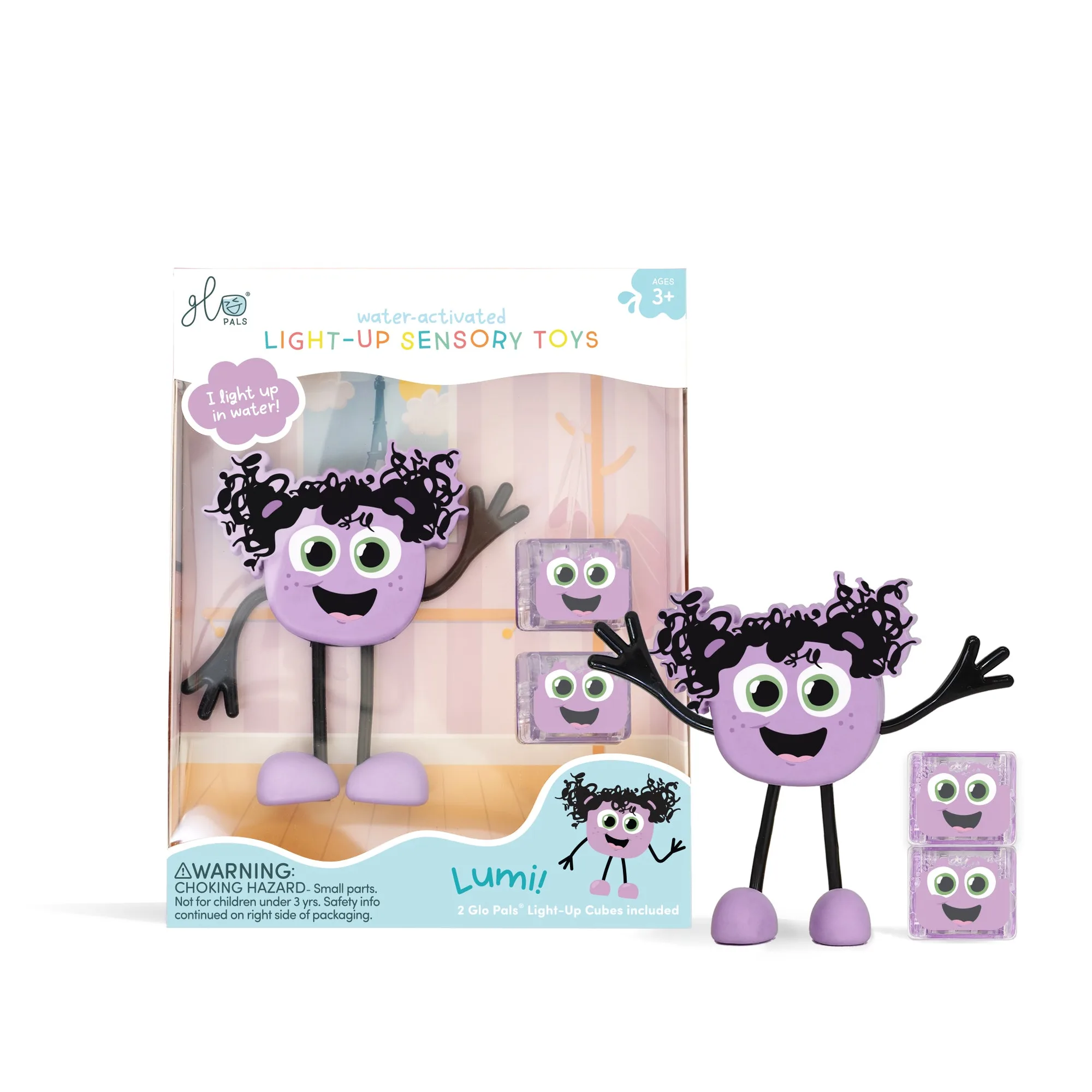
- Lumi® Light-Up Character: Includes 2 Liquid-Activated Light-Up Cubes. Place a cube in the back of Lumi, drop it into water, and it instantly glows. Designed for baths, water tables, and sensory bins. This is the clearest example of cause-and-effect play in the range: one action, one visible result, repeatable as often as your child wants.
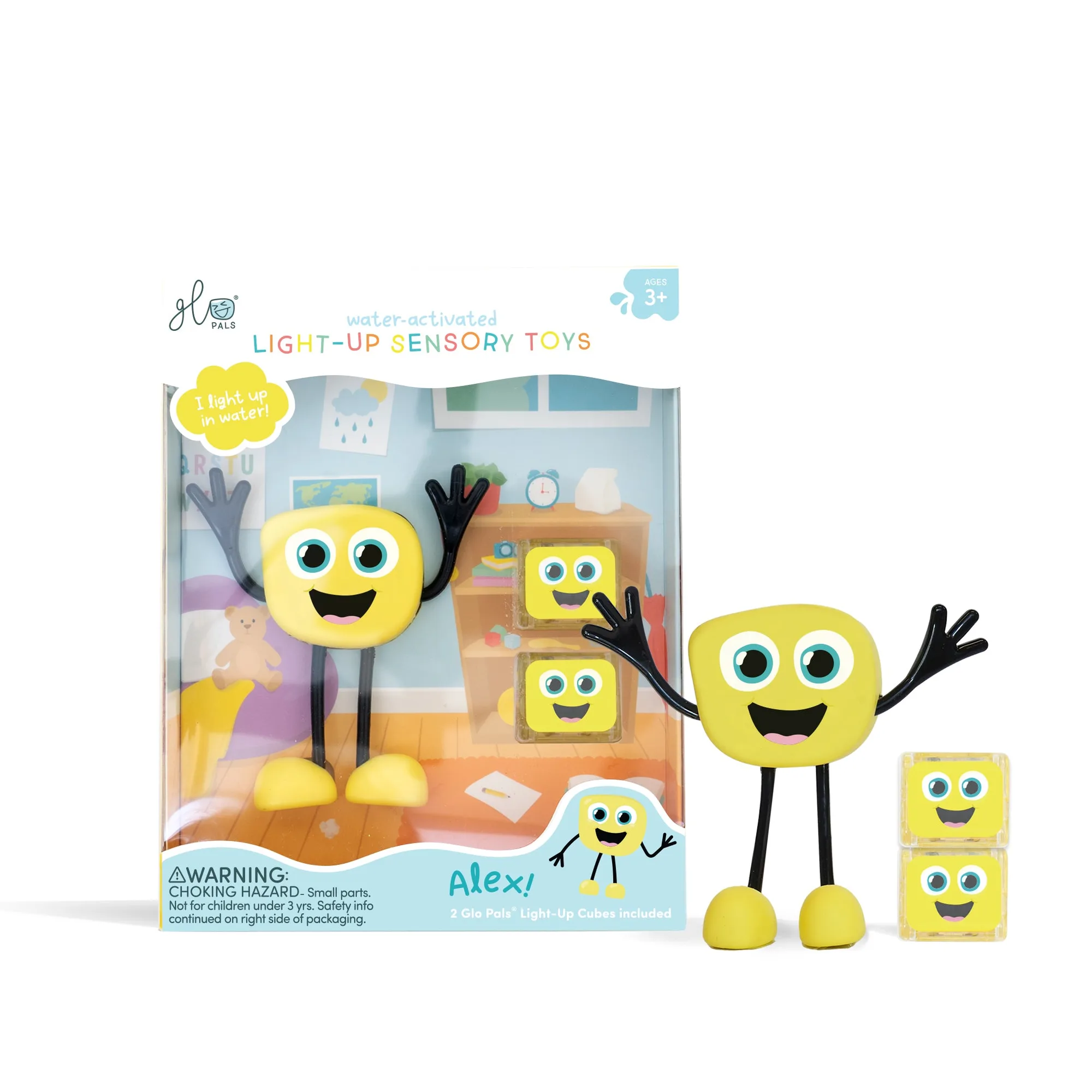
- Alex® Light-Up Character: Includes 2 Light-Up Cubes so play can start right out of the box, and is designed and shipped from Starkville, MS. Two cubes included means the toy works immediately without a separate purchase — useful if you want to test whether your child engages before adding more.
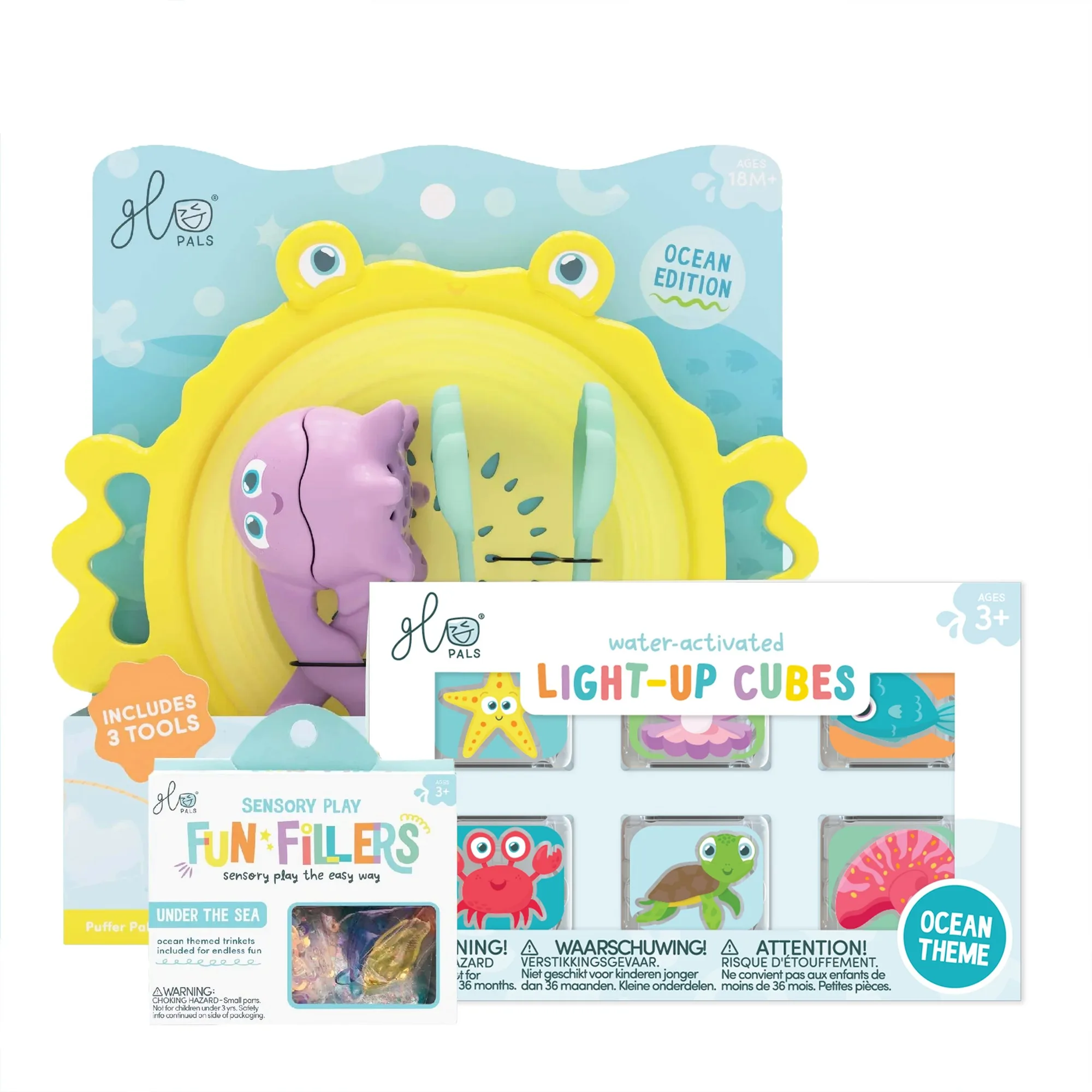
- Ocean Explorer Bundle: A bundle of Glo Pals best-sellers including the limited edition Ocean Light-Up Cubes, positioned for summertime sensory fun with a 10% savings. A bundle makes sense if you already know your child likes water play and you want variety across bath, bin, and water table without buying pieces one at a time.
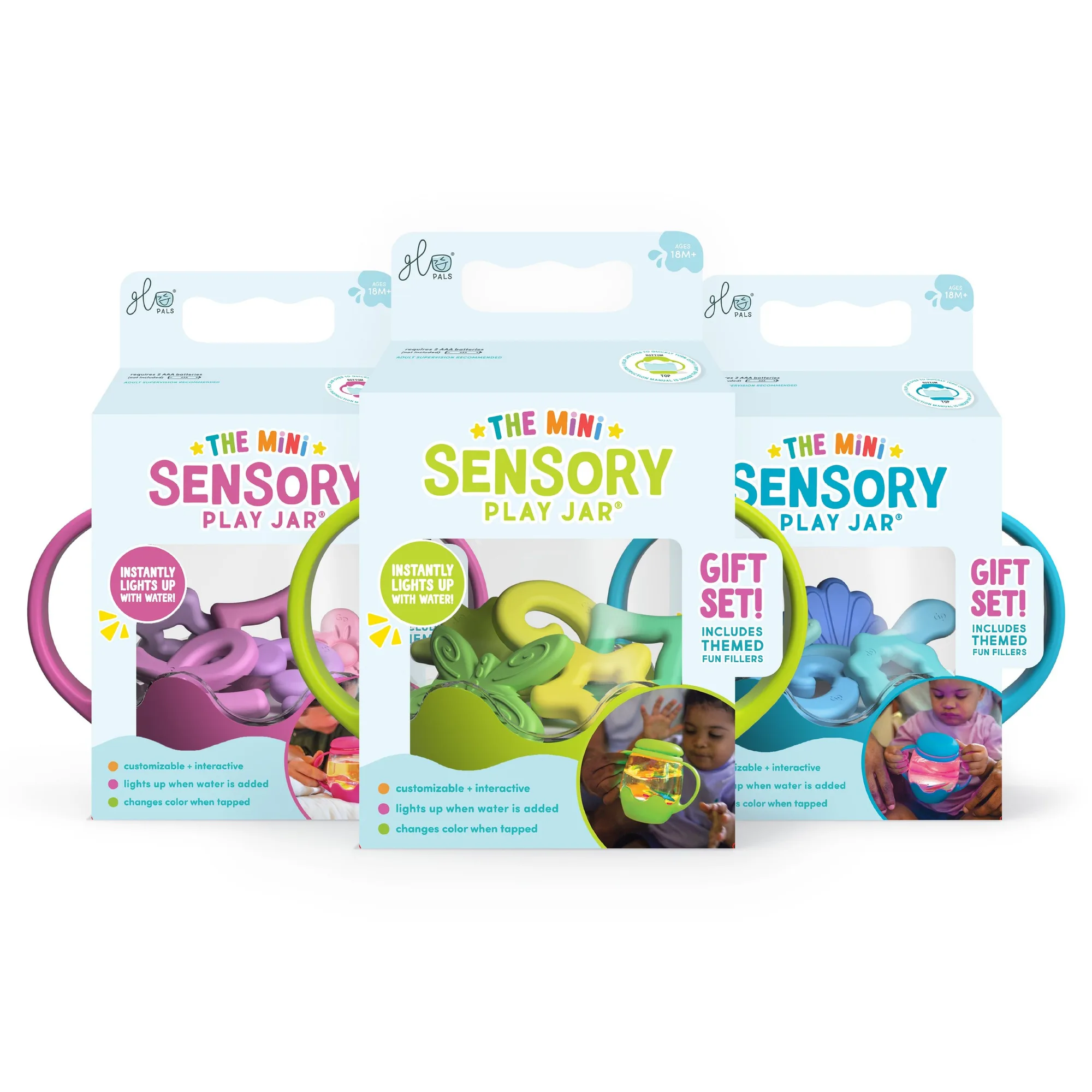
- Mini Sensory Play Jar® Set – All 3 Colors: Brings together all three Mini Sensory Play Jar Gift Sets — Gumdrop, Firefly, and Blue Lagoon — each packed with 5 soft-touch silicone shapes sized for little hands. This is the dry-play alternative. If your child finds bath time overwhelming, silicone shapes in a jar offer tactile sensory play without water or light.
Light-up bath toys are a reasonable addition to sensory play, not a shortcut to development. Pick one with a clear, repeatable response, keep the setup simple, and dry it properly after use. If your child's reactions worry you, that is a conversation for your pediatrician — not something a glowing cube can answer.