Quick answer
Tongs, dice and sorting cups do not build math skills by themselves. They build the hand control, matching and turn-taking that make counting and number talk possible later. Buy them as fine motor and sorting tools, then add your own counting language during play.
What these toys actually train
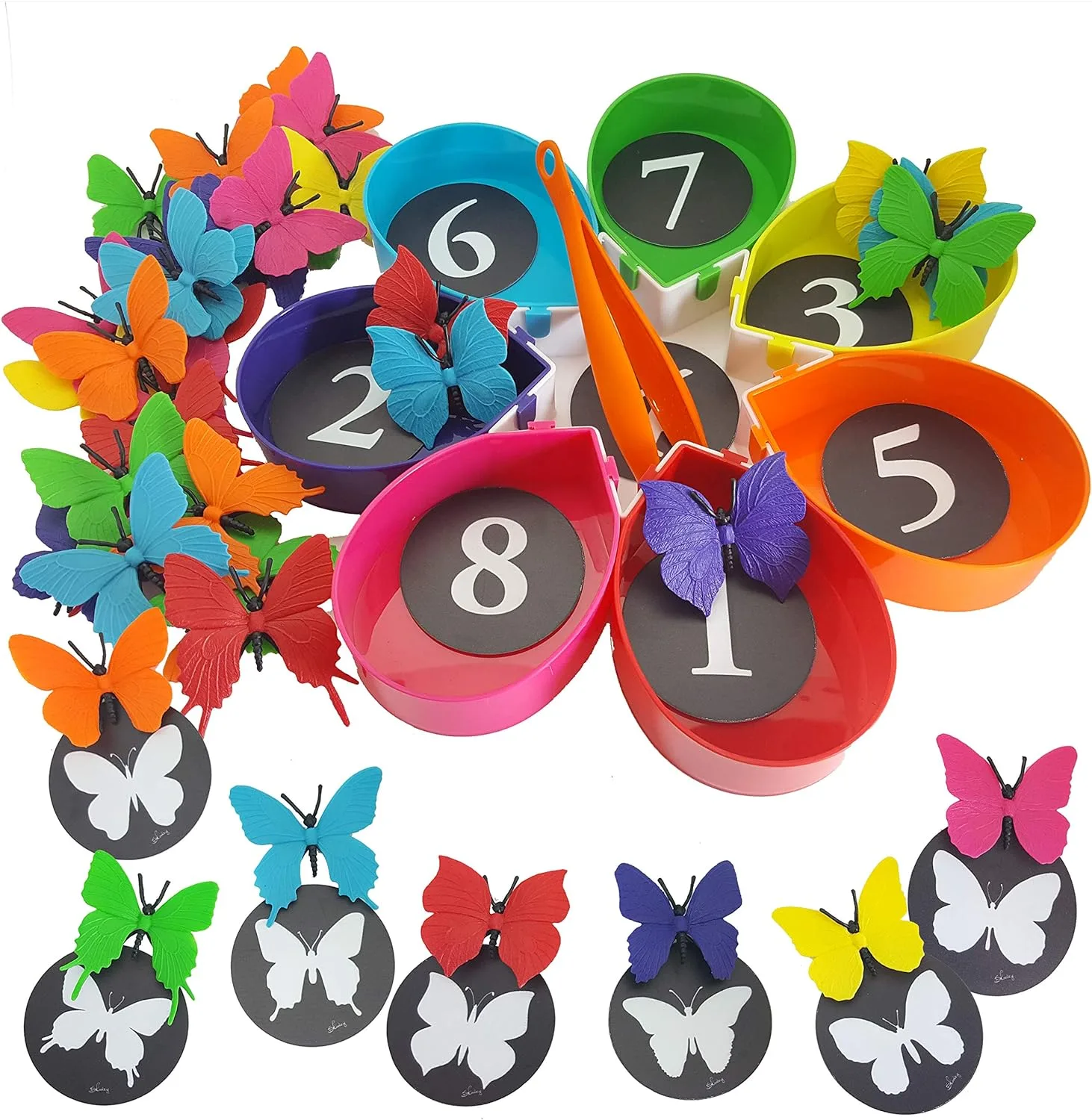
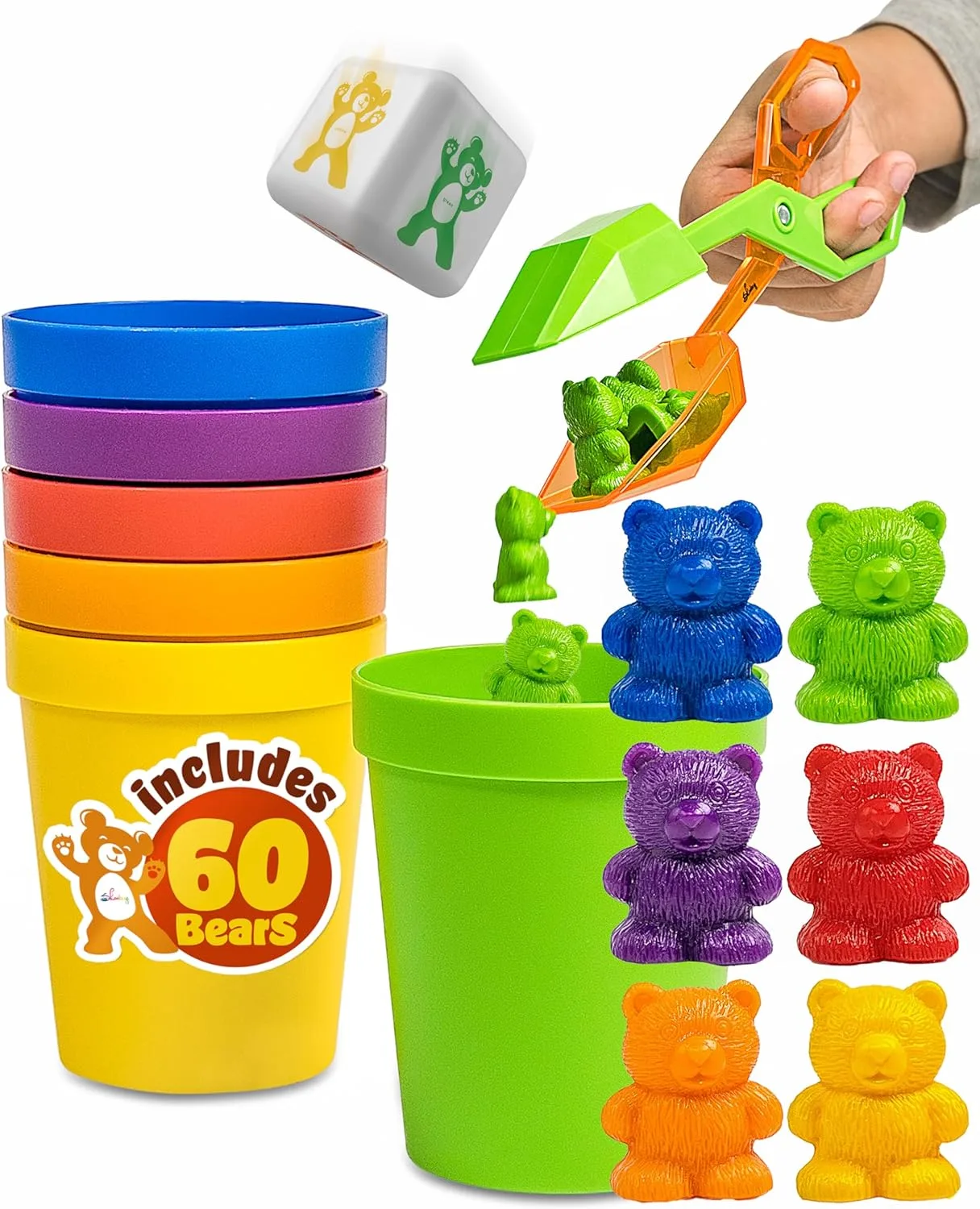
The skills a toddler practices with tongs, pegs and counters are pre-math skills: matching, sorting, one-to-one correspondence, hand-eye coordination and fine motor control. The Skoolzy Rainbow Counting Bears set is described as a math manipulative that has children work on matching, sorting, mathematics, dexterity and hand-eye coordination as they count, sort and play. That list is the honest scope. A three-year-old is not learning multiplication; they are learning that one bear goes in one cup, that colors can be grouped, and that their fingers can place an object where they intend.
Why dice get oversold
Dice add two things: a random number and a turn. That makes them useful for simple games where a child counts spaces or matches a rolled number to a group of objects. It does not make the die a teacher. The math happens in the counting out loud, the moving of pieces, and the adult asking 'how many now?' If you hand a toddler dice and walk away, you have handed them a rolling toy. The Skoolzy Rainbow Counting Bears set includes dice alongside sorting cups and bear counters, which is a practical pairing because the dice give a reason to count and the bears give something to count.
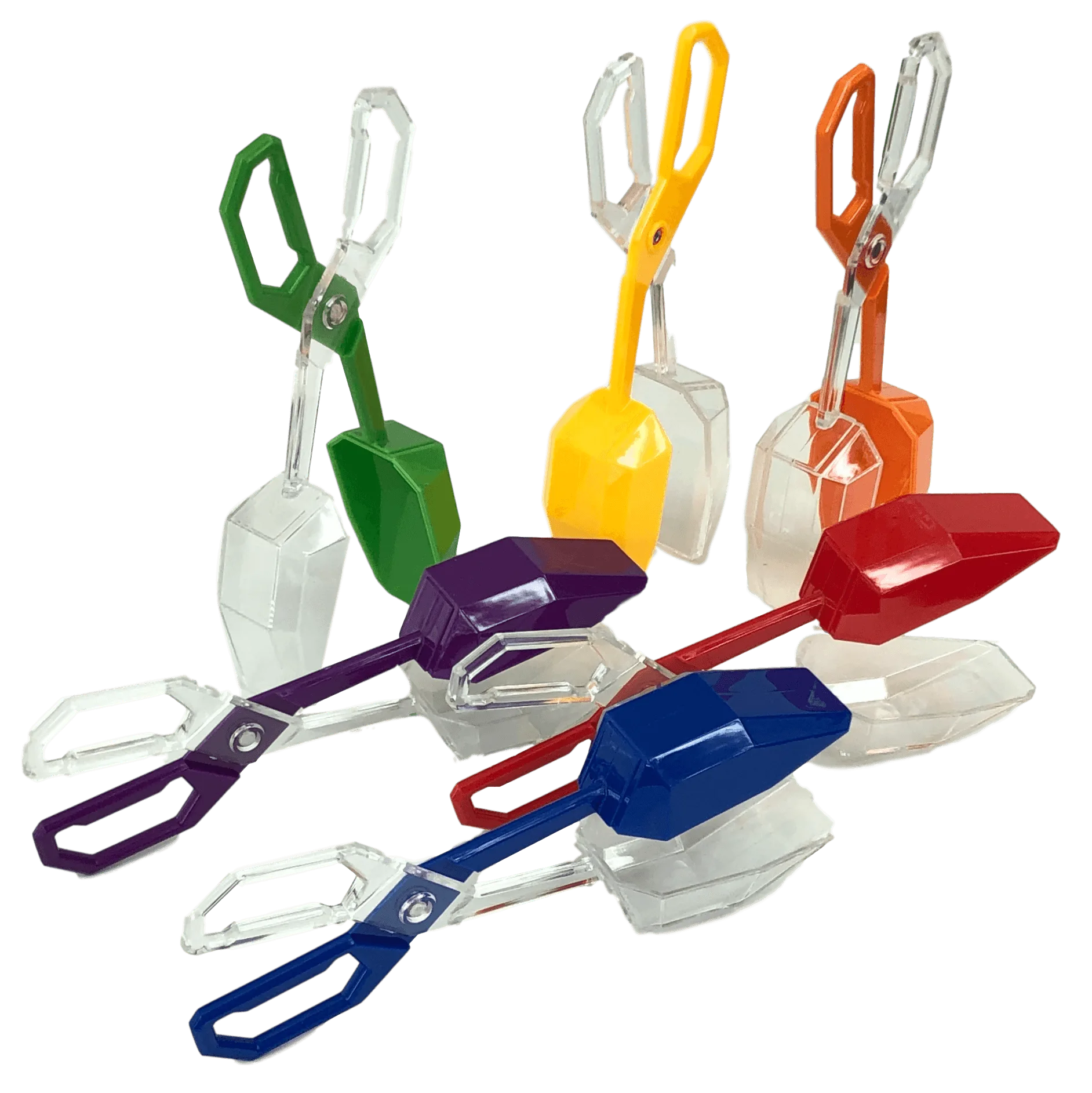
Tongs are a grip tool first
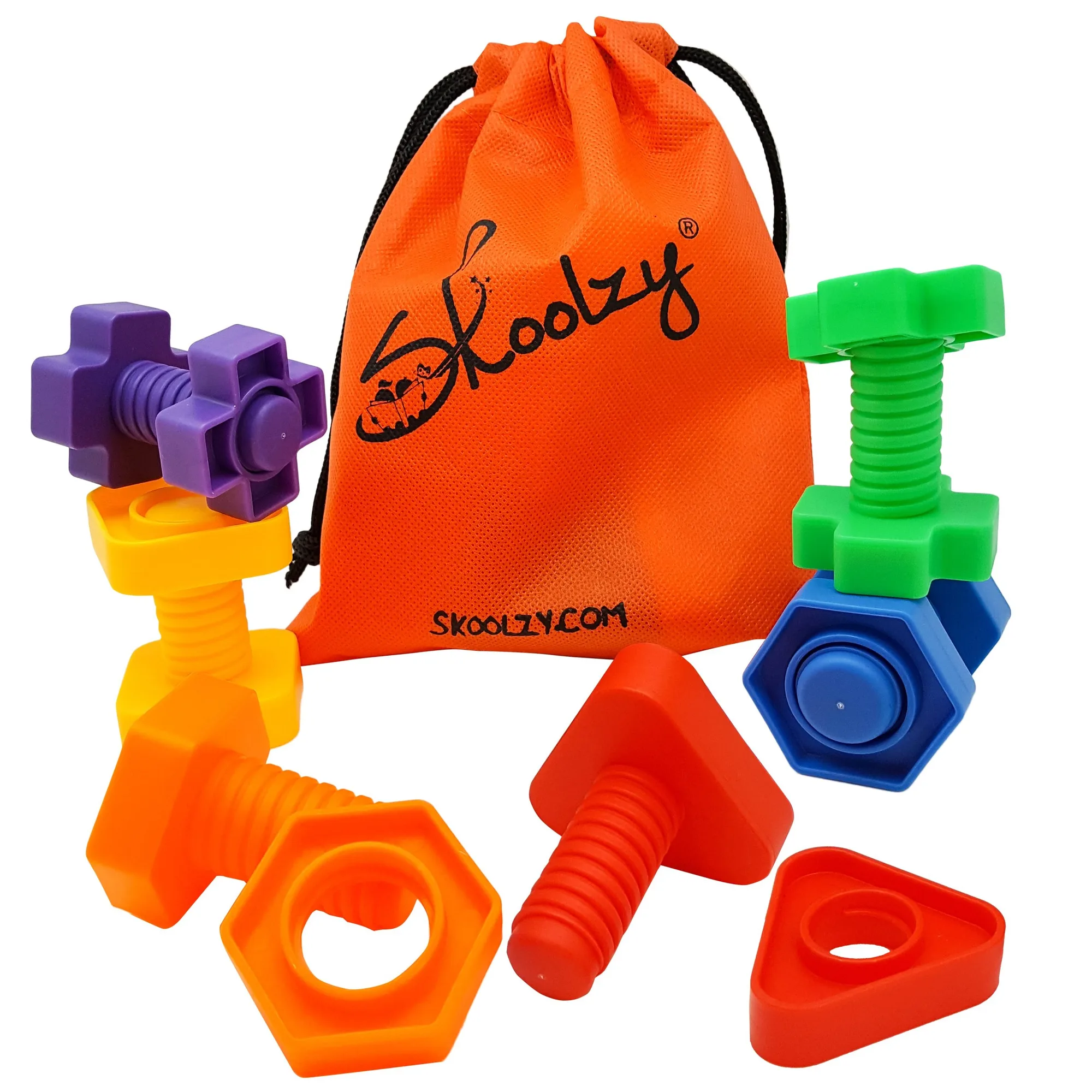
Tongs and jumbo pegs are often marketed as math toys, but their first job is grip. The Sensory Peg Board set uses oversize pegs that are easy for small fingers to grasp and stack on the peg boards or build into towers. That is a fine motor task. The math layer comes when you ask a child to put three pegs on the board, or to make a tower taller than another. Without that adult language, the toy is still useful, just not mathematical. Treat tongs and pegs as the prerequisite, not the lesson.
How to add the math yourself
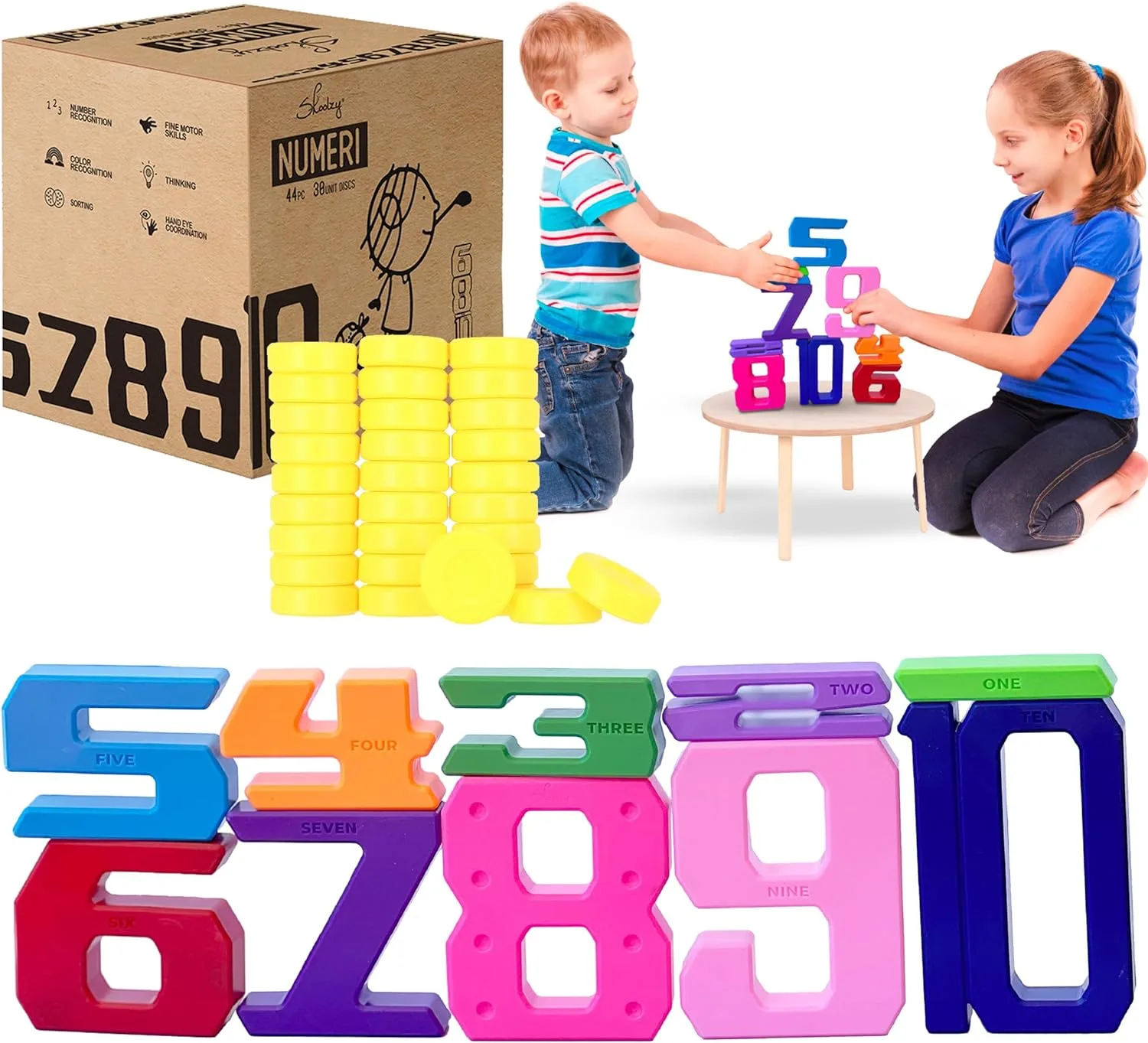
The cheapest upgrade to any of these toys is your voice. Count each bear as it goes into a cup. Ask which cup has more. Roll a die and have the child place that many bears on the table. Stack number blocks from one to ten and say the numbers as they go up. The Number Blocks and Counting Coins set is built around this idea: children build and stack blocks from one to ten and see how numbers work through hands-on discovery. The toy supplies the objects; you supply the number talk. Ten minutes of that beats an hour of solo play with any manipulative.
What to ignore in the marketing
Be skeptical of any toddler toy that promises to teach math, boost IQ or prepare a child for school on its own. None of the supplied product descriptions make those claims, and the ones that do elsewhere are not backed by anything you can verify. Also ignore piece counts as a quality signal. A 44-piece set and a 33-piece set can both be right for your child depending on whether they are ready to sort by color or just to stack. The useful question is whether the pieces match the skill your child is working on right now.
Verdicts on common claims
- Claim: tongs teach math: Tongs train grip, hand-eye coordination and placement. The math only appears when an adult adds counting or comparing language to the activity. Verdict: false as stated. Buy tongs for fine motor work, not for math.
- Claim: counting dice teach math: Dice create a random number and a turn. Counting the result out loud is what teaches the number, and that step needs a person. Verdict: partly true. The die starts the game; you finish the lesson.
- Claim: sorting cups build math skills: Sorting by color or size builds matching and classification, which are real pre-math skills. It does not teach arithmetic. Verdict: true for pre-math, false for arithmetic.
- Claim: more pieces means more learning: Piece count tells you how many objects are in the box, not whether your child is ready to use them. Match the set to the skill they are practicing now. Verdict: false. Fit beats volume.
What the sets actually include
- Skoolzy Rainbow Counting Bears Toddler Toys For 3 Year Old Gifts Stocking Stuffers, Sorting Cups, Montessori Sensory Toys, 1 Preschool Learning Activities Math Games Dice Toy, Montessori Tongs, 2 Bags: The Skoolzy Rainbow Counting Bears set includes sorting cups, bear counters and dice, and is described as a math manipulative for matching, sorting, counting, dexterity and hand-eye coordination. The dice give a reason to count and the bears give something to count, so the set supports simple number games rather than only free play.
- Sensory Peg Board 33 Piece Set - Montessori Occupational Therapy Toys for Kids & Toddlers 2+: The Sensory Peg Board 33 Piece Set uses oversize pegs that are easy for small fingers to grasp and stack on the peg boards or build into towers. This is a grip and stacking tool first, so use it to build hand control before expecting counting or sorting from it.
- Number Blocks & Counting Coins 44 Piece Set: The Number Blocks and Counting Coins 44 Piece Set lets children build and stack number blocks from one to ten and is described as teaching number sense through hands-on discovery. Stacking one to ten in order gives a concrete number line a child can touch, which is easier to talk about than an abstract digit.