Quick answer
No. Adding more steel bones to a faja does not automatically improve tummy control. Bones support and stabilize the garment, but the smoothing effect comes from the fabric's stretch and how the faja fits your body. A faja with six well-placed bones and strong compression can control your tummy better than one with twelve bones and a loose fit.
What steel bones actually do in a faja
Steel bones are rigid strips sewn into the faja to stop the fabric from rolling, bunching, or folding over when you move. They give the garment structure, so the compression stays smooth against your body instead of digging in or shifting. In a tummy control faja, bones also help the front panel lie flat and prevent the waistband from curling down.
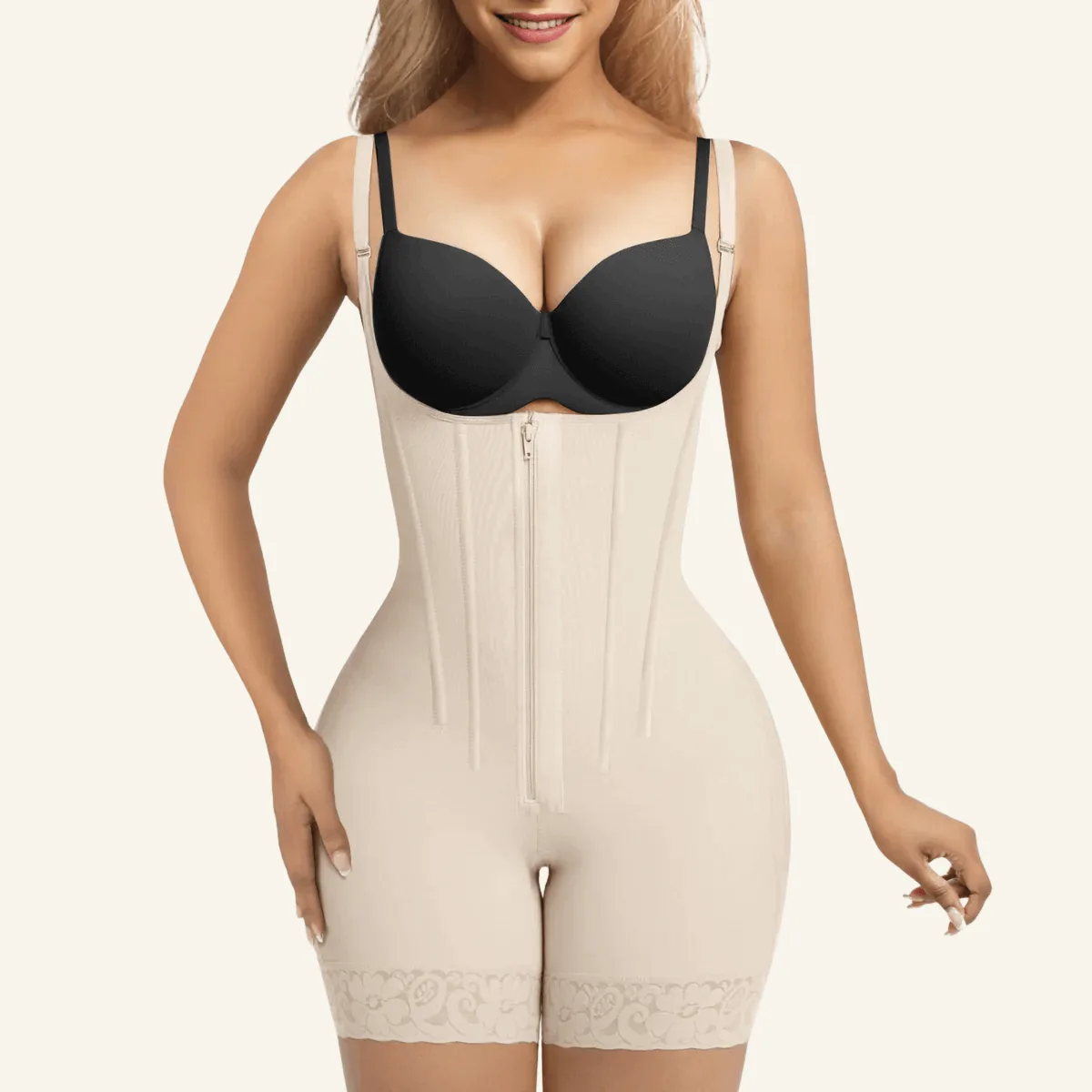
What bones do not do is create compression on their own. The shaping comes from the fabric blend and the fit. A faja made with high-stretch nylon and spandex, like the SHAPERX 6-Steel-Bones Tummy Control Zip & Hooks Faja with Butt Lift, uses 69% nylon and 31% spandex for sculpting support. The six hidden steel bones add 360° stability so that compression stays in place. Without enough stretch in the fabric, extra bones would just make the faja stiff and uncomfortable.
Why a higher bone count isn't automatically better
Bone count is a design choice, not a quality score. More bones can distribute pressure more evenly across the torso, which may help if you have a longer torso or want extra structure along the sides and back. But each additional bone also adds stiffness. Past a certain point, the faja becomes harder to put on, less breathable, and more likely to dig into your ribs or hips when you sit.
The right number depends on the faja's purpose. A tummy control faja that you wear under clothes all day needs enough bones to stay flat without feeling like a corset. A shorter shaper short or a pull-on style may need fewer bones because the fabric itself holds its shape. The bone count should match the garment's length, the fabric's stretch, and how much movement you need.
The fit factors that matter more than bone count
Compression comes from the fabric's stretch ratio and the size you choose. If the faja is too loose, no amount of boning will smooth your tummy. If it is too tight, the bones will press into your skin and the faja will roll or gap. The closure system also matters: a zip and hooks front, like the one on the SHAPERX 6-Steel-Bones faja, lets you adjust the fit and keeps the front panel flat, which supports the bones' work.
Breathability is another factor. A faja with breathable, high-stretch fabric and hidden bones can be comfortable enough for extended wear, while a faja overloaded with bones may trap heat and feel bulky. For everyday tummy control, prioritize a fabric that moves with you and a bone layout that follows your natural curves rather than a high bone count.
When extra bones can help
There are cases where more bones make sense. If you have a long torso and find that fajas without enough structure roll down at the waist, additional bones along the front and sides can keep the garment anchored. Similarly, if you want a snatched silhouette under a fitted dress and need the faja to stay perfectly smooth for hours, a slightly higher bone count with a secure closure can help.
Still, the benefit comes from stability, not from the number itself. A faja with six steel bones placed at the right angles can deliver the same smooth result as one with ten bones if the fabric and fit are right. The key is to treat bone count as one specification among several, not as a standalone measure of tummy control.
Myths vs. facts: steel bones and tummy control
- More steel bones always mean better tummy control.: Myth. Bones support the fabric, but tummy control comes from compression and fit. A faja with fewer bones and the right stretch can smooth better than a stiff, high-bone faja that doesn't fit. Check the fabric blend and size chart before counting bones.
- Steel bones create the compression in a faja.: Myth. The fabric's stretch and your fit create compression. Bones keep the garment from rolling or folding so that compression stays effective. Without enough spandex, extra bones won't add smoothing. Look for a high spandex percentage, such as 31% spandex, as a sign of sculpting stretch.
- A faja with six steel bones can control your tummy well.: Fact. Six hidden bones placed for 360° stability, combined with a breathable nylon-spandex fabric and a zip-and-hooks closure, can deliver reliable tummy control for everyday wear. Prioritize bone placement and closure design over raw bone count.
- You should always choose the highest bone count available.: Myth. Higher bone counts add stiffness and can make the faja harder to put on and less breathable. Choose a bone count that matches your torso length, activity level, and how long you plan to wear it. If you sit for long periods, a moderate bone count with flexible fabric is usually more comfortable.
Product facts
-
SHAPERX 6-Steel-Bones Tummy Control Zip & Hooks Faja with Butt Lift: Made with 69% nylon and 31% spandex for sculpting support, plus 6 hidden steel bones for 360° stability. The high-stretch fabric provides the tummy control, while the six bones keep the faja from rolling or bunching so the compression stays smooth.
SHAPERX 6-Steel-Bones Tummy Control Zip & Hooks Faja with Butt Lift