Quick answer
Neoprene hex dumbbells are far less likely to damage floors than bare cast iron, but they are not completely floor-proof. The neoprene coating cushions contact and protects most hard surfaces, yet heavy drops, sharp edges, and grit trapped under the dumbbell can still leave marks.
Why neoprene is gentler than bare cast iron
Bare cast iron dumbbells have a hard, abrasive surface that can gouge wood, chip tile, and leave rust-colored scuffs on light floors. Neoprene hex dumbbells add a smooth coating over a solid cast iron core, so the part that touches your floor is softer and less abrasive. That coating also helps absorb minor impacts when you set the weight down.
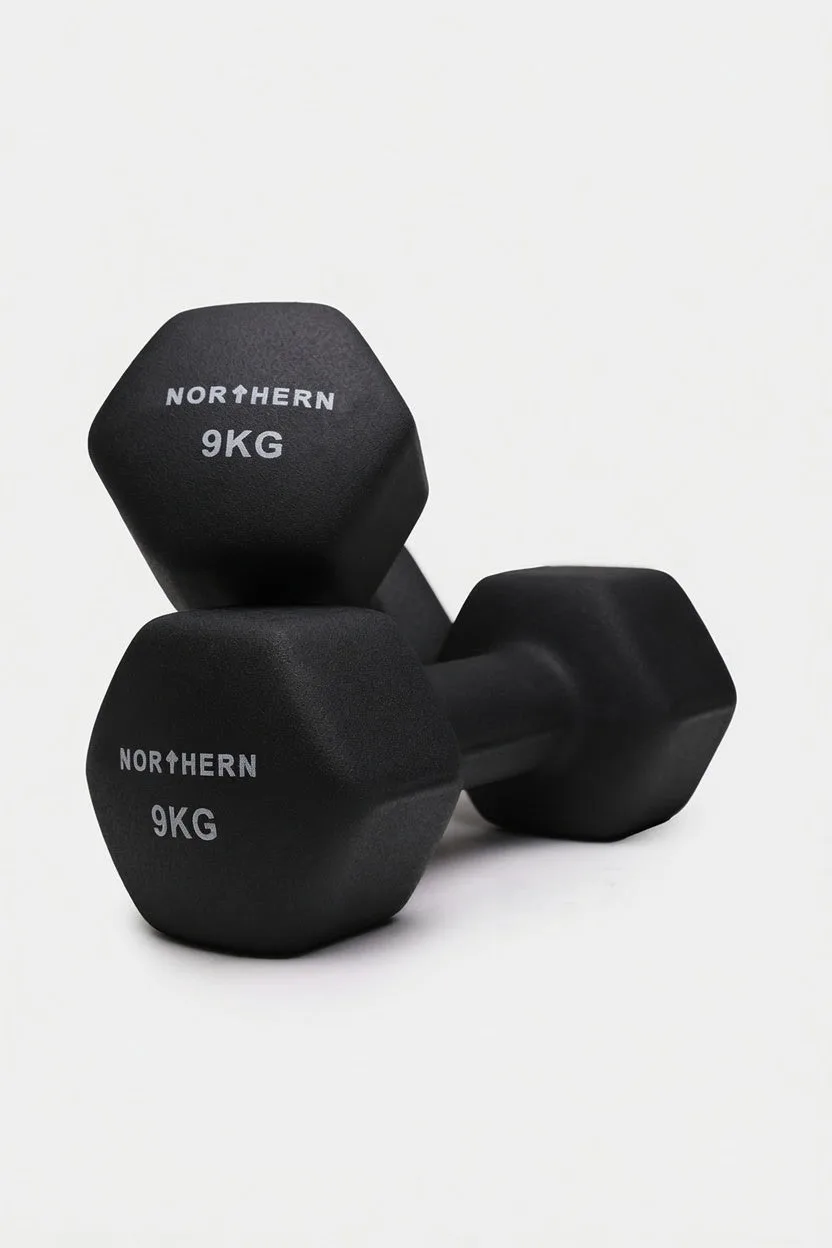
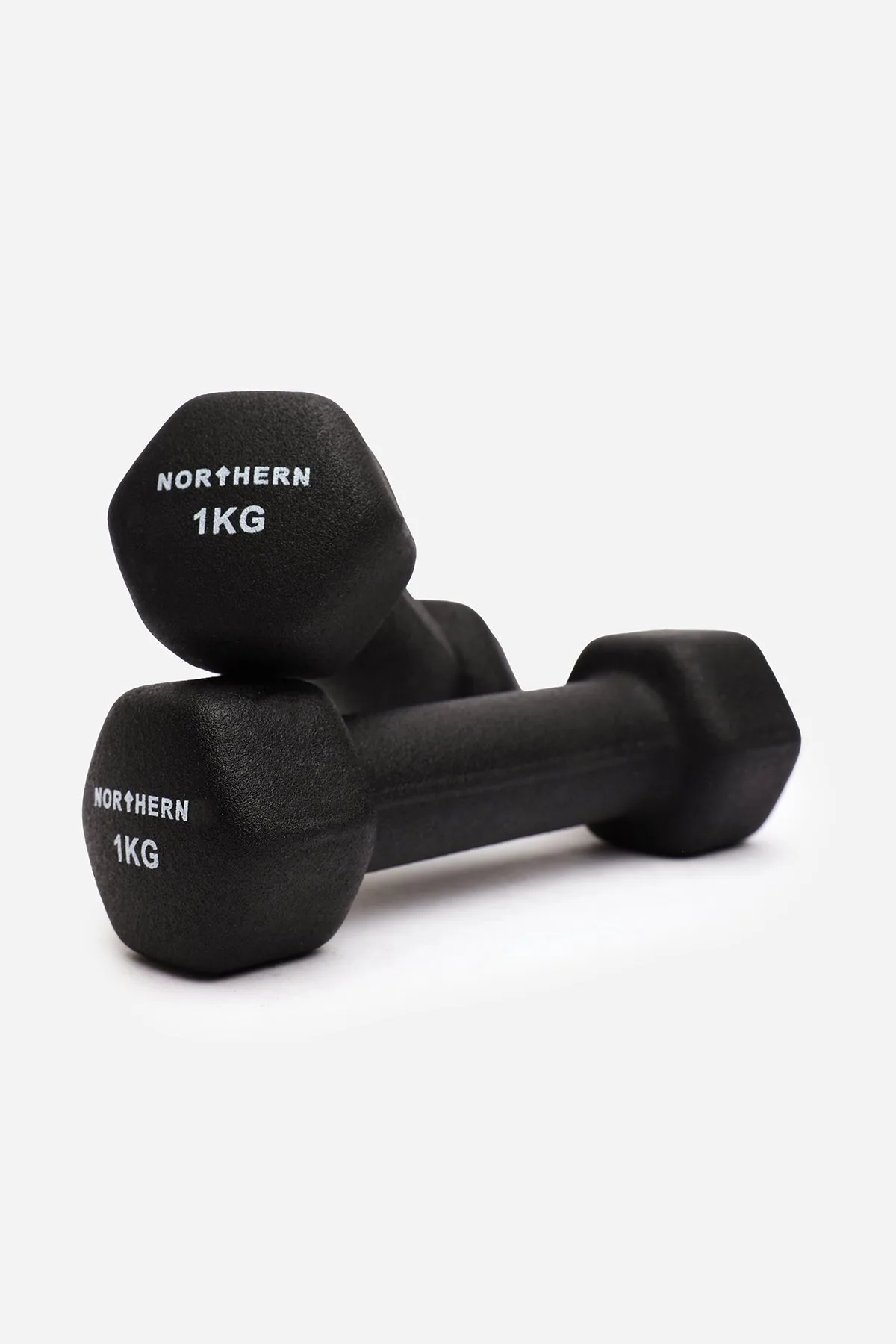
The hexagonal shape matters too. A hex dumbbell stays put when you set it down instead of rolling across the room, which reduces the chance of it knocking into walls, furniture, or other equipment.
When neoprene dumbbells can still mark a floor
The coating protects against ordinary contact, not abuse. Dropping a neoprene dumbbell from waist height concentrates force on a small area and can dent softwood or crack brittle tile, even with the coating. Dragging the dumbbell instead of lifting it can also wear the neoprene and transfer dark marks to light flooring.
Grit is another culprit. Sand, small stones, or debris trapped between the dumbbell and the floor act like sandpaper under load. On rubber gym flooring, the neoprene itself can leave temporary scuffs or a rubbery residue, especially in warm rooms.
The floor-type exception
No dumbbell coating replaces a suitable training surface. Neoprene hex dumbbells are a sensible choice for carpet, rubber mats, and most home gym floors, but on delicate hardwood or unsealed stone you should still use a mat. The coating reduces risk; it does not make the floor indestructible.
Myths vs. reality: neoprene dumbbells and your floor
- Myth: Neoprene dumbbells are completely floor-proof: False. The neoprene coating reduces impact and abrasion, but a heavy drop on tile or softwood can still cause damage. Set dumbbells down under control; don't drop them from height.
- Myth: Neoprene leaves the same marks as bare cast iron: False. Bare cast iron is harder and more abrasive; neoprene is softer and less likely to gouge or scuff. If floor protection is your priority, neoprene is the gentler choice.
- Myth: You don't need a mat with neoprene dumbbells: Not quite. A mat is still wise on delicate hardwood, tile, or any floor where dropped weights are a risk. Use a mat on fragile floors and keep the area free of grit.
Product facts
-
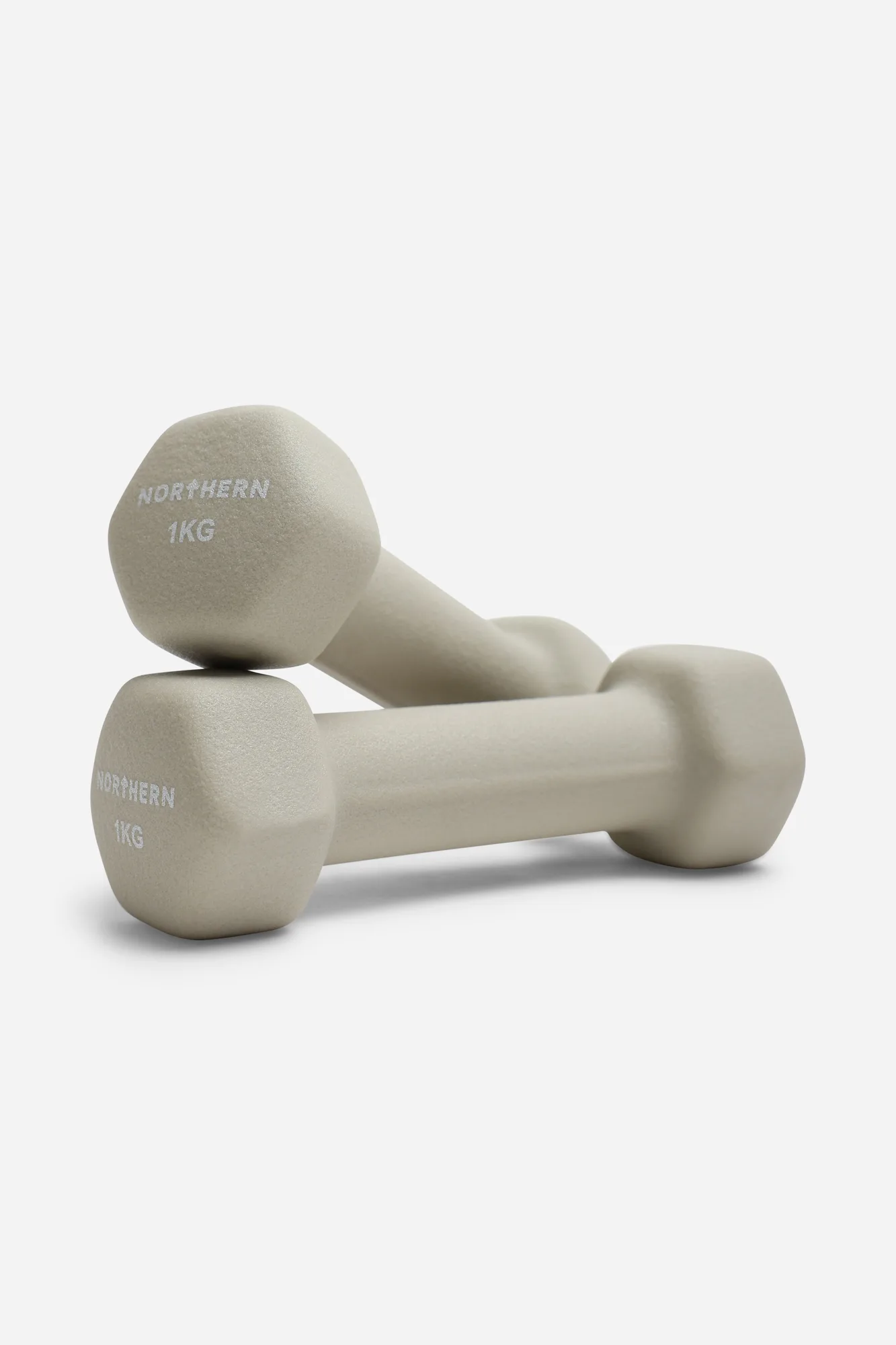
Neoprene Hex Dumbbells 1kg x 2 (2kg) - Soft Lavender: Neoprene coating over a solid cast iron core, with a hexagonal shape that prevents rolling. The soft coating cushions floor contact and the hex shape stops the dumbbell from rolling into walls or furniture.

Neoprene Hex Dumbbells 1kg x 2 (2kg) - Soft Lavender