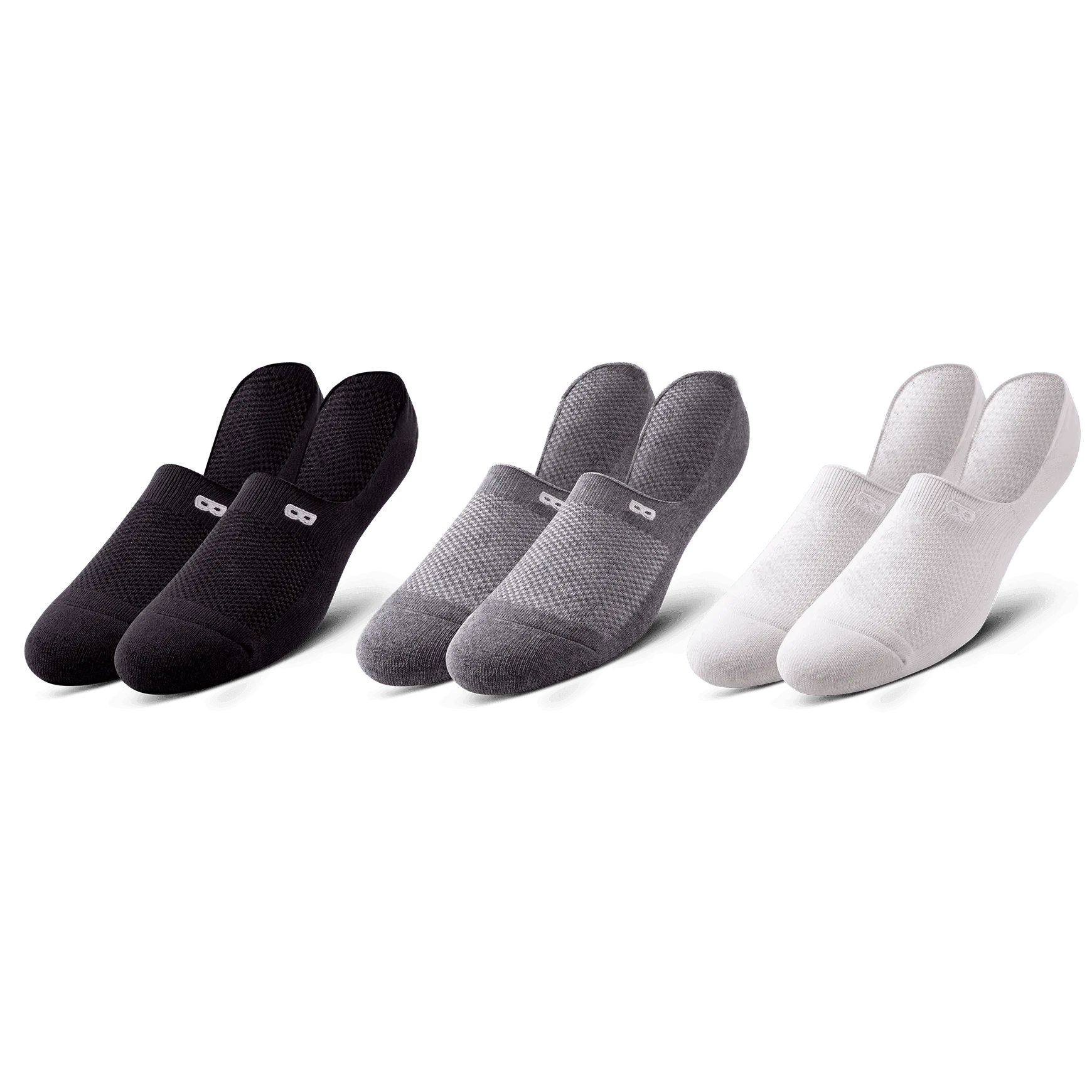
Quick answer
Yes, no show socks can stay hidden all day, but not by magic. They stay invisible when the sock's cut sits below the shoe's collar, the size matches your foot, and the shoe opening isn't deeper than the sock was designed for. If any one of those three is off, the sock will peek, slip, or bunch. Choose the right pair and treat fit as the deciding factor, not the label.
No show socks have a reputation problem. Some people swear they never stay hidden, while others wear them every day without a second thought. The difference usually isn't luck, and it isn't the price tag. It's whether the sock, your foot, and your shoe actually agree on where the sock should sit.
Below are the claims we hear most often about no show socks, each with a straight verdict and the facts behind it. No lab tests, no invented statistics, just the design details that decide whether a sock disappears into your sneakers or rides up into view.
Myth: Any low-cut sock works as a no show sock
Verdict: false. A low-cut sock and a no show sock are not the same thing, even though they look similar folded in a drawer. The difference is where the sock's collar sits relative to the shoe. A low-cut sock is designed to sit at or just below the ankle, which means it can still show above the collar of a low-profile sneaker.
A true no show sock is cut to sit below the shoe's opening, so the fabric stays inside the shoe rather than above it. That's why the same sock can look invisible in one pair of shoes and obvious in another. Before blaming the sock, check the shoe's collar height. The recent guide on crew versus no show socks covers this distinction in more detail if you want the full breakdown.
- Compare the sock's collar height to the shoe's opening before you decide it doesn't work.
- If a sock shows in one shoe but not another, the shoe is the variable, not the sock.
Myth: If a no show sock slips, the sock is defective
Verdict: usually false. Slipping is most often a fit problem, not a manufacturing defect. A sock that's too large has extra fabric that has nowhere to go, so it bunches and works its way up. A sock that's too small gets stretched thin and loses the snug hold that keeps it in place.
The fix is boring but effective: match the sock size to your foot size, not to your shoe size, and check the fit while wearing the shoes you plan to pair them with. If you've already tried that and the sock still slides, the issue may be the shoe's lining or how you put the sock on. Our article on keeping no show socks from slipping off your heel walks through the adjustment steps.
- Size the sock to your foot, then test the fit inside the actual shoe.
- Pull the sock snug over the heel before stepping in, rather than letting it sit loose.
Myth: No show socks are only for warm weather
Verdict: false. The cut of a sock and the fabric of a sock are two separate decisions. A no show cut simply keeps the sock out of sight; it says nothing about warmth. You can find no show socks in lighter, breathable constructions for summer and in cushioned versions for cooler days, depending on what the brand offers.
What matters is the fabric and cushioning, not the height. If you want a no show sock for year-round wear, look at the material and the cushioning level rather than assuming the cut limits the season. That said, a very thin no show sock won't add much warmth in cold weather, so if insulation is the goal, a crew sock is the more practical choice.
- Judge a no show sock by its fabric and cushioning, not by its height alone.
- For cold-weather insulation, a crew sock is the more reliable pick.
Myth: No show socks never stay put in sneakers
Verdict: false, but it depends on the design. Socks built with 4-way stretch and a snug, no-shift fit are made to stay in place during movement, which is exactly what you want in sneakers. Arch support and a reinforced heel and toe also help the sock hold its shape instead of stretching out and sliding.
That doesn't mean every no show sock will stay put in every sneaker. A sock with a loose, unstructured fit will move around, especially in shoes with a smooth lining. The practical takeaway is to look for stretch and structure in the sock's design, then confirm the fit in your own shoes.
- Look for 4-way stretch and a snug, no-shift fit if staying put is your priority.
- Arch support and reinforced heel and toe help the sock keep its shape over time.
Myth: You need a different sock for every pair of shoes
Verdict: mostly false. You don't need a separate sock for every sneaker, but you do need to accept that one sock won't be invisible in every shoe. A no show sock that disappears in a low-profile sneaker may show in a deeper shoe with a higher collar, and that's a design reality, not a flaw.
A practical approach is to pick one or two no show socks that fit your most-worn sneakers well, then use crew socks for the shoes where a no show cut doesn't make sense. That keeps your drawer simple and avoids the daily frustration of a sock that only works half the time.
- Match your no show socks to your most-worn sneakers, not to every shoe you own.
- Keep a few crew socks on hand for shoes where a no show cut won't stay hidden.
No show sock verdicts at a glance
- Any low-cut sock works as a no show sock: Low-cut and no show are different cuts. A low-cut sock can still show above a low-profile sneaker, while a no show sock is cut to sit below the shoe's opening. Verdict: false. Check the cut, not just the height.
- A slipping no show sock is defective: Slipping usually comes from a size mismatch or a loose fit, not a defect. Size the sock to your foot and test it inside the actual shoe. Verdict: usually false. Fix the fit first.
- No show socks are only for warm weather: The cut controls visibility, not warmth. Fabric and cushioning decide how warm a sock feels, and a thin no show sock won't insulate much in cold weather. Verdict: false. Choose by fabric and cushioning.
- No show socks never stay put in sneakers: Socks with 4-way stretch and a snug, no-shift fit are designed to stay in place, and arch support plus a reinforced heel and toe help them hold their shape. Verdict: false, when the design supports it.
- You need a different sock for every pair of shoes: One no show sock won't be invisible in every shoe, but you can cover most of your rotation with one or two pairs and use crew socks for the rest. Verdict: mostly false. Match socks to your most-worn shoes.
Sock details that support the verdicts
- Ready For Everything Cushion Crew (3-Pack): RFE means Ready for Everything. RFE socks are cooling, breathable, and next-level comfy whether they're climbing rocks or corporate ladders. They're designed with 4-way stretch and a snug, no-shift fit for distraction-free wear, with arch support and reinforced heel and toe. This is the design language that keeps a sock from sliding: 4-way stretch plus a snug, no-shift fit. It's the same principle that makes a well-built no show sock stay hidden, even though this particular pair is a crew cut.
- BOWO Cushion Crew - Neutrals (3-Pack): Pair of Thieves BOWO socks are cooling, breathable, and Ready for Everything, whether you're climbing rocks or the corporate ladder. Designed with 4-way stretch and a snug, no-shift fit for distraction-free wear, with arch support and reinforced heel and toe. The neutral color options make these easy to rotate with different shoes, and the same stretch-and-structure build applies whether you're wearing them for work or the weekend.
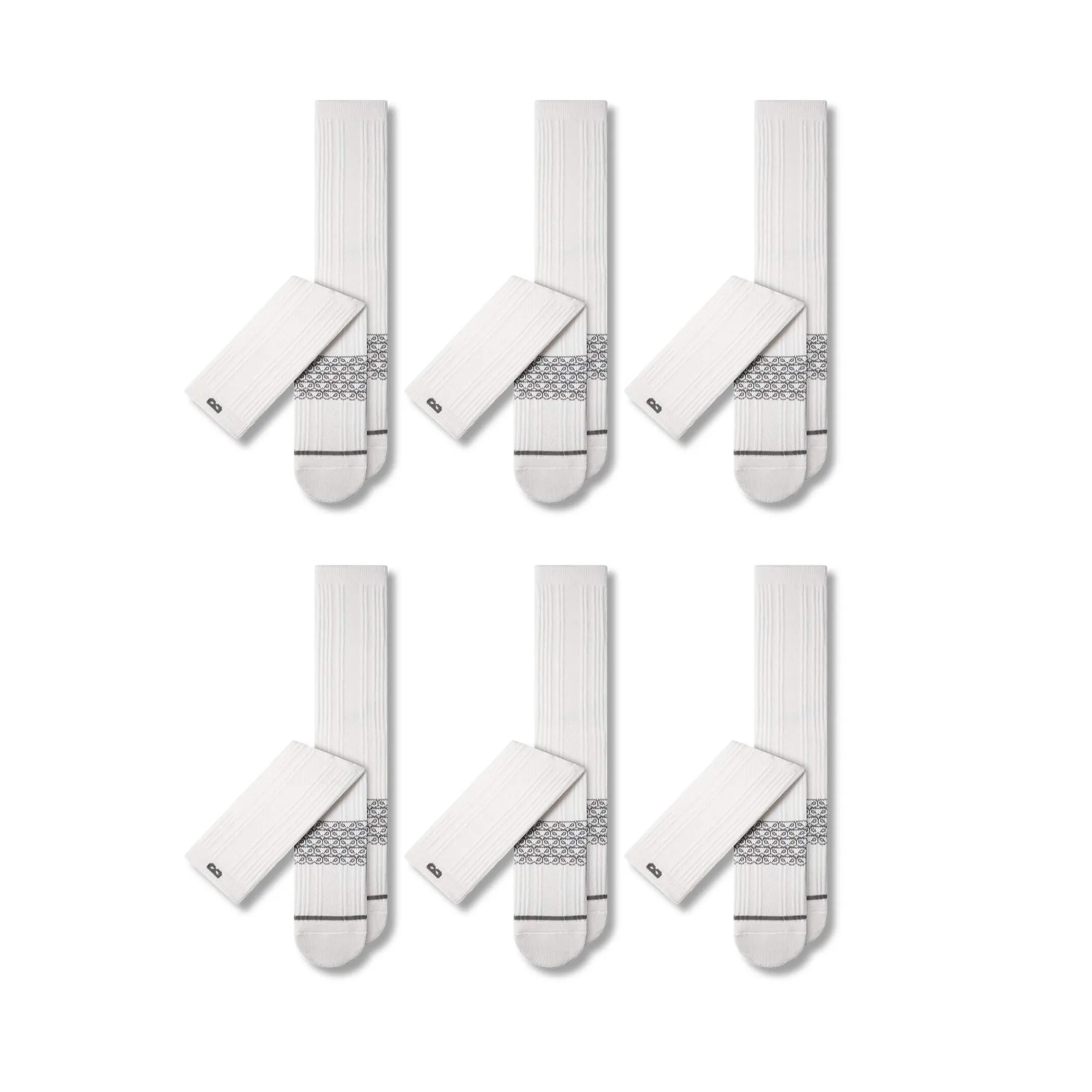
- 4-Way Stretch Cushion Crew (6-Pack): Made to keep up with your every move, these socks offer a snug yet stretchy fit that never slips, slides, or stirs up trouble in your shoes. They're designed with a breathable, ventilated mesh and built-in arch support for added comfort and reinforced heel and toe. The ventilated mesh addresses the breathability concern that comes up with any sock worn in sneakers, and the no-slip fit is the same quality you want in a no show sock.
No show socks stay hidden when the cut, the size, and the shoe all line up. Treat the myths above as a checklist: verify the cut sits below the shoe's opening, size the sock to your foot, and look for stretch and structure in the design. Do that, and the sock disappears the way it's supposed to.