The claims vs. the ingredients
Rice water shampoo bars have become a popular alternative to liquid shampoo, often marketed with promises of stronger, longer, shinier hair. But do they actually deliver? The short answer: it depends on the formula and what you expect. Using Paradise Beauty Company's Rice Water Protein Strengthening Shampoo & Conditioner Bars as an example, let's look at what the product record actually says and where the evidence stops.
The bars are formulated with rice water to help repair damaged hair follicles and prevent split ends, give hair and scalp a nourishing cleanse to encourage overall hair length and density, and boost shine in dull, dry hair. Those are the claims from the product description. What the record does not include is any clinical testing, specific percentages of rice water, or independent studies. So while rice water has a traditional reputation for hair strength, the bar's actual performance will depend on how you use it and your hair type.
What the product record confirms
-
Rice Water Protein Strengthening Shampoo & Conditioner Bars – Paradise Beauty Company: Formulated with rice water to help repair damaged hair follicles & prevent split ends This is the core strength claim. It's a cosmetic benefit, not a medical treatment, so expect improvement in the look and feel of split ends rather than permanent repair.
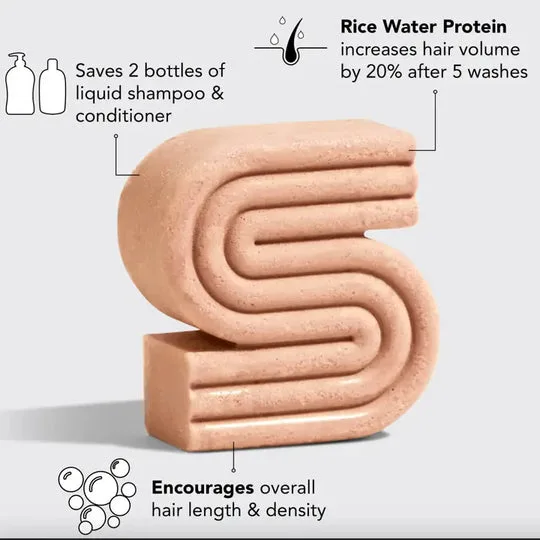
Rice Water Protein Strengthening Shampoo & Conditioner Bars – Paradise Beauty Company
-
Rice Water Protein Strengthening Shampoo & Conditioner Bars – Paradise Beauty Company: Gives your hair & scalp a nourishing cleanse to encourage overall hair length & density A clean, healthy scalp is a reasonable foundation for healthy hair growth, but no shampoo can guarantee increased length or density on its own.
-
Rice Water Protein Strengthening Shampoo & Conditioner Bars – Paradise Beauty Company: Boosts shine in dull, dry hair Shine is a cosmetic effect that many users notice quickly, making it one of the more realistic short-term benefits.
-
Rice Water Protein Strengthening Shampoo & Conditioner Bars – Paradise Beauty Company: Fragrance: White Tea & Mandarin Scent is a personal preference; if you're sensitive to fragrances, this is a consideration.
Shampoo bar vs. liquid shampoo: what's different
The main difference is format: a solid bar is concentrated and typically lasts longer than a bottle of liquid shampoo, and it usually contains fewer water-diluted ingredients. That means you control the dose by how much you rub the bar on your hair or scalp. Some people find bars more drying if they over-apply, while others find them gentler because they can target the scalp and rinse thoroughly.
Liquid shampoos often include more water and surfactants that create instant lather, which can feel more familiar. Bars may take a few washes to get used to, especially if you're used to a rich foam. Neither format is inherently better; it comes down to your hair's needs and your routine.
How to use the bars for best results
- Wet your hair thoroughly: The bar needs water to release its ingredients. Make sure your hair is soaked before you apply.
- Rub the bar directly on your scalp or between your hands: Focus on the scalp and roots, then massage in. If you have long hair, you can also create a lather in your hands and work it through.
- Rinse well: Residue can weigh hair down, so rinse until the water runs clear.
- Follow with the conditioner bar: The matching conditioner bar helps detangle and adds moisture, especially if you have dry or damaged hair.
- Store the bar dry: Keep it on a draining dish between uses so it doesn't dissolve prematurely.
What about the conditioner bar for dry hair?
The Rice Water Protein Conditioner Bar is part of the same set. While the record doesn't list specific conditioning agents, the pairing suggests it's designed to complement the shampoo. If you have dry hair, a conditioner bar can help smooth the cuticle and reduce tangles, but you may need to experiment with how much you apply—start with a little and add more if needed. The fragrance is the same White Tea & Mandarin, so the scent layers nicely.
The bottom line
Rice water shampoo bars can be a good choice if you're looking for a concentrated, travel-friendly option with a traditional ingredient. But don't expect miracles: the claims are cosmetic, and results vary. If you have severe hair loss or scalp issues, see a dermatologist—no shampoo bar can replace medical advice. For everyone else, the Rice Water Protein bars are worth a try if the format and fragrance appeal to you, and you're willing to give them a few washes to see how your hair responds.