The claim, and what the product actually says
The name invites a simple assumption: Chewtensils are teethers. The supplied product information doesn't support that as the main purpose. Chewtensils are described as Stage 1 baby-led weaning utensils, meant to introduce babies to holding a utensil and feeding themselves. They are for ages 6 months and up.
That doesn't make the teething angle irrelevant. The same information says Chewtensils can be chewed on by younger babies before they're ready to transition to silverware, and the back of the spoon head has sensory bumps to stimulate gums. So the honest answer is narrower than the marketing name suggests: they are feeding tools with a chewable, gum-friendly design, not a product positioned as a dedicated teether.
What the Chewtensils record confirms
-
Silicone Chewtensils®: Lavender: Intended for Stage 1 of baby-led weaning: introducing babies to holding a utensil and feeding themselves. This is the stated purpose. Teething relief is secondary to early self-feeding practice.
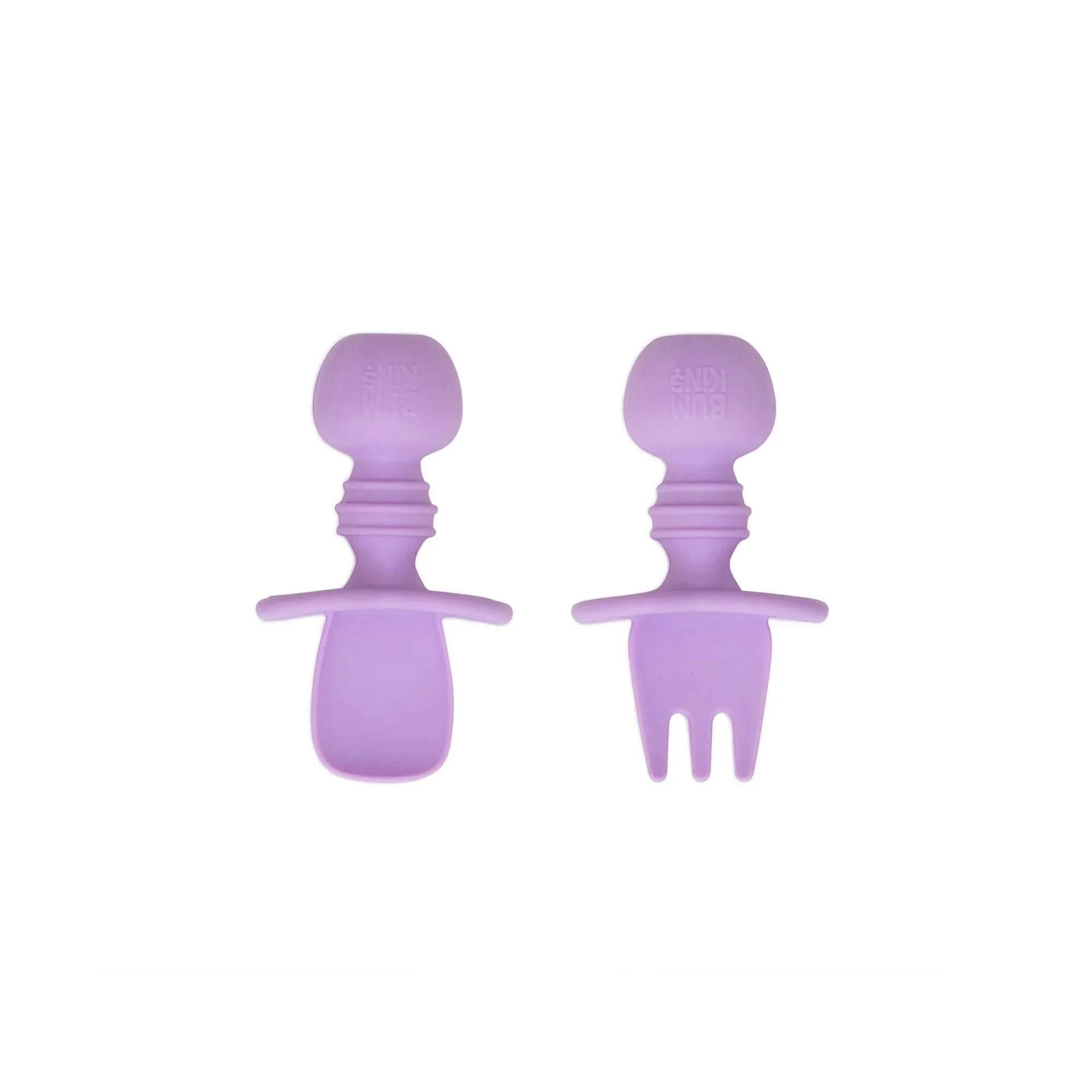
Silicone Chewtensils®: Lavender
-
Silicone Chewtensils®: Lavender: For ages 6 months and up. The age guidance anchors when the product is intended to be used.
-
Silicone Chewtensils®: Lavender: The back of the spoon head has sensory bumps to stimulate gums. This is the specific design detail behind any gum-soothing expectation.
Three common claims, checked against the evidence
- Claim: Chewtensils are a teething remedy.: Not supported as the primary purpose. The record says they can be chewed on by younger babies before they're ready for silverware, and the spoon head has sensory bumps for gums. That describes a chewable feeding tool, not a product labeled or tested as a teether.
- Claim: They help babies learn to self-feed.: Supported for the Stage 1 stage. They are intended for babies before they have a firm grasp on self-feeding, best for dipping and scooping, not yet spearing solid foods.
- Claim: The bendable heads make them safer.: The record describes bendable heads for safety, along with soft, textured silicone that's easy to grip and gentle on tender gums. That is a design description, not a guarantee against every injury. Supervision is still required: do not leave a child unattended with Chewtensils.
Where the teething expectation comes from
The sensory bumps and the soft silicone explain why parents reach for Chewtensils during the teething months. The record also notes they can be chewed on by younger babies before they're ready to transition to silverware. If your baby is mouthing everything and not yet scooping, that chewable quality is the part you'll notice first.
The limit is that the supplied information doesn't describe Chewtensils as a substitute for a dedicated teether, and it doesn't make claims about relieving teething pain. Treat the chew factor as a bonus of a feeding tool, not a reason to expect a clinical outcome.
Chewtensils Lavender: materials and care limits
- Silicone Chewtensils®: Lavender: Made from 100% food-safe, premium LFGB grade silicone. The material is the basis for the soft, gum-friendly feel and the chewable use.
- Silicone Chewtensils®: Lavender: Dishwasher-safe on the top rack. Cleaning is straightforward, which matters for a utensil that goes in the mouth repeatedly.
- Silicone Chewtensils®: Lavender: Discard if damaged or torn. A chewed silicone utensil needs inspection. This is the one care instruction the record states explicitly.
The safety claims that are actually verified
The record states that Chewtensils are safety tested using certified third-party labs to comply with US Federal CPSC safety regulations for Lead, Phthalates, BPA, BPS, and Cadmium. That is a compliance statement about those substances, not a broader certification of teething benefits or injury prevention.
The record also says the product is designed in Arizona and responsibly made in China. It lists a single Standard variant, so there's no size or firmness choice to weigh within this product.
How to use them if teething is your main concern
Offer Chewtensils during supervised mealtime or mouthing play, not as a leave-behind item. The record's instruction is clear: do not leave a child unattended with Chewtensils. For the feeding side, the intended use is dipping into puréed foods early in baby-led weaning, and scooping rather than spearing.
If your baby is younger than 6 months, the age guidance doesn't cover that stage, so this isn't the product to plan around. If your baby already has a firm grasp on self-feeding and is ready to spear soft foods, the record points you toward a later-stage utensil instead.
What the evidence does not tell you
- Teething pain relief: The supplied information makes no claim about reducing teething pain or duration. The sensory bumps are described as stimulating gums, not as a treatment.
- Cleaning beyond the dishwasher: Top-rack dishwasher-safe is stated. The supplied record does not include hand-washing, sterilizing, or boiling instructions, so don't assume a method that isn't listed.
- Exact dimensions in everyday terms: The record gives approximate measurements, but they aren't a substitute for judging whether the utensil suits your baby's grip. Use the stated age range and the Stage 1 purpose as the practical guide.
The verdict for parents weighing the purchase
Chewtensils are a reasonable buy if you want a soft, grippy first utensil for a baby around 6 months who is starting to dip and scoop purées, and you like that the same tool can be chewed on between bites. The Lavender color is the only difference in the supplied variant, so the decision is about the Stage 1 design, not the shade.
They are a weaker fit if you specifically need a dedicated teether, or if your baby is already past the dipping-and-scooping stage. In those cases, the teething claim in the name is doing more work than the product record supports.