Quick answer
No, silicone teethers do not need to be refrigerated. Chilling is optional and only for extra soothing. If you do chill a RaZberry teether, the silicone will get cold but not hard, so it stays safe and flexible. Never freeze a teether solid or leave it in the freezer for hours, and always check it before giving it to your baby.
Why cold feels good (and what it does not do)
Cold can numb sore gums temporarily, which is why a chilled teether often feels good during a flare-up. That is comfort, not treatment. A chilled teether does not speed up teething or make teeth come in faster, and it does not replace your normal teething pain relief methods. Think of it as one tool in the rotation, not the main event.
The freezing myth: cold is fine, hard is not
The most common myth is that you should freeze silicone teethers solid for maximum relief. That is not necessary and can make the teether uncomfortably hard. The RaZberry teether is designed to be frozen for extra soothing, and its silicone will get cold but not hard. That is the key difference: cold and flexible, not frozen and rigid. If a teether comes out rock-hard, let it sit at room temperature for a few minutes before offering it.
How to chill a RaZberry teether safely
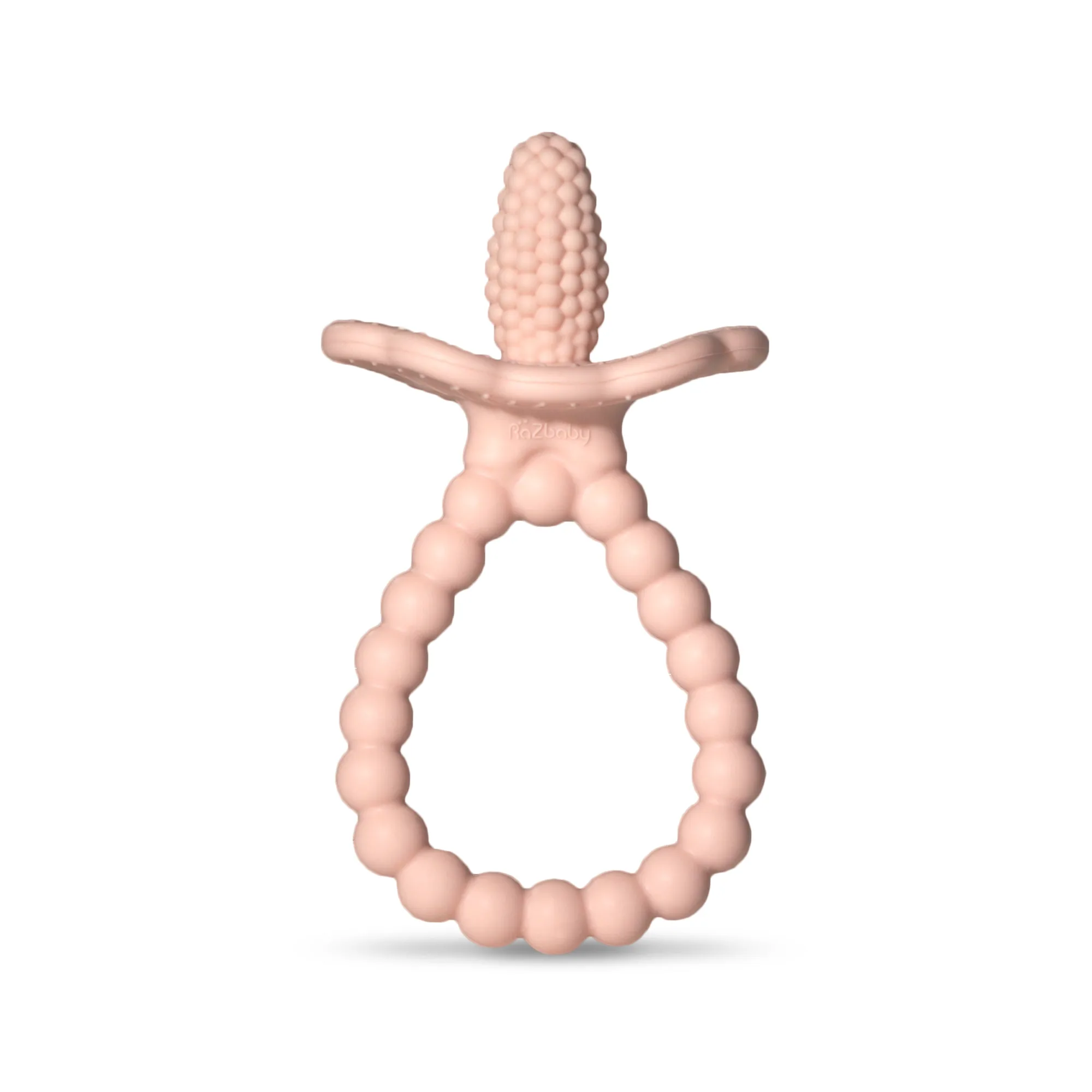
If you want to chill a RaZberry teether, put it in the refrigerator rather than the freezer for a gentle cold. If you do freeze it, keep the session short and check the texture before handing it over. The loop-shaped handle is easy for little hands to grab, and the pacifier shape allows hands-free use, so a chilled teether can stay in place while your baby chews. Wash it with warm soapy water and rinse well before chilling, and never chill a teether that has been sitting out dirty.
When cold is not the answer
Some babies prefer a room-temperature teether, and that is completely fine. If your baby pulls away from a cold teether, try offering it at room temperature instead. You can also rotate between a chilled teether and other teething pain relief methods, such as gentle gum massage with a clean finger. Pay attention to what your baby actually reaches for; that is more useful than any rule about refrigeration.
Cold relief verdicts
- You must refrigerate silicone teethers: Refrigeration is optional, not required. A silicone teether works at room temperature, and chilling is only for extra soothing when your baby seems to want it. Verdict: Myth. Chill only if it helps your baby.
- Freezing makes teething relief stronger: Freezing does not make a silicone teether more effective, and a solid-frozen teether can feel too hard. The RaZberry teether can be frozen for extra soothing, but its silicone will get cold, not hard. Verdict: Partly myth. Cold is fine; hard is not.
- A chilled teether is always safe: Safety depends on how you chill and handle it. Keep freezing sessions short, check the texture before giving it to your baby, and wash the teether before it goes back in the fridge or freezer. Verdict: Only with basic precautions.
- Cold is the only way to soothe sore gums: Cold is one option among several teething pain relief methods. Some babies prefer a room-temperature teether, and gentle gum massage with a clean finger can also help. Verdict: Myth. Follow your baby's preference.
RaZberry teethers at a glance
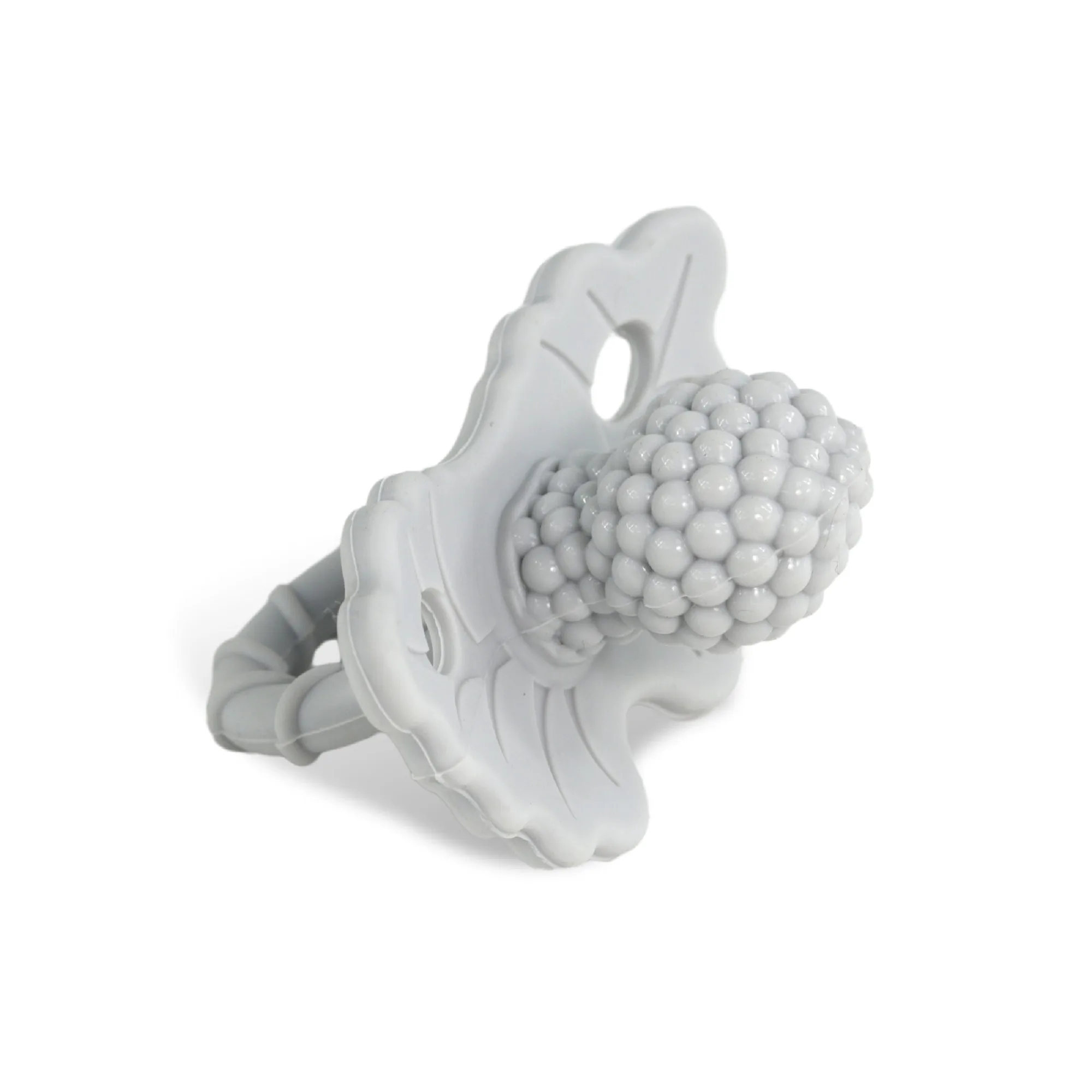
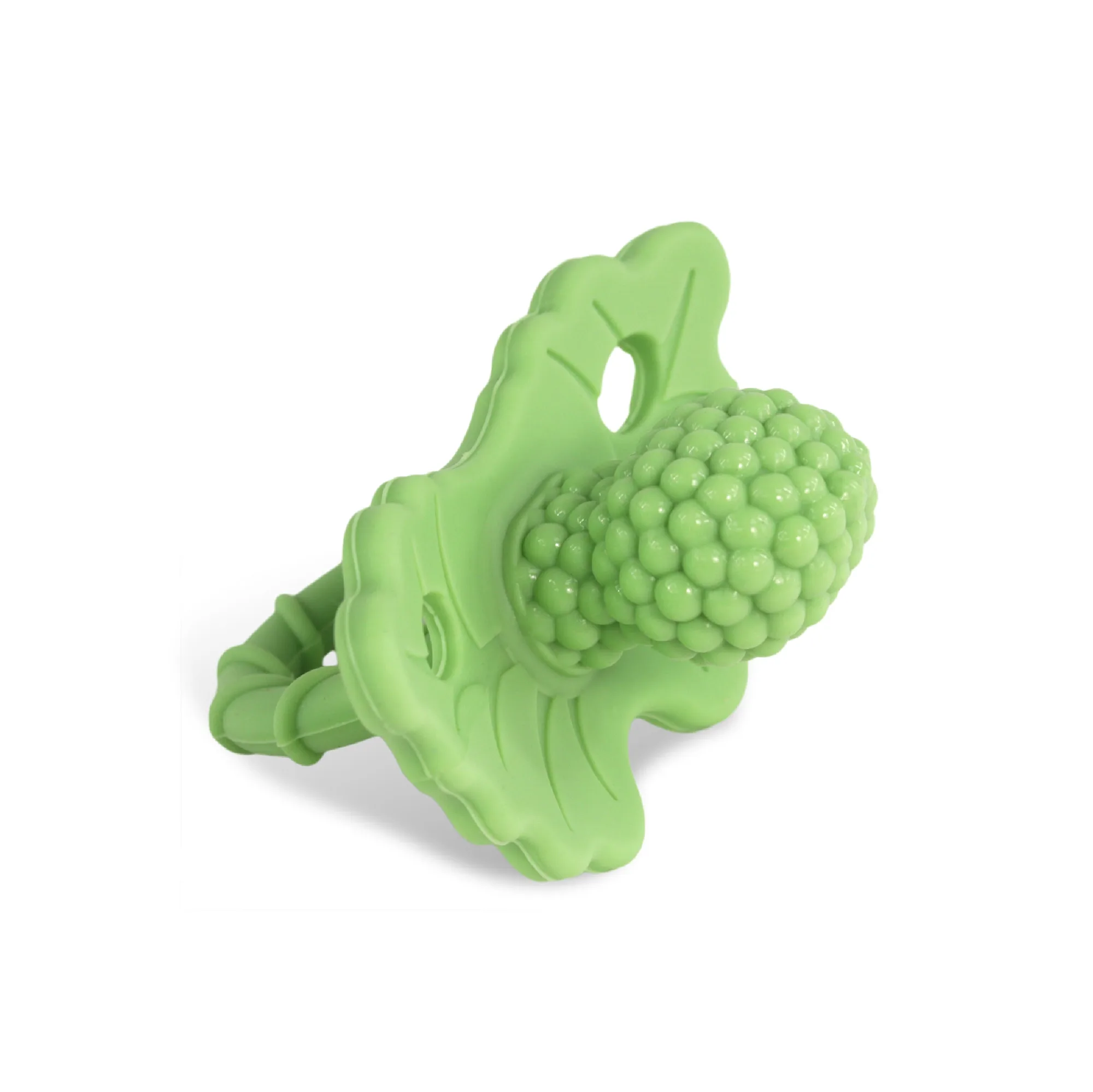
- RaZberry Teether - Cookies & Cream: The RaZberry teether is a soft silicone teether constructed of one single piece, whose multiple textures are specially designed to soothe your baby's sore gums. One-piece construction means no small parts to detach, and the multiple textures give your baby different surfaces to chew on as their preferences change.
- RaZberry Teether - Mint: Its loop-shaped handle is perfect for little ones to grab onto, while its pacifier shape allows for it to also be used hands-free. A handle that is easy to hold helps babies self-soothe, and hands-free use means the teether can stay in place while you manage other tasks.
- RaZberry Teether Plus - Cotton Candy: The RaZberry Teether Plus is made of non-toxic food grade silicone and is free of BPA, PVC, phthalates, lead and cadmium. Knowing exactly what is not in the silicone helps you feel confident about what goes in your baby's mouth, especially during repeated daily use.