Quick answer
Suction plates can reduce mealtime mess by keeping dishes in place, but they do not stop a determined baby from throwing food or plates. They work best when paired with the right surface, a properly pressed seal, and realistic expectations. Use them as one tool in your feeding routine, not a magic solution.
What suction plates actually do
Suction plates create a temporary bond with smooth, non-porous surfaces like highchair trays or countertops. This bond resists tipping and sliding, which can help keep food contained and reduce the chance of a bowl ending up on the floor. However, the suction is not permanent. A strong tug from a curious toddler or a sudden push can break the seal. The plate's effectiveness depends on the surface, the seal's condition, and your child's determination.
Myth: Suction plates are baby-proof
No suction plate is completely baby-proof. While they can make it harder for babies to lift dishes, many babies quickly learn to pry up an edge or slide the plate to the edge of the tray. The goal is not to prevent all movement but to make mealtime less chaotic. If your baby is determined to throw, suction may only delay the action. Combine suction with gentle guidance and consistent mealtime routines to teach appropriate behavior over time.
Myth: Suction works on any surface
Suction relies on a smooth, non-porous surface. Textured trays, wooden tables, or surfaces with even slight bumps can prevent a strong seal. Many highchair trays are smooth plastic, which works well, but always check for a clean, dry surface before pressing down the plate. If the tray has a mat or cover, suction may not hold. In those cases, consider placing the plate directly on the tray or using a different dish.
Tips to make suction plates work better
Start with a clean, dry surface. Even a thin film of oil or water can weaken the seal. Press the plate down firmly in the center and smooth the edges to remove air pockets. If the plate has a tab, lift it only when you are ready to remove the plate. For babies who are learning to self-feed, offer a plate that is appropriately sized for their tray and portion. And remember: suction is not a substitute for supervision. Always stay close during mealtimes.
When suction might not be the answer
If your baby is consistently throwing plates despite suction, it may be a sign they are done eating, seeking attention, or exploring cause and effect. In those moments, suction can become a battleground. Instead of fighting the suction, respond calmly and redirect. Sometimes, removing the plate and offering food piece by piece can be more effective. Suction plates are a tool, not a cure for throwing.
Myth vs. reality: suction plate verdicts
- Suction plates are baby-proof: Suction can slow down a baby, but it cannot prevent a determined child from lifting or throwing a plate. The seal can break with a strong tug or if the plate is pried at the edge. Verdict: Myth. Use suction as a helper, not a guarantee.
- Suction works on any surface: Suction requires a smooth, non-porous, clean, and dry surface. Textured trays or surfaces with mats may not allow a strong seal. Verdict: Myth. Check your surface first.
- Suction plates can reduce mealtime mess: By keeping dishes in place, suction plates can prevent accidental tipping and sliding, which may reduce spills and food thrown from a tipped bowl. Verdict: True, with realistic expectations.
- Suction plates stop babies from throwing food: Throwing is often a developmental phase or a sign of being done. Suction does not address the root cause and may not stop throwing behavior. Verdict: Myth. Address the behavior, not just the plate.
Products that support self-feeding
- Mealtime Plates: ezpz Basics Mealtime Plate (2-pack) comes with two identical square plates designed for kids 5+. If your child has moved beyond the throwing stage, these plates offer a simple, stylish option for independent eaters.
- Tiny Plate: The Tiny Plate provides an open plate design to promote self-feeding and utensil use, supporting both purees and baby-led weaning. An open plate can make it easier for babies to see and reach food, which may reduce frustration that leads to plate throwing.
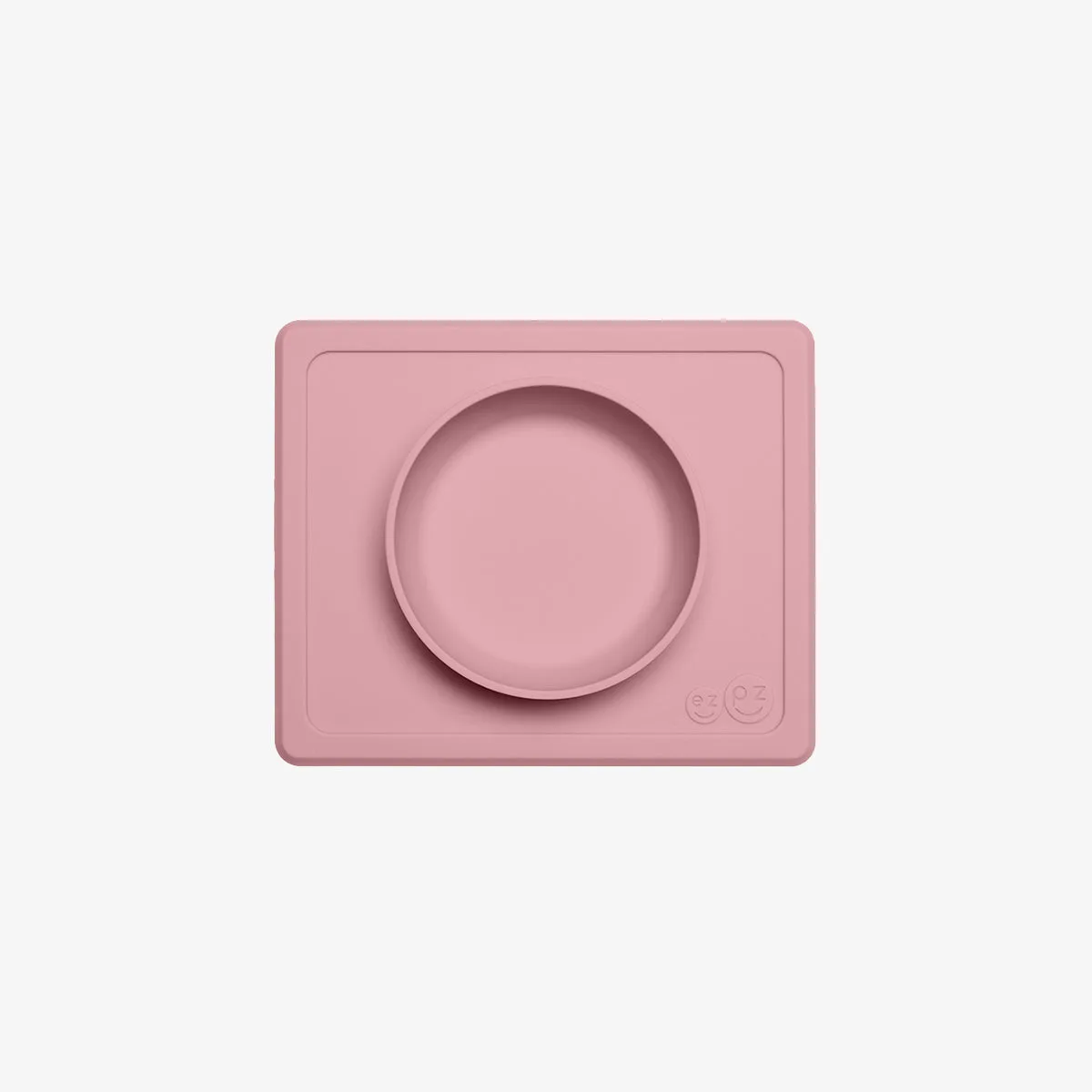
- Tiny Bowl: The Tiny Bowl is designed to fit on the tiniest of highchair trays, including the Stokke Tripp Trapp, and is perfect for first foods like purees, yogurt, and baby cereal. A bowl that fits properly on the tray is less likely to be knocked over, and its suction base can help keep it in place during early feeding.