The claim worth testing: more shades means a better blush
The pitch for any multi-shade palette is simple: three pans must be better than one. That isn't a rule, and it's the claim worth testing before you spend. A single blush you actually reach for beats a trio you open twice, and a trio only earns its place when the extra pans do a job your one shade can't.
The honest test comes down to three questions: will you use more than one pan, do the textures let you change the finish rather than just the color, and does the format fit how you apply makeup. Everything below is built around those questions, using the Cheek Clapper 3D Blush Trio as the working example because its three textures are the whole reason a trio can make sense.
What a trio actually gives you that one blush can't
A single blush gives you one color and one texture. A monochromatic trio gives you the same color family in several textures, so the variable you're changing is finish and intensity, not shade matching. The Cheek Clapper 3D Blush Trio is built around exactly that idea: each pan can be worn alone or layered, and the brand describes the result as a blurring 3D blush effect.
That's the real multi-shade blush palette benefit, and it's narrower than the marketing implies. You're not buying three unrelated blushes. You're buying one tone you can dial from soft to high impact, which is useful if you like changing your blush look without buying a second product. It's not useful if you want three genuinely different colors for three different outfits.
What's inside the Cheek Clapper trio
-
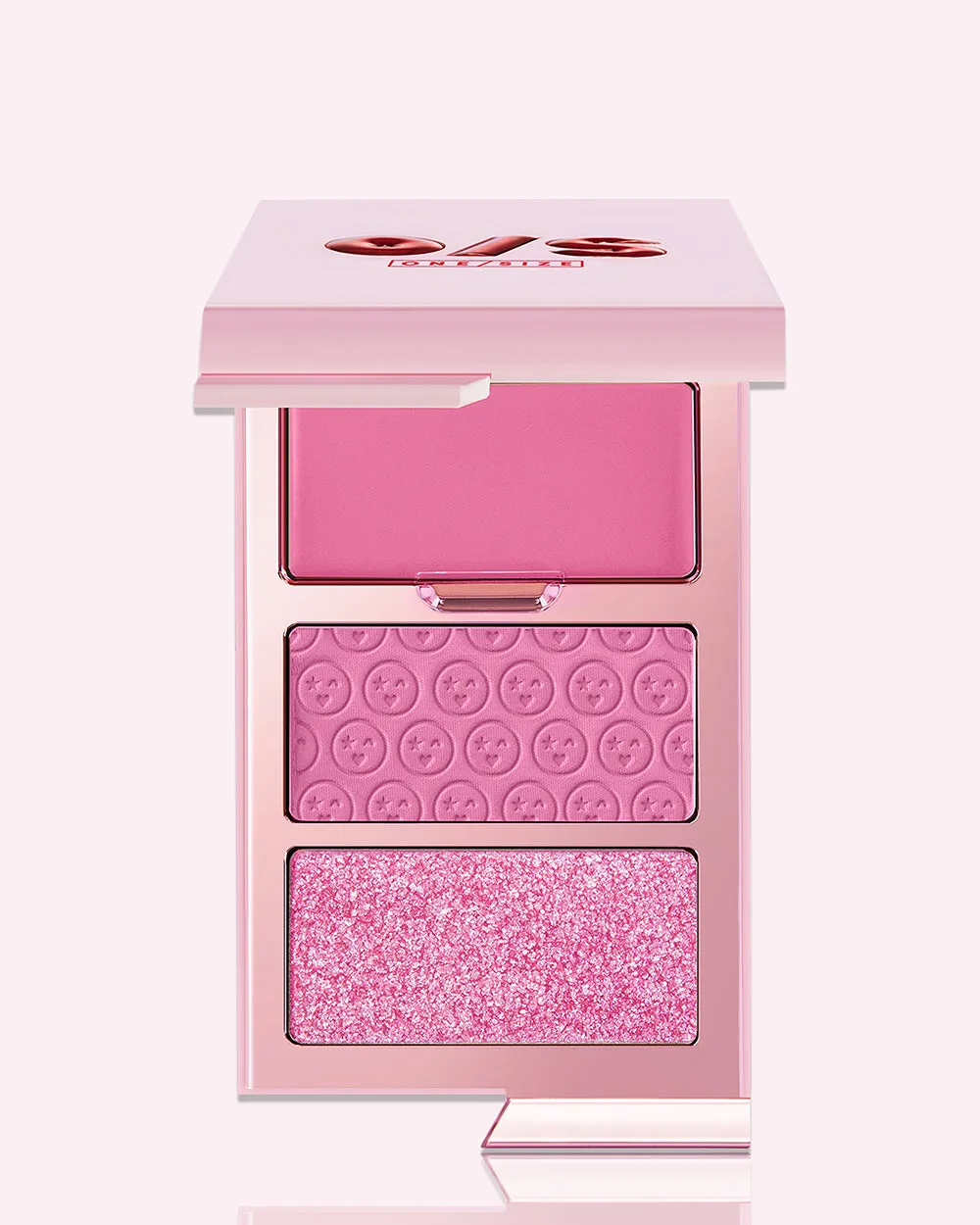
Cheek Clapper 3D Blush Trio: A monochromatic blush trio in versatile textures, designed for a blurring 3D blush effect; each shade can be worn alone or layered. This is the core of the trio argument: the value is in layering one tone, not in collecting three separate blushes.
Cheek Clapper 3D Blush Trio
-
Cheek Clapper 3D Blush Trio: The pans are named by texture: a cream, a cream matte, and a cream hyper sheen within each colorway. Finish, not color, is the real choice a trio offers, so check that you'd actually use all three textures before buying.
-
Cheek Clapper 3D Blush Trio: Dragon fruit extract is listed as helping grip and extend wear. This is the formula claim behind the long-wear pitch; it's a supplied ingredient note, not an independent wear test.
-
Cheek Clapper 3D Blush Trio: Available in six colorways: Attention Seeker, Gworly Pop, Phat Ass, Very That, Freaky Peach, and Rich Betch. Six color families means the trio decision is really a color decision first and a format decision second.
Blush trio vs single blush: match the format to your habit
Neither format is better in the abstract. The right pick depends on whether you change your blush look often and whether you'll use a sheen pan at all.
- Choose a trio if: You like adjusting intensity from day to night, you enjoy a sheen or glazed finish on top of a matte base, and you'd use the cream pan as a base layer rather than ignoring it.
- Choose a single blush if: You've found one shade and finish you trust, you don't want to think about layering, or you know from experience that you never touch the shimmery pan in a palette.
- The honest tradeoff: A trio asks more of you: three pans to learn, and a look that only pays off if you actually layer. A single blush is faster and harder to get wrong, but it can't shift finish without a second product.
How to mix blush shades within one trio
Layering is the skill that decides whether a trio was worth it. The order below follows the texture logic of the Cheek Clapper pans, from grip to glow.
- Start with the cream: Apply the cream pan first as the base. The formula lists dragon fruit extract as helping grip and extend wear, which is the role this layer is meant to play.
- Build with the matte: Layer the cream matte over the base to add depth and a more diffused, high-impact color where you want it.
- Top with the hyper sheen: Place the hyper sheen pan on the high point of the cheek for a lit-from-within finish, or skip it entirely for an all-matte look.
- Wear one pan alone when you're in a hurry: Each pan is designed to work solo, so a single swipe of the matte or sheen is a complete look, not a half-finished one.
Is a blush palette worth it for travel?
This is where the trio argument is strongest. One compact holding three textures replaces a blush, a highlighter, and often a cream-to-powder layering step. If you travel with a small makeup bag, consolidating those into one palette is a real benefit, and it's the clearest case where a trio beats a single blush on practicality rather than preference.
The caveat: the supplied information doesn't include palette dimensions or weight, so you can't judge it as a travel product by size alone. Judge it by whether the three textures replace items you'd otherwise pack.
What the evidence doesn't settle
A few common claims about blush trios aren't confirmed by the supplied product information. Wear time is described only through the brand's dragon fruit extract claim, not an independent test. Skin suitability and patch-test results aren't provided, so if you have reactive skin, treat that as an open question rather than a settled one. And there's no supplied guidance on how much to apply or how often, so start light and build.
That doesn't make the trio a bad buy. It means the decision should rest on what's verifiable: three textures in one tone, six colorways, and a layering format that either fits how you do your makeup or doesn't.