Quick answer
You do not need a display tray to play your handhelds, but you need one if you want a stable, visible, dust-reducing home for small systems like the GAMER V CLASSIC Gray/Purple or Tetris® Go Gamer. A tray turns a loose pile of handhelds into a display you can actually use. Buy one when your collection has outgrown a drawer or shelf edge.
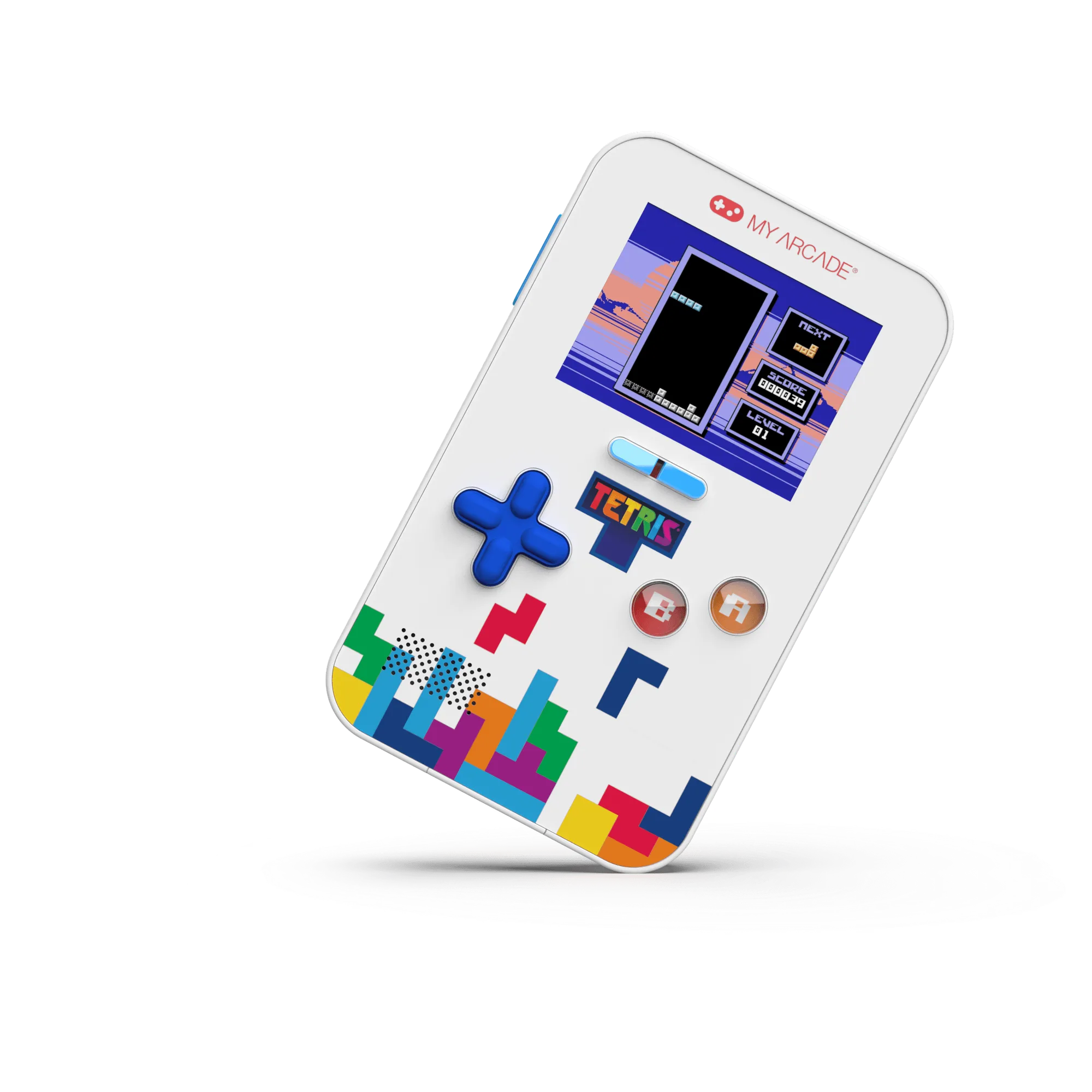
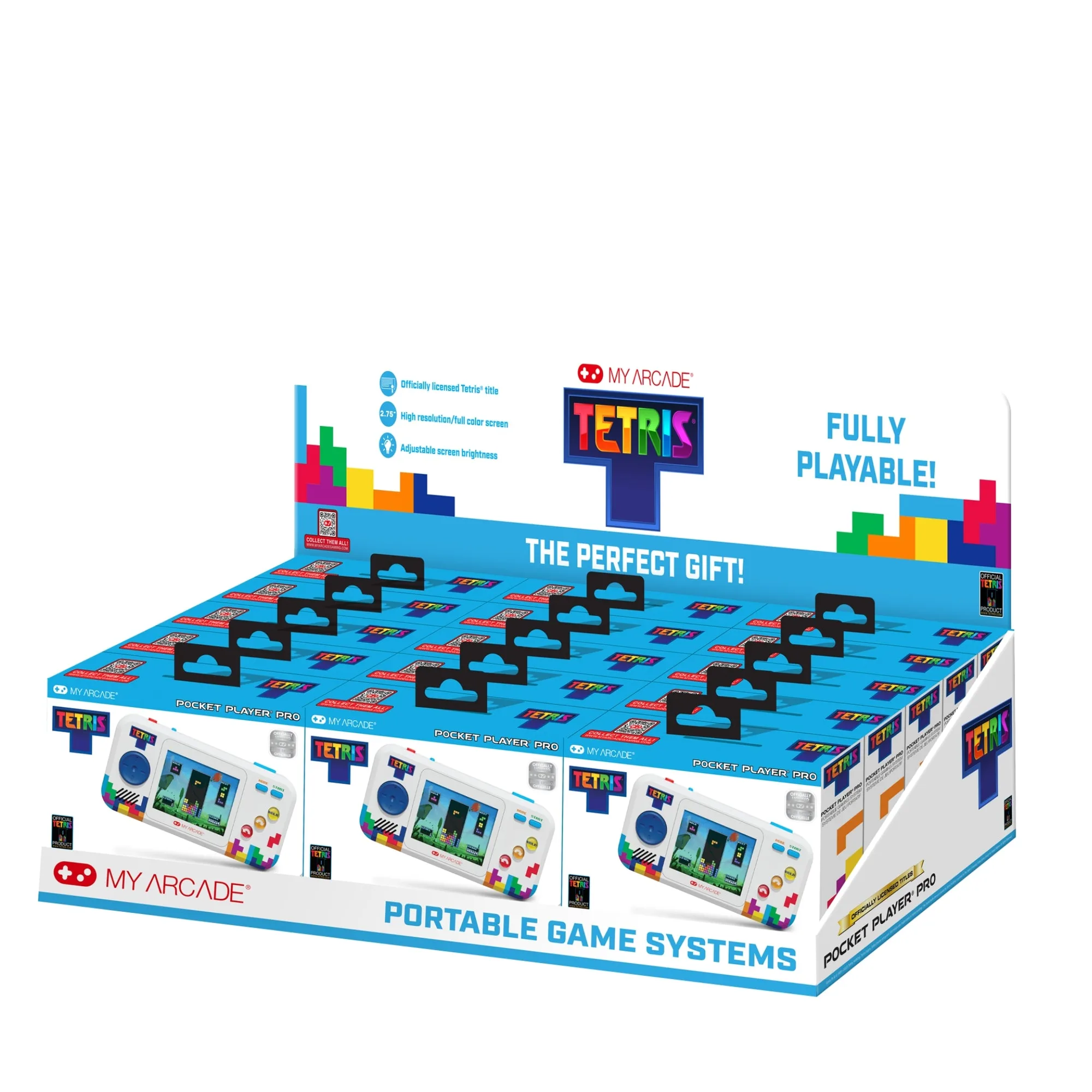
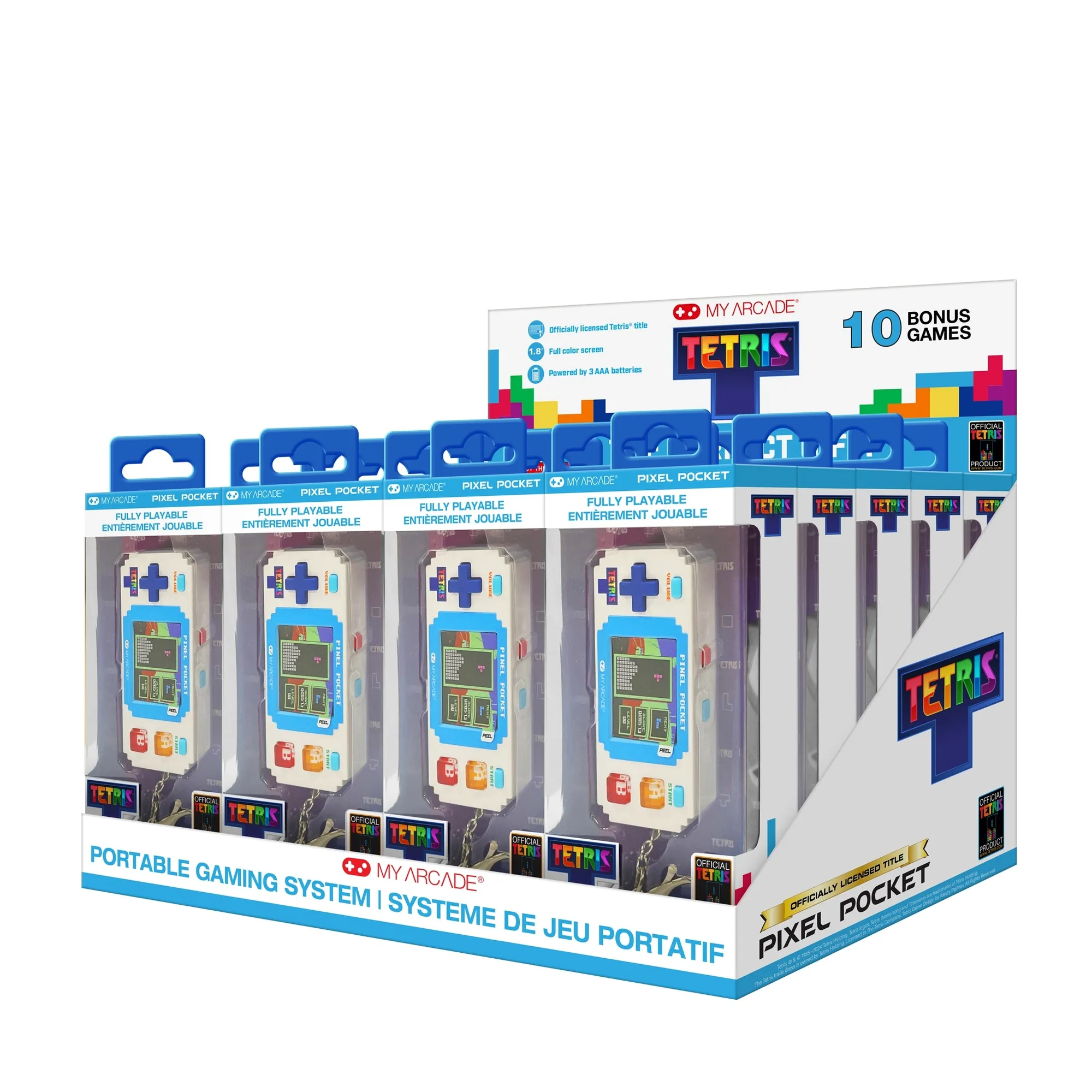
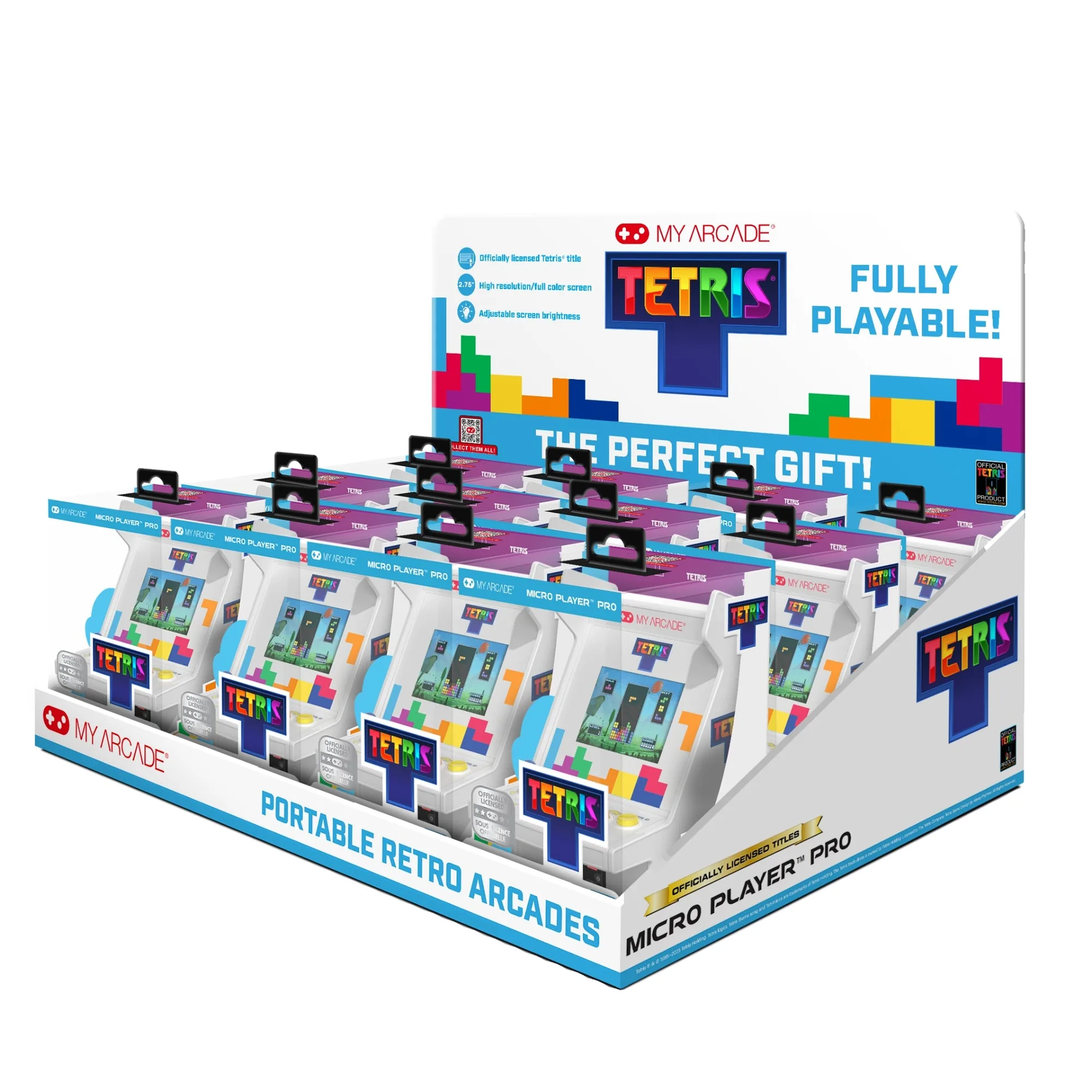
Tetris® Go Gamer
If your handhelds live in a drawer, a shoebox, or a precarious stack on a shelf, a display tray is the simplest upgrade you can make. It does not change how the games play. It changes whether you can see what you own, find it quickly, and keep it out of harm's way.
This FAQ answers the questions collectors ask most before buying a tray: what it actually does, whether your handhelds fit, how to choose one, and when a tray is the wrong purchase. The advice applies whether you own one handheld or a dozen.
What does a display tray actually do?
A display tray gives each handheld a defined spot instead of letting it slide around a shelf or sink to the bottom of a bin. That means less scratching, less dust settling on screens and buttons, and less time hunting for the system you want to play. It also makes a small collection look intentional rather than accidental.
The practical benefit is access. When every handheld has a slot, you can grab the one you want without disturbing the others. That matters more as a collection grows, because stacked handhelds tend to get handled carelessly and stored in ways that stress buttons, screens, and battery covers.
- A tray is a storage and display tool, not a protective case. It reduces dust and sliding, not drops.
- If you only own one handheld and keep it in a case, a tray is optional.
Will my handhelds fit in a display tray?
Fit depends on the tray's slot dimensions and the size of your handhelds, and those specs vary by product. Before buying, compare the tray's stated slot size to your largest handheld, not your smallest. A tray that fits a compact system may not fit a wider one with a larger screen housing.
If a tray's dimensions are not listed, treat that as a decision limitation rather than guessing. Measure your handhelds at their widest point, including any raised buttons or grips, and look for a tray with a little clearance. A snug fit is fine; a forced fit is not.
- Measure width, height, and depth of your biggest handheld before choosing a tray.
- Leave a few millimeters of clearance so you can lift the handheld out without scraping.
How do I choose a display tray for a handheld collection?
Start with capacity. Count your current handhelds and add two or three slots for future finds. A tray that is exactly full today leaves no room for the next purchase, and mismatched add-on trays rarely look good together. Next, check material and finish: a smooth, wipeable surface is easier to dust than a textured one.
Then think about where the tray will live. A shelf tray should have a low profile so it does not block the view behind it. A desk tray can be deeper and angled for easier reading of labels or screens. If you plan to move the collection, look for a tray that stays rigid when lifted rather than flexing and spilling handhelds.
- Buy for the collection you will have in a year, not just the one you have now.
- Match the tray finish to your shelf or desk so the handhelds stay the focus.
Does a display tray protect handhelds from damage?
It helps, but only within limits. A tray stops handhelds from sliding into each other, which is a common cause of scuffed screens and scratched shells. It also keeps them off dusty surfaces and away from the edge of a shelf where a bump could send one to the floor.
It does not replace a case for travel, and it will not protect against a drop or a spilled drink. If you carry a handheld in a bag, keep using a case for that. The tray is for the home base, where most wear actually happens through repeated handling and careless storage.
- Use a tray at home and a case for travel; they solve different problems.
- Keep the tray away from direct sun, which can fade shells over time.
Which handhelds benefit most from a tray?
Small, lightweight systems benefit most because they are the easiest to lose and the most likely to slide under something. The GAMER V CLASSIC Gray/Purple fits easily in a pocket, purse, bag, or backpack, which makes it convenient to carry and easy to misplace at home. A tray gives it a permanent spot between sessions.
Compact novelty and puzzle handhelds benefit for the same reason. The Tetris® Go Gamer is a small dedicated system, and small systems are exactly the ones that end up buried in a drawer. A tray keeps them visible, which in practice means you play them more often.
- Prioritize trays for the smallest handhelds in your collection.
- If a handheld already lives in a hard case, it may not need a tray slot.
When is a display tray the wrong purchase?
Skip the tray if you own one handheld that stays in a case, or if your collection is stored in a closed cabinet where dust and visibility are not concerns. A tray adds value through display and access, so if neither matters to you, it is just another object taking up space.
Also skip it if your handhelds are too large for available trays and no listed dimensions match. Forcing a large system into a small slot can stress the shell. In that case, open shelving with bookends or a dedicated cabinet may serve you better than a tray.
- No display goal and no access problem means no tray needed.
- If nothing fits, choose open shelving instead of a tray that is too small.
Display tray FAQ quick reference
Do I need a display tray?
Only if you want your handhelds visible, dust-reduced, and easy to grab. One handheld in a case does not need one. Buy when storage or access is a real problem.
How do I check fit?
Measure your largest handheld at its widest point and compare to the tray's listed slot dimensions. If dimensions are not listed, do not guess. Clearance of a few millimeters prevents scraping.
What should I buy first?
Choose a tray with a few empty slots and a wipeable finish, then place your smallest handhelds in it first. Capacity and easy dusting matter more than looks.
Handhelds that work well with a tray
- GAMER V CLASSIC Gray/Purple: The GAMER V is loaded with 220 fun and easy to play video games and fits easily in your pocket, purse, bag, or backpack. Its small size makes it easy to misplace at home, so a tray slot keeps it visible and ready to play.
- Tetris® Go Gamer: Tetris® has remained an iconic puzzle game for nearly four decades and offers gameplay that engages the mind and sharpens reflexes. A dedicated puzzle handheld is one you reach for often, and a tray keeps it accessible instead of buried.
- Retro Machine: The Retro Machine is lightweight, portable, and requires 3 AA batteries (not included). Because it runs on AA batteries, you will handle it regularly to swap cells, so a tray that allows easy removal matters.
A display tray is a small purchase that solves a specific problem: handhelds that are hard to see, hard to reach, or easy to damage at home. If that describes your collection, measure your largest system, check the tray's dimensions, and buy one with room to grow.