Quick answer
For a cat-back system that keeps the factory converter and oxygen sensors in place, you do not need a tune. The engine management already has room to adjust, and a tune mainly buys you a little more response rather than unlocking hidden power. A tune becomes necessary when you remove or relocate emissions hardware, replace the converter with a high-flow or catless unit, or change the downpipe or turbo plumbing. In those cases the ECU may throw a check engine light or run rich until it is recalibrated.
This question comes up constantly after someone bolts on a new cat-back and starts wondering whether they left power on the table. The honest answer depends less on the exhaust brand and more on what the exhaust changed between the engine and the tailpipe. If the factory catalytic converter and both oxygen sensors stayed where they were, the computer is still reading the same signals it always did.
That distinction matters because "performance exhaust" covers two very different jobs. A cat-back or axle-back system is mostly a sound and flow upgrade from the converter rearward. A downpipe, turbo-back, or converter replacement sits in the middle of the ECU's feedback loop, and that is where tuning conversations actually start.
What a cat-back actually changes
A cat-back replaces the piping and muffler behind the factory converter. The oxygen sensors stay in their original locations, so the ECU keeps seeing the same air-fuel feedback it was calibrated for. Modern engines run closed-loop fuel control, which means they continuously trim fueling based on sensor readings. Within normal limits, that self-correction absorbs the mild flow increase from a freer-flowing muffler.
This is why a cat-back is one of the few bolt-ons that rarely requires follow-up calibration. You will usually notice a sharper exhaust note, slightly better throttle response, and a small top-end gain. What you will not get is a dramatic horsepower jump, because the converter and factory manifold are still the main restrictions.
- Keep the factory converter and both O2 sensors in their stock positions and the stock tune stays valid.
- If the new system moves a sensor bung, confirm the sensor still reads before assuming no tune is needed.
When a tune becomes mandatory
The moment you remove or replace the catalytic converter, change the downpipe, or delete emissions components, you have stepped outside what the factory calibration expects. The rear oxygen sensor's job is to verify converter efficiency, so when that signal changes, the ECU sets a catalyst efficiency code and lights the dash. No amount of driving will clear it because the hardware no longer matches the software's assumptions.
Turbocharged and diesel applications are more sensitive still. Removing restriction before the turbo changes boost behavior and air-fuel ratios, and the ECU may respond with reduced power, smoke, or limp mode. In these setups a tune is not optional performance polish, it is the calibration that makes the hardware run correctly.
- Converter or downpipe changes: plan on tuning, and check local emissions legality before buying.
- Cat-back only: tune is optional and mostly about drivability preference.
Does a tune add horsepower on a cat-back car?
Yes, but modestly. A custom tune on a naturally aspirated engine with only a cat-back typically refines throttle mapping, shift points on automatics, and fuel and ignition targets for the small flow increase. The result is usually a more responsive feel rather than a big peak number. If peak power is your goal, the converter and manifold are the next bottlenecks, not the muffler.
On a turbo car, the math changes. A tune can raise boost targets to take advantage of reduced backpressure, and that is where cat-back exhaust horsepower gains become noticeable. Even then, the tune is doing most of the work, and supporting hardware limits still apply.
- Ask any tuner what baseline they measured before quoting a gain.
- A dyno sheet from your car beats a generic claimed number every time.
Backpressure, reversion, and the myth of no backpressure
You have probably read that engines need backpressure. That is a half-truth. What engines need is exhaust velocity, especially at low rpm, so the scavenging effect helps pull burned gases out of the cylinder. Oversized piping on a small naturally aspirated engine can slow that velocity and cost low-end torque even though the exhaust flows more freely at the top end.
This is why pipe diameter matters more than most buyers expect. A well-matched system keeps velocity where you drive every day. Going larger than the engine can use is a common mistake, and no tune fully recovers lost low-rpm response caused by poor pipe sizing.
- Match pipe diameter to displacement and power level, not to the biggest size available.
- If low-end torque feels weaker after the install, pipe size is the first thing to review.
Check engine light after an exhaust install
A light right after installation is usually an installation issue, not a tuning issue. The most common causes are an oxygen sensor left unplugged, a sensor installed in the wrong bung, a loose clamp or flange causing an upstream leak, or a gasket pinched during assembly. Exhaust leaks before the front oxygen sensor pull in outside air and skew the reading, which can trigger fuel trim codes.
Before you spend money on a tune, scan the codes and inspect the work. Recheck every clamp, flange, and sensor connection. If the code is specifically a catalyst efficiency code and you replaced the converter with a non-factory unit, that is the one scenario where calibration is the real fix.
- Scan first, then inspect, then decide about tuning.
- Clear the code only after the underlying cause is corrected, or it will return.
What to do before buying anything
Decide your goal before you order parts. If you want a better sound and a bit more response while staying emissions-legal and tune-free, a cat-back is the right call. If you want maximum flow and are prepared for tuning, emissions implications, and possibly failing an inspection, a downpipe or converter change is the path, and it comes with real tradeoffs.
Also confirm fitment details before purchase. Check your engine size, cab and bed configuration on trucks, and whether the system is designed for your model year. A direct-fit system that matches your vehicle saves fabrication time and keeps sensor locations where the ECU expects them.
- Write down your goal, budget, and emissions requirements before comparing systems.
- Verify engine, drivetrain, and body configuration against the listing fitment notes.
Quick decision guide
Cat-back only, factory converter intact
The ECU keeps its original sensor feedback and self-corrects for the mild flow change. No tune required. Skip it unless you want refined throttle response.
Check engine light right after install
Usually an unplugged sensor, wrong bung, loose clamp, or a pre-sensor exhaust leak pulling in air. Scan and inspect before paying for calibration.
Converter, downpipe, or turbo-back change
You have altered the hardware the ECU uses to verify emissions and control fueling. Plan on a tune and confirm emissions legality in your area first.
Turbo or diesel application
Reduced restriction upstream changes boost and air-fuel behavior the factory calibration did not anticipate. Treat tuning as part of the build, not an afterthought.
Low-end torque feels worse after install
Oversized piping can slow exhaust velocity and hurt scavenging at low rpm. Review pipe diameter before blaming the tune.
Catalog facts worth knowing
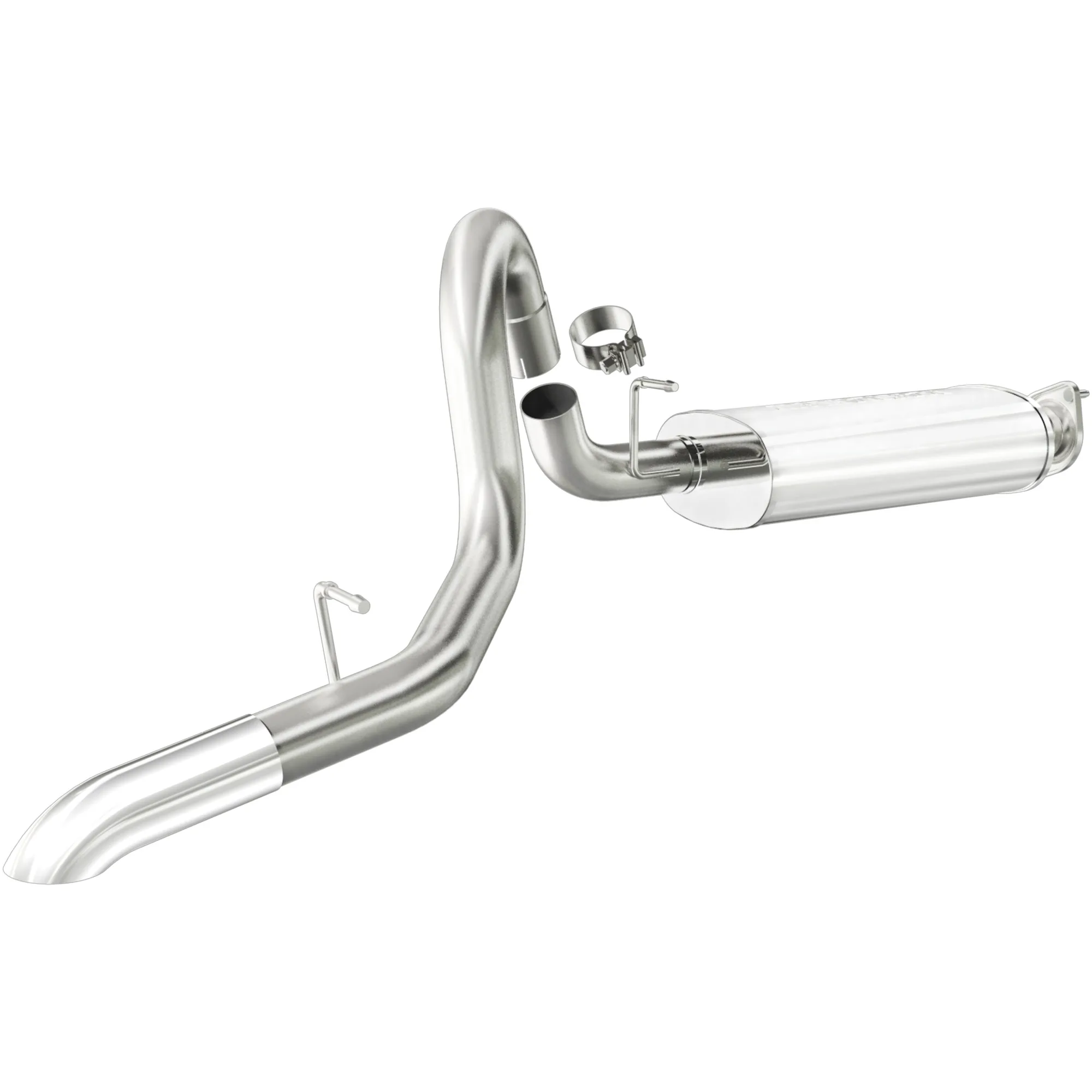
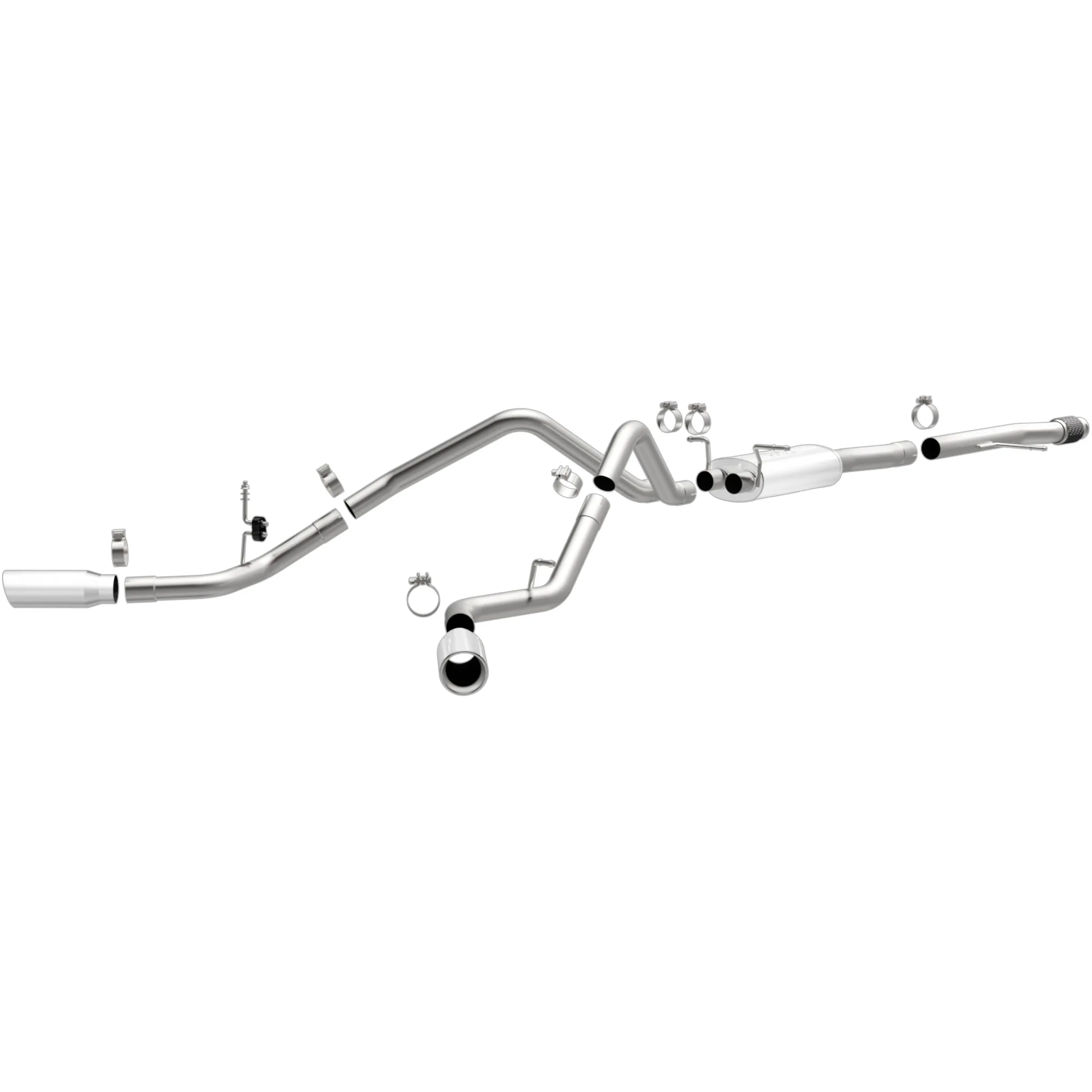
- https://magnafloweb.com/products/15855-magnaflow-street-series-cat-back-performance-exha-a976a3afdba354efa3fe7347-2679291https://magnafloweb.com/products/magnaflow-street-series-cat-back-performance-exhaust-sy-fa211f990507d48fc06da92c-2677829https://magnafloweb.com/products/magnaflow-street-series-cat-back-performance-exhaust-sy-164871ef66e3c12b9738eeee-2677830https://magnafloweb.com/products/magnaflow-street-series-cat-back-performance-exhaust-sy-00d89eec4df341b209a280b9-2677832MagnaFlow Street Series Cat-Back Performance Exhaust System 15855: Designed for the 2.4L, 2.5L, and 4.0L Jeep Wrangler, it uses mandrel-bent 2.5 in. main piping and one straight-through muffler, exiting as a single straight passenger-side rear exit with a 2.75 in. polished welded-on single wall tip. This is a converter-back design, so the factory emissions hardware and sensor locations stay intact. That is exactly the configuration where the stock tune remains valid and no recalibration is required.
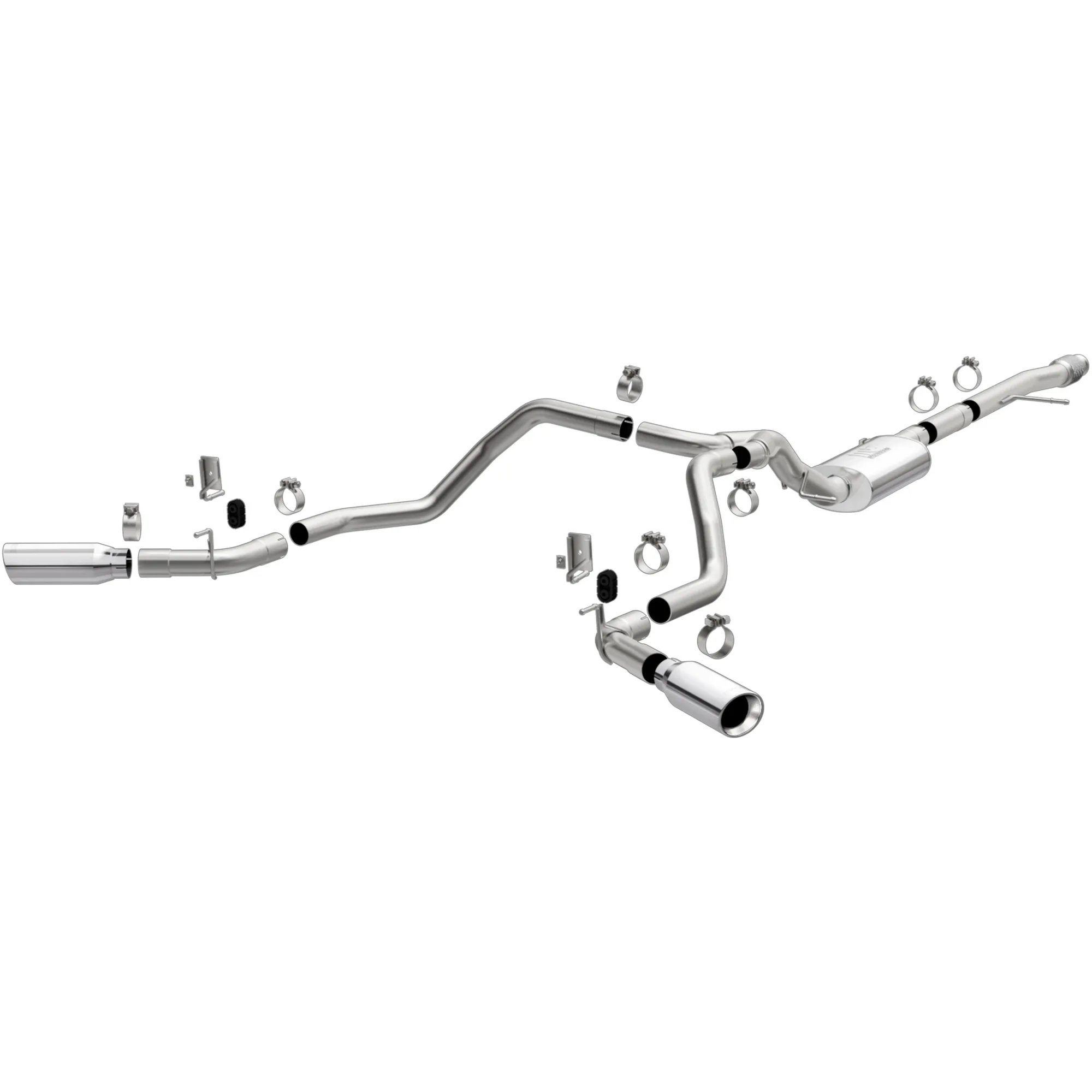
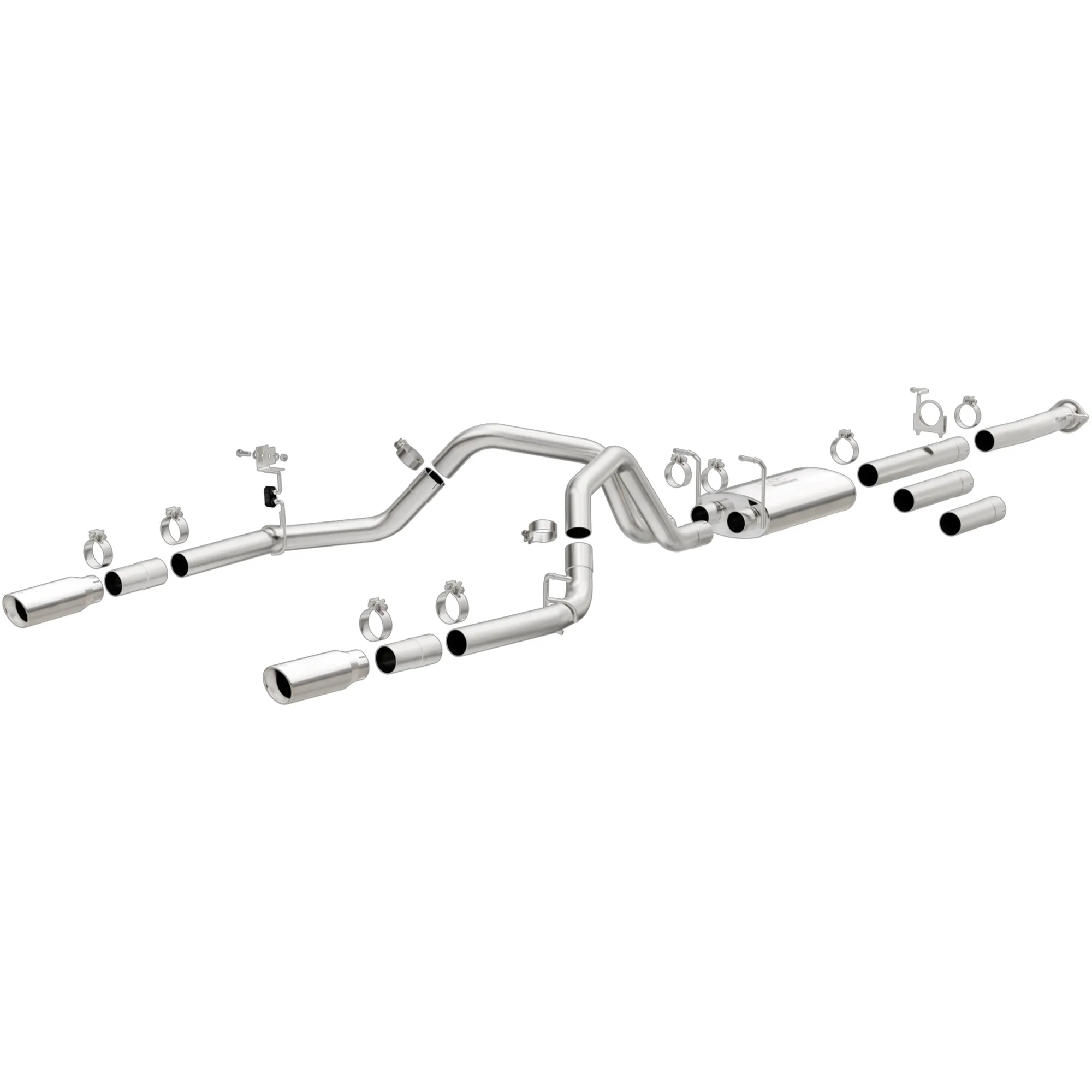
- MagnaFlow 2002-2003 Ford F-150 Harley-Davidson Edition 5.4L Street Series Cat-Back Performance Exhaust System 15772: Built for the 5.4L Ford F-150 with mandrel-bent 2.5 in. main piping and one straight-through muffler, exiting as a dual same-side behind-passenger-rear-tire setup with 3.5 in. polished welded-on single wall slash cut edge tips. Two 3.5 in. tips on 2.5 in. piping shows the split between appearance and flow. The tip size is cosmetic; the 2.5 in. pipe is what sets the flow and backpressure behavior your ECU sees.
- MagnaFlow Custom Builder Series Downpipe Back 4 in Performance Exhaust System 18980: An aluminized steel Custom Builder pipe kit with 4 in. diameter mandrel-bent pipes, weight-optimized and intended to enhance a diesel truck. A 4 in. downpipe-back kit on a diesel is the opposite end of the spectrum from a cat-back. Changes this far upstream affect boost and fueling, so this is the category where a tune moves from optional to strongly recommended.
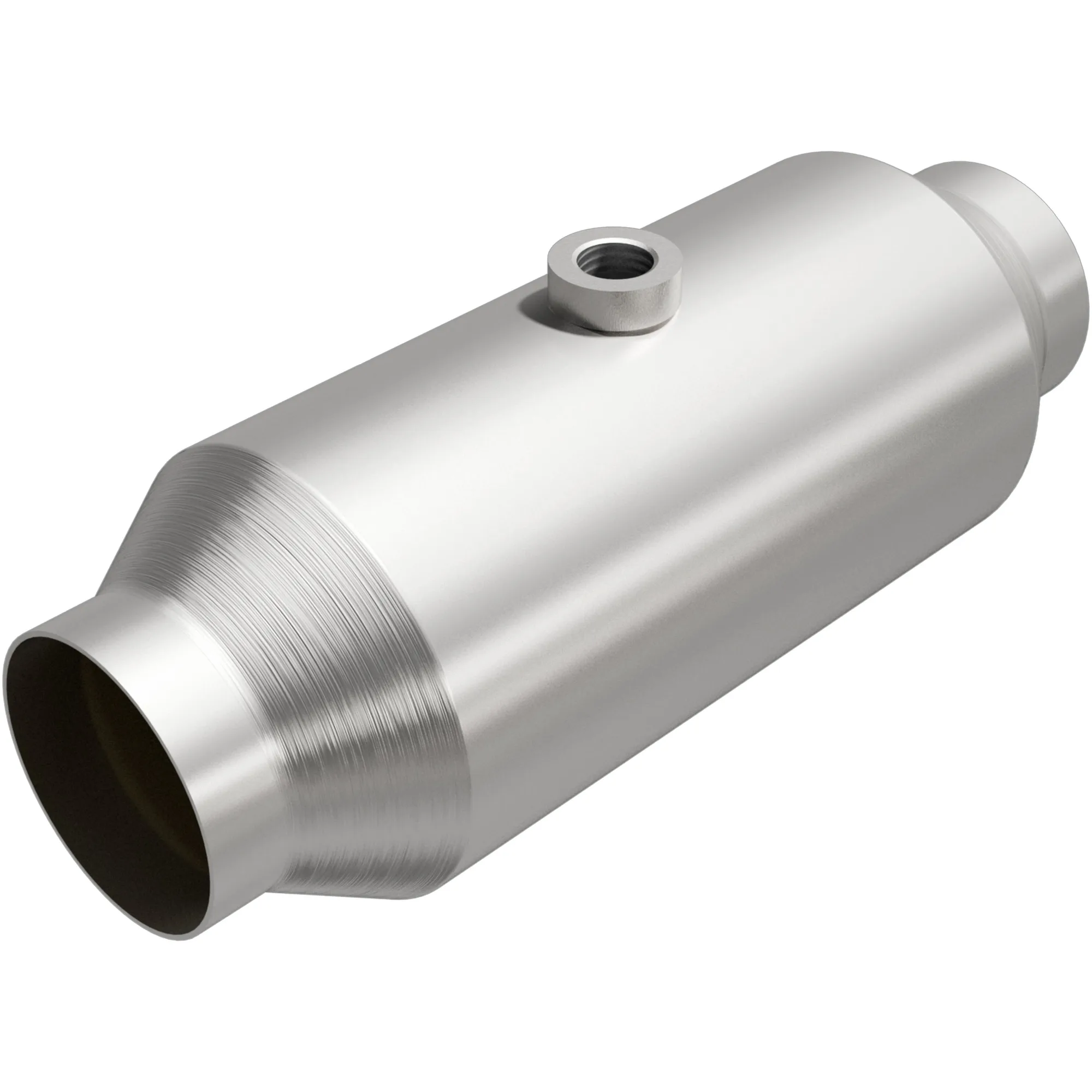
- MagnaFlow California Grade CARB Compliant Universal Catalytic Converter 444504: A CARB compliant universal converter with stainless steel construction, a single laser fusion weld to reduce leak potential, and a compact low-mass design. Replacing a converter is the most common reason a check engine light appears after exhaust work. Choosing a compliant replacement keeps you legal, but the ECU may still need calibration or a code reset depending on the application.
Start by asking what your exhaust actually changed. If the converter and sensors stayed put, drive it, enjoy the sound, and skip the tune until you have a specific reason. If you altered emissions hardware or turbo plumbing, budget for calibration from the beginning and verify local rules before you order parts.