Quick answer
In most homes, you do not need a separate cleaner for every room. A dedicated floor cleaner is the safer default for sealed wood, stone, and tile, while a multi-purpose bathroom cleaner handles soap scum and bathroom grime. If you want one bottle for both, test a small area first and avoid acidic formulas on natural stone.
What is the real difference between a bathroom cleaner and a floor cleaner?
The main difference is the type of soil each is designed to break down. Bathroom cleaners target soap scum, body oils, hard-water films, and mildew-prone residue. Floor cleaners target tracked-in dirt, dust, and food spills, and they are usually formulated to be used with a mop or diluted in water. A floor cleaner often leaves a finish that resists streaking, while a bathroom cleaner may leave a residue that is fine on porcelain but dulls or streaks a sealed wood floor.
Can I use one cleaner everywhere?
Sometimes, but it depends on the surface and the formula. A pH-neutral multi-purpose cleaner can often be used on both sealed floors and bathroom fixtures. However, many bathroom cleaners contain acids or abrasives to cut soap scum, and those can etch natural stone, strip wax on wood, or damage some grout sealers. If you want to simplify, choose a neutral cleaner and use it at the correct dilution for each job.
Is a bathroom cleaner safe for floors?
Check the label for surface warnings before you mop. Bathroom cleaners designed for tile and porcelain may be safe on those same materials in a hallway or kitchen, but they are not automatically safe for wood, laminate, or natural stone. A safer test is to apply a small amount to an inconspicuous spot, wait a minute, and wipe. If the finish dulls or the color changes, keep that product in the bathroom.
When is a dedicated floor cleaner worth it?
A dedicated floor cleaner is worth it when you have large hard-surface areas, sealed wood, or natural stone. These floors benefit from a formula that lifts grime without leaving a sticky film that attracts more dirt. A floor cleaner also lets you dilute consistently in a bucket, which is more economical than spraying a bathroom cleaner across a whole room. If your floors are the main surface you clean, a floor-specific product saves time and reduces re-soiling.
How do natural cleaners fit into this choice?
Natural cleaners rely on plant-derived ingredients and essential oils rather than synthetic fragrance or harsh solvents. That makes them a good fit for homes where you want fewer harsh fumes, but it also means you should match the formula to the soil. For everyday bathroom upkeep, a natural bathroom cleaner can handle soap scum and grime. For floors, a natural floor cleaner with essential oils can cut everyday dirt while leaving a fresh scent. Always follow the dilution and surface guidance on the bottle.
Quick answers to common questions
Do I need separate cleaning products for bathroom and floors?
Not always. A pH-neutral multi-purpose cleaner can work on both if you dilute it correctly and test on a hidden spot. But if your bathroom has heavy soap scum or your floors are wood or natural stone, separate products are safer and more effective. Default to separate products unless you have confirmed the shared cleaner is safe for every surface.
Can I use bathroom cleaner on tile floors?
Often yes for ceramic and porcelain tile, but check the label for stone and grout warnings. Acidic bathroom cleaners can etch travertine, marble, or limestone and may weaken some grout sealers. Rinse well after use to avoid a slippery film. Test a small area first and never use an acid bathroom cleaner on natural stone.
Is a multi-purpose cleaner the same as a floor cleaner?
No. A multi-purpose cleaner is designed for many surfaces but may not be optimized for large floor areas or for leaving a streak-free finish. A floor cleaner is typically diluted in a bucket and formulated to lift tracked-in dirt without leaving a sticky residue that attracts more soil. For whole-home floors, use a floor cleaner; for spot cleaning, a multi-purpose cleaner is fine.
What is the safest natural cleaner for tile and stone?
Look for a pH-neutral formula and avoid acidic ingredients like vinegar or citrus if you have natural stone. A natural floor cleaner with essential oils and no synthetic fragrance is a good choice for sealed tile and stone when used at the recommended dilution. Check the bottle for stone-safe wording; if it is missing, test a small area first.
Product facts to help you decide
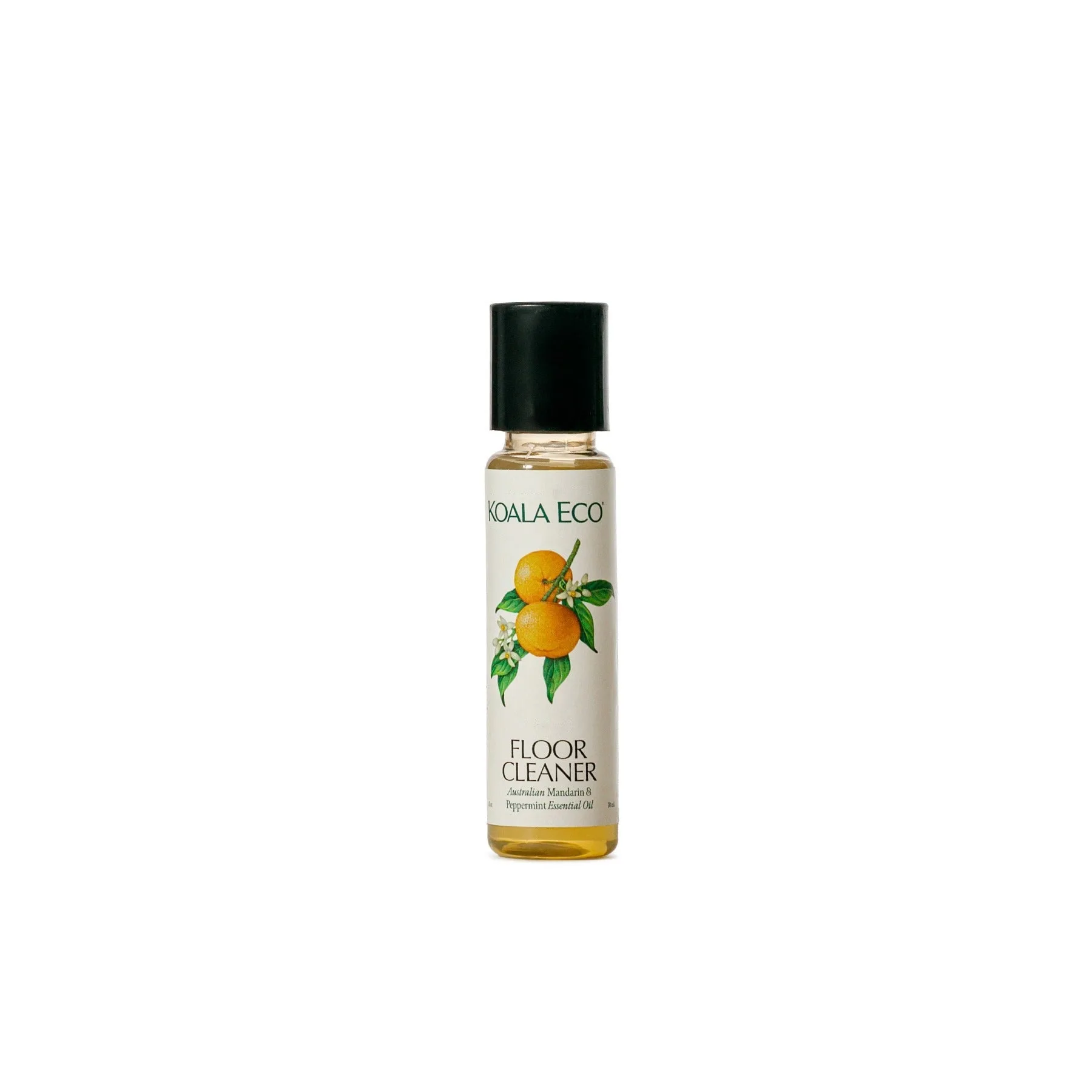
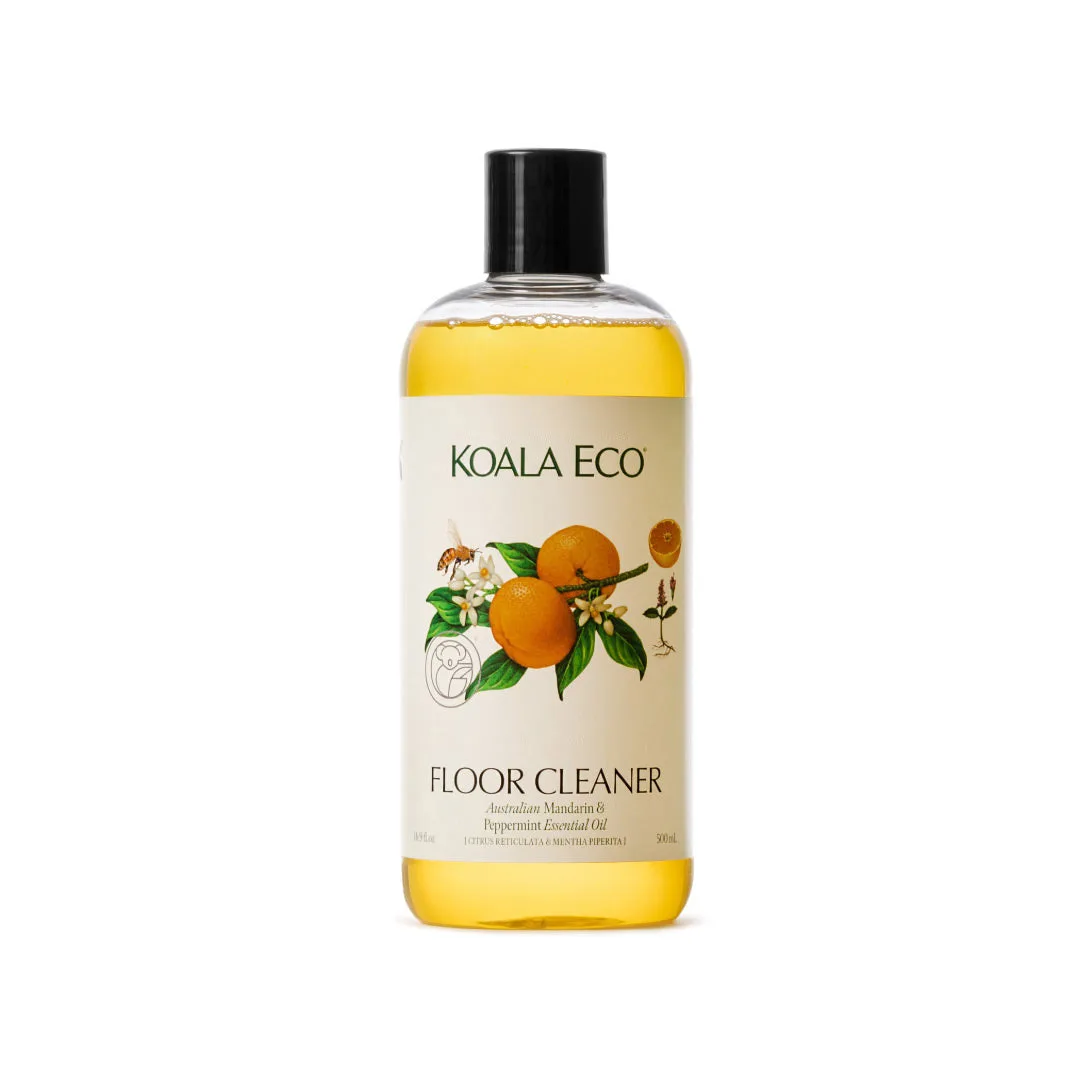
- Floor Cleaner: Mandarin & Peppermint Floor Cleaner combines essential oils with no synthetic fragrance and comes in 16.9 oz and 33.8 oz sizes. A dedicated floor formula lets you dilute consistently for mopping and avoid the residue that bathroom cleaners can leave on sealed floors.
- Multi-Purpose Bathroom Cleaner: Eucalyptus Multi-Purpose Bathroom Cleaner cuts through soap scum, dirt, and grime and is available in 16.9 oz and 33.8 oz. This is the better match for tubs, showers, and sinks where soap scum and body oils build up, rather than for wood or stone floors.
- Fruit & Vegetable Wash: Mandarin Fruit & Vegetable Wash removes residual pesticides, oils, waxes, and agricultural chemicals and leaves no aftertaste. It shows that a multi-purpose cleaner can be safe for a specific job, but it is not a substitute for a floor or bathroom cleaner.