The puffiness product question, stripped down
If your skin looks tired or puffy, the instinct is often to buy a dedicated product—usually an eye serum or a face serum marketed for puffiness. But do you actually need a separate face serum for puffiness, or can one product do the job? The answer depends on what you expect the product to do and where you plan to apply it.
This article evaluates common claims about caffeine serums for facial puffiness and separates what the supplied product information supports from what it does not. The goal is not to sell you more steps but to help you decide whether a separate product makes sense for your routine.
What “puffiness” claims can and cannot mean
Cosmetic skincare products can refresh the appearance of skin, but they are not medical treatments. A product described as instantly refreshing tired-looking skin is making a cosmetic claim about appearance, not a claim about reducing fluid retention, treating allergies, or changing underlying anatomy.
That distinction matters because many puffiness myths blur the line between temporary cosmetic refreshment and a medical effect. The supplied information for The Ordinary Caffeine 3% + Escin 1% Face Serum describes it as an energizing face serum designed to immediately refresh tired-looking skin. It does not include medical claims, clinical trial results, or instructions for treating a medical condition. Any expectation beyond cosmetic refreshment is not supported by the supplied evidence.
The formula behind the puffiness claim
-
Caffeine 3% + Escin 1% Face Serum: Contains 3% caffeine and 1% escin. These are the two named ingredients in the product. The percentage strengths are part of the formula description, but the supplied information does not include independent studies or comparative data showing how these concentrations perform against puffiness.
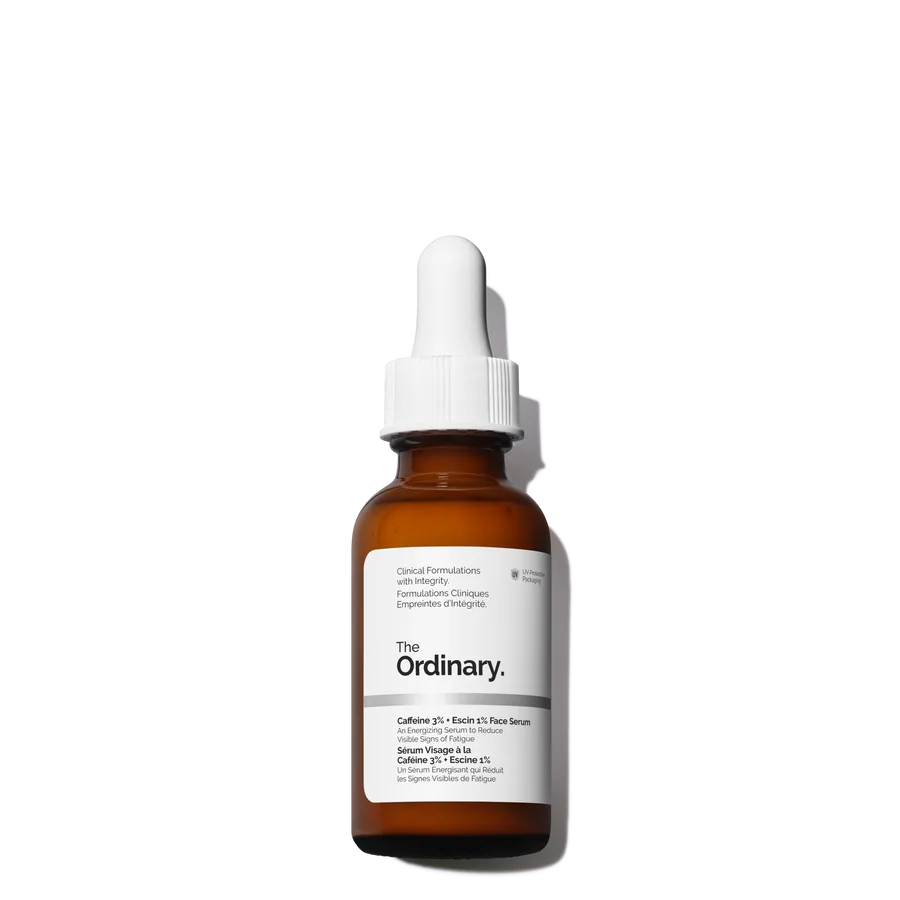
Caffeine 3% + Escin 1% Face Serum
-
Caffeine 3% + Escin 1% Face Serum: Instantly refreshes the appearance of tired skin. This is a cosmetic appearance claim, not a medical one. It sets a realistic expectation: the serum is intended to make skin look refreshed, not to resolve underlying causes of puffiness.
Myth: a face serum for puffiness is the same as an eye serum
A common assumption is that an eye serum and a face serum for puffiness are interchangeable. They may share ingredients, but they are not automatically the same product. The supplied information for the Caffeine 3% + Escin 1% Face Serum does not state that it is formulated for the eye area, nor does it include eye-specific usage instructions.
That does not mean you cannot use a face serum near the eyes—many people do—but the supplied evidence does not confirm eye suitability, eye safety, or eye-specific results. If your primary concern is the under-eye area, the honest answer is that this face serum’s eye-area use is not confirmed by the information provided. A product labeled as an eye serum may have its own directions, but those directions are not part of this record.
Do eye serums reduce puffiness? What the evidence supports
The question “do eye serums reduce puffiness” often gets a confident yes, but the supplied information does not include eye serum studies or clinical outcomes. For the Caffeine 3% + Escin 1% Face Serum, the only performance claim provided is that it instantly refreshes the appearance of tired skin.
So the evidence supports a narrower statement: this product is intended to refresh the look of tired skin. It does not support a claim that it reduces puffiness in a measurable or medical sense, nor does it establish that a separate eye serum is necessary. If you are looking for a separate eye product, that is a personal routine choice, not a requirement established by this evidence.
Face serum vs eye serum for puffiness: what changes
- Face serum: The Caffeine 3% + Escin 1% Face Serum is described as an energizing face serum for tired-looking skin. The supplied information does not specify eye-area use, so treat eye application as unconfirmed.
- Eye serum: The supplied records do not include a separate eye serum product, so a direct comparison of formulas or eye-specific results is not possible from this evidence.
- Practical difference: A face serum is typically applied more broadly, while an eye serum is positioned for the eye area. Without eye-specific instructions for this face serum, the safer assumption is that it is intended for facial skin, not the eye area.
How to use a caffeine serum for face without overcomplicating it
The supplied information does not include a full step-by-step application routine, frequency, or layering instructions for the Caffeine 3% + Escin 1% Face Serum. That absence is a limitation of the evidence, not a sign that the product is difficult to use. What the record does support is that it is a face serum intended for daily skincare.
A conservative approach is to treat it as a face serum in your existing routine rather than adding it as an extra puffiness-specific step. Because the record does not specify how often to apply it or how it interacts with other products, avoid inventing a complicated schedule. If you have sensitive skin or a diagnosed skin condition, the supplied information does not include suitability or patch-test guidance, so those decisions should be made with a qualified professional.
The honest trade-off: one product or two?
The appeal of a separate face serum for puffiness is the idea that a dedicated product will do something a general serum cannot. The supplied evidence does not support that assumption. The Caffeine 3% + Escin 1% Face Serum is already positioned as a face serum for tired-looking skin, and no separate eye serum is included in the supplied records for comparison.
If you already own this serum, adding a second puffiness product is not clearly justified by the evidence. If you are deciding what to buy, the more grounded choice is to evaluate this product on its stated cosmetic claim—refreshing the appearance of tired skin—rather than on an expectation of medical puffiness reduction. That is the honest limit of what the supplied information can tell you.