The claim: every winter hike needs snow baskets
It's a common piece of advice: swap your pole baskets for snow baskets as soon as the season turns cold. Like many blanket rules, it contains a kernel of truth but overshoots. Snow baskets are a targeted tool for soft ground, not a mandatory winter accessory.
The supplied product information for the Snow Basket (Pair) describes their purpose plainly: screw them onto your poles for extra float in packed snow or powder. That's the benefit to evaluate—float in snow—rather than a general promise of winter readiness.
What snow baskets actually change
A basket's job is to stop the pole tip from sinking too deep and to keep the shaft from plunging past the snow surface. A wider snow basket spreads your downward force over more area, which is what 'float' means in practice.
Notice what the supplied description does not claim. It doesn't promise better grip on ice, warmer hands, or compatibility with every pole on the market. Those are separate questions, and treating a basket swap as a cure-all is where the myth starts.
What the catalog confirms about the Snow Basket (Pair)
-
Snow Basket (Pair): Sold as a pair, with catalog copy describing them as screwing onto your poles for extra float in packed snow or powder. Two baskets per pack matches the two poles most hikers carry, and the screw-on description is the only attachment method the supplied information confirms.
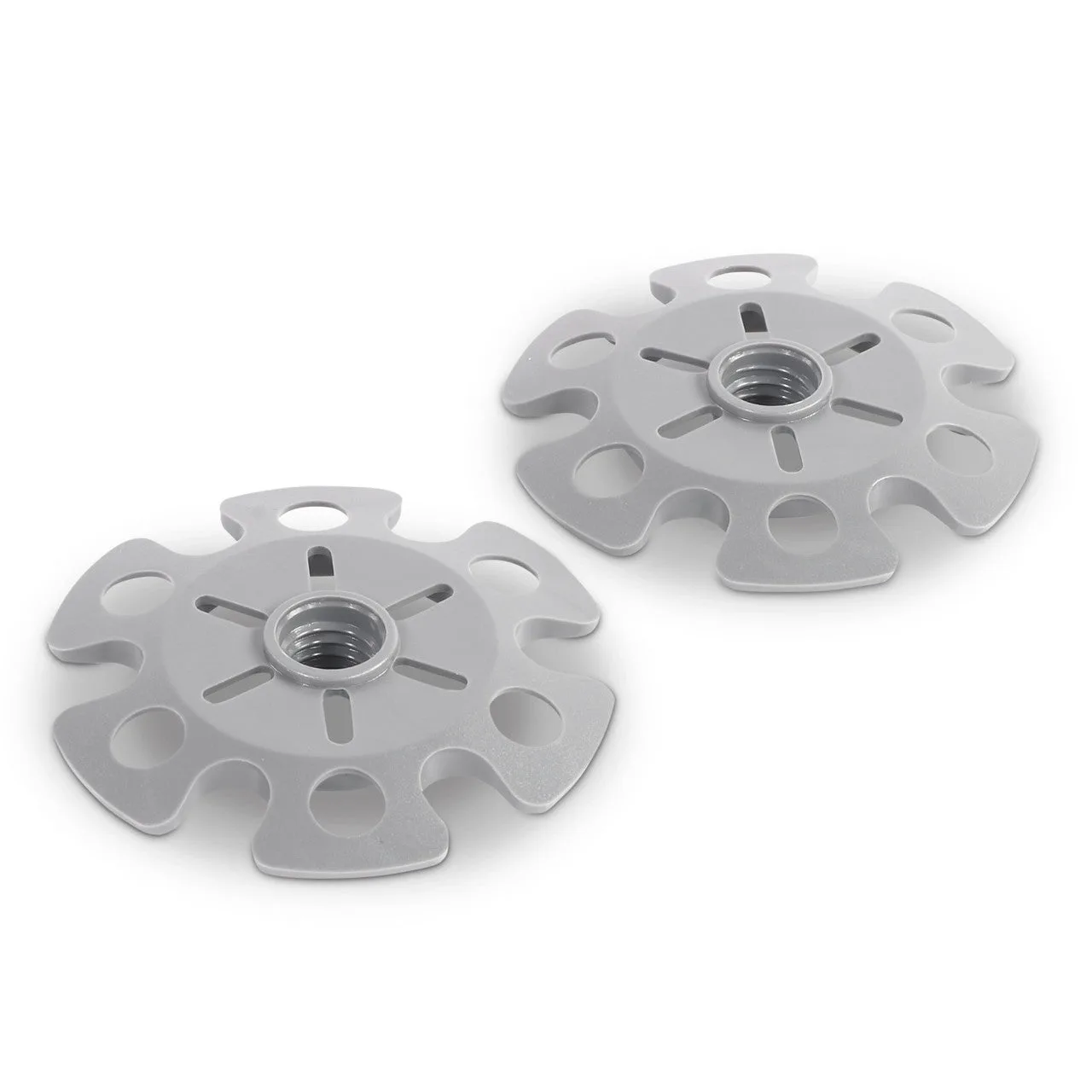
Snow Basket (Pair)
-
Snow Basket (Pair): The catalog pairs them with snowshoeing: 'When winter calls, strap on the snowshoes. Then screw these snow baskets onto your poles.' That framing points to soft-snow travel as the intended use, not pavement, rock, or icy trails.
When the extra float is worth it
If your winter outings put you on snowshoes in packed snow or powder, the case for snow baskets is straightforward: the catalog describes exactly that scenario as their purpose. Deeper, softer snow is where a wider basket earns its place, because a standard basket may sink further before it finds support.
This is also where the snowshoeing pole accessory question usually comes from. Snowshoes spread your weight; a snow basket does the same smaller job for your pole tips. The two work as a pair of ideas, which is likely why the catalog copy mentions them together.
When you probably don't need them
Not every cold-weather walk is a powder day. If your winter hiking stays on packed, firm, or cleared trails, the float benefit has less to work with. A basket swap won't change how your poles feel on hard ground.
The supplied information also doesn't establish that snow baskets improve traction, stability on ice, or performance in every winter condition. If someone tells you they're essential for all winter hiking, that claim goes beyond what the catalog supports.
Hiking pole basket types: what the evidence lets you compare
The supplied product record covers one basket type—the Snow Basket (Pair)—and does not include a basket-type comparison chart. Here's what can be said without guessing.
- Snow baskets: The catalog describes them as screw-on baskets for extra float in packed snow or powder. Wider float is the stated benefit.
- Standard baskets: Your poles likely came with baskets already. The supplied information does not describe their size or snow performance, so any direct comparison would be speculation.
- Attachment method: Screw-on is the only method confirmed by the supplied record. Whether your specific poles accept screw-on baskets is not confirmed here.
The compatibility question the catalog leaves open
Before buying, check that your poles take screw-on baskets. The supplied record does not list compatible pole models, thread specifications, or basket diameters, so it can't confirm fit for a particular pair of poles.
That's a limitation of the available information, not evidence that the baskets won't fit. The practical move is to inspect your pole tips and confirm the attachment style before ordering.
A winter trekking pole setup that stays honest
Treat snow baskets as one part of a soft-snow setup rather than a winter checklist item. If you're snowshoeing in packed snow or powder, they match the catalog's described use. If your winter routes are firm and cleared, the float argument is weaker.
The supplied information doesn't cover installation steps, torque, care, or removal, so follow the instructions that come with your poles and baskets rather than improvising from a blog post. The myth to retire is simple: snow baskets aren't mandatory for winter—they're a specific answer to soft snow.