Quick Answer
If you are digging fence posts or planting trees in soil that contains roots, clay, or shale, the Root Slayer Post Hole Digger is worth considering because its design reduces digging movement by about 30% compared with other hole diggers and cuts an 8-inch hole. If your ground is loose sand or you need dozens of holes in a day, a powered auger will be faster. For mixed beds and one-off planting holes, a Root Slayer shovel may be the more versatile choice.
Root Slayer
What the Root Slayer Post Hole Digger Actually Does
The Root Slayer Post Hole Digger is a heavy-duty manual tool built to make digging a hole faster and easier. Its unique design prevents crushing your knuckles while in use, and it reduces movement by about 30% compared with other hole diggers on Amazon. It cuts holes 8 inches in diameter. That combination matters when you are setting fence posts, planting small trees, or sinking stakes in ground that fights back.
Because it is manual, you control the pace and the placement. You can stop mid-hole to chop through a root or lever out a rock instead of forcing a machine through it. The trade-off is effort: in soft, stone-free soil, a powered auger will outpace it, and in very wide planting holes you may still need a shovel to widen the top.
Where It Fits in a Root Slayer Tool Kit
A post hole digger is a single-purpose tool: it makes vertical holes. A shovel cuts roots, moves soil, and transfers material. If your project is one fence line or a few trees, the digger earns its place. If you are also building raised beds, dividing perennials, or trenching, pair it with a root-cutting shovel so you are not forcing one tool to do everything.
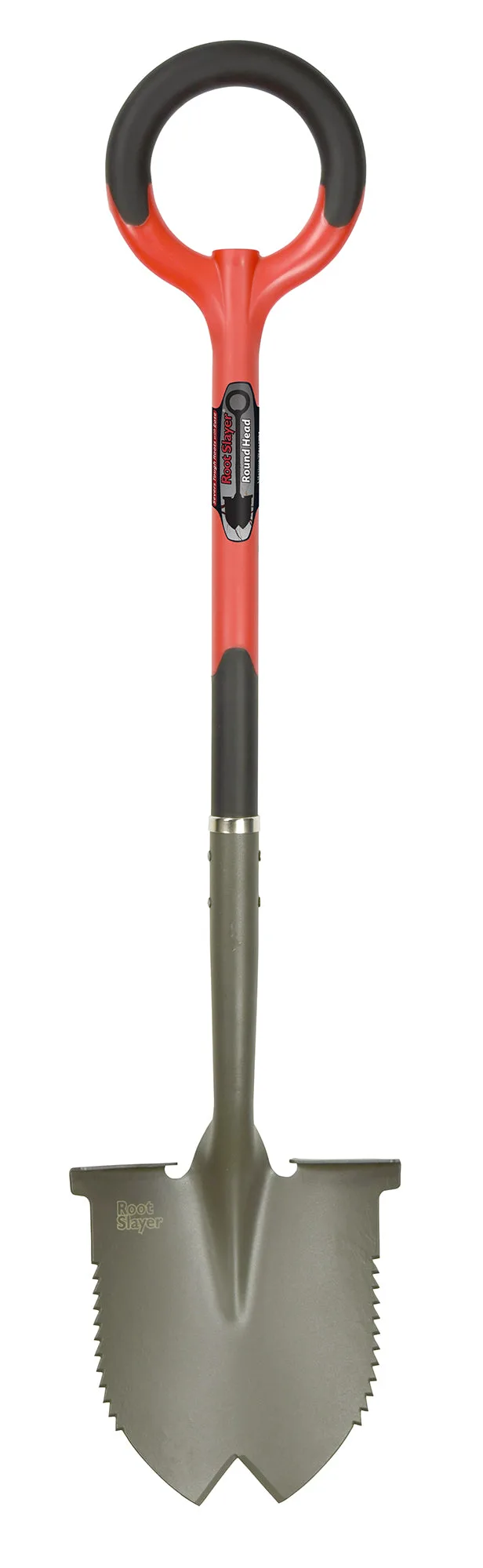
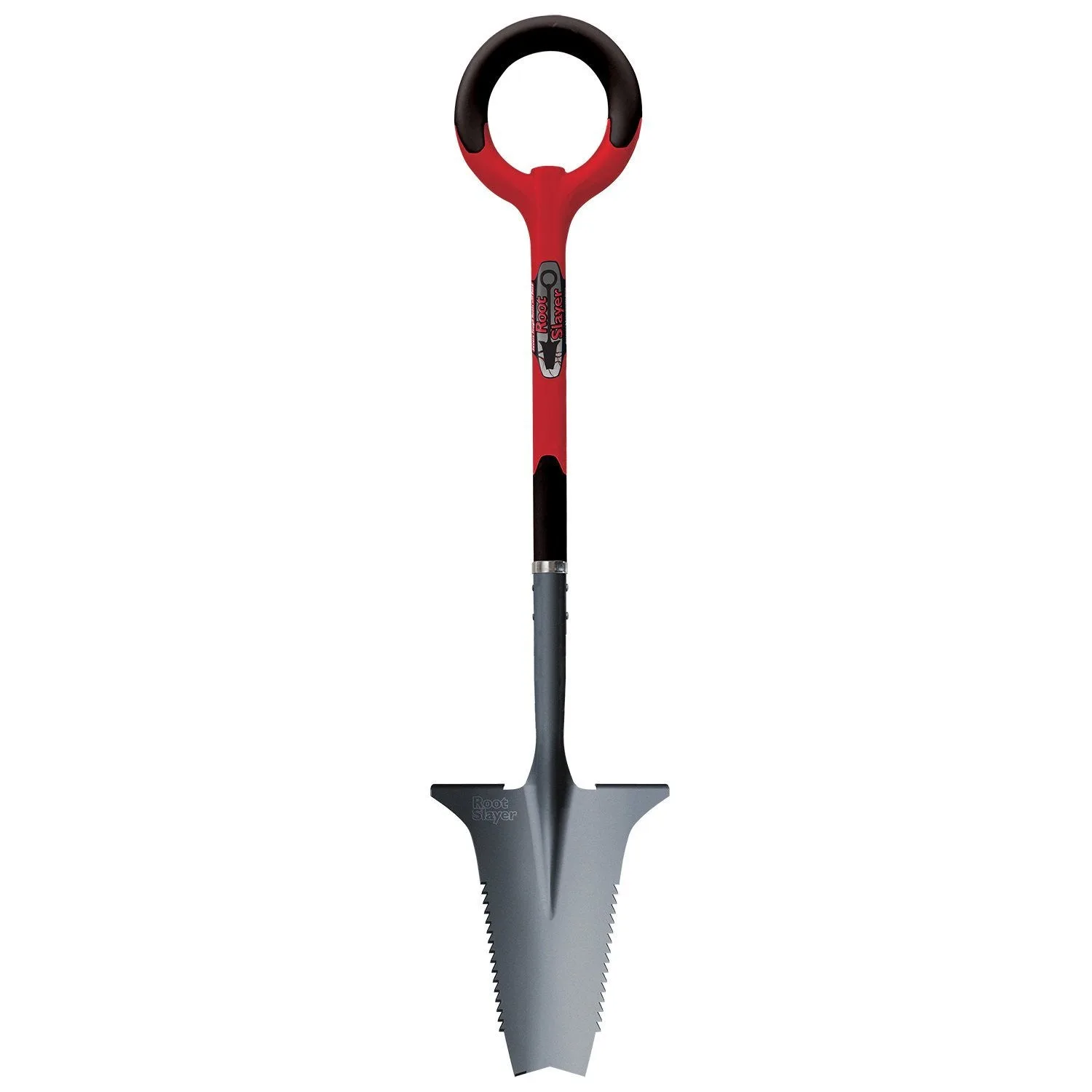
The Root Slayer Round Head Shovel is a heavy-duty, root-cutting version of the most popular shovel type in North America, with an inverted V cutting tip instead of a round point. Radius Garden recommends considering it when you have dense clay soil, rocks and shale, roots, and other dense organic material. That is the same ground where the post hole digger makes sense, so the two tools often belong in the same shed.
How to Decide Before You Buy
Start with the hole, not the tool. Count how many holes you need, measure the diameter, and check what is in the top 18 inches of soil. If you hit roots or shale with a spade, a manual digger with a cutting edge will save you time. If the soil is loose and you need 20 or more holes, rent or buy an auger instead.
Then check your own leverage. A long-handled tool lets you dig standing up and use your body weight; a compact tool fits tight spaces. The Root Slayer Post Hole Digger is designed for two-handed vertical work, so it suits fence lines and open beds rather than crowded borders.
Manual Digger vs. Shovel vs. Auger
A manual post hole digger removes a cylinder of soil and keeps the hole edges clean, which helps when you are pouring concrete or setting a post. A shovel digs a wider, shallower hole and is better for planting because you can loosen a broad root zone. An auger is fastest in uniform soil but can bind on roots and rocks.
The Root Slayer Nomad is a compact, multi-purpose digging tool that Radius Garden describes as great in small spaces, raised beds, and campgrounds, and as an excellent weeding tool. It is not a post hole digger, but it shows the other end of the Root Slayer range: if your work is planting, weeding, and tight beds, the Nomad may be the better fit. If your work is vertical holes in hard ground, the post hole digger is the right tool.
Decision Rules for Buying a Manual Post Hole Digger
- Rule 1: Buy it if roots and rocks are the obstacle: If a spade stops on roots, shale, or dense clay, a manual digger with a cutting edge and an 8-inch hole is the right class of tool. The Root Slayer Post Hole Digger is built for that ground. Test one hole with a spade first; if it takes more than a few minutes, the digger will pay for itself.
- Rule 2: Skip it if you need speed in soft soil: In loose sand or loam with no roots, a powered auger drills faster and with less effort. A manual digger is the better choice only when the ground is too messy for an auger. Count your holes: a handful favors manual; dozens favor power.
- Rule 3: Match the tool to the hole, not the project name: Post holes are vertical and narrow; planting holes are wider and need loosened sides. If most of your work is planting and weeding, a Root Slayer Nomad or Round Head Shovel covers more tasks. Buy the post hole digger only if vertical holes are a recurring job.
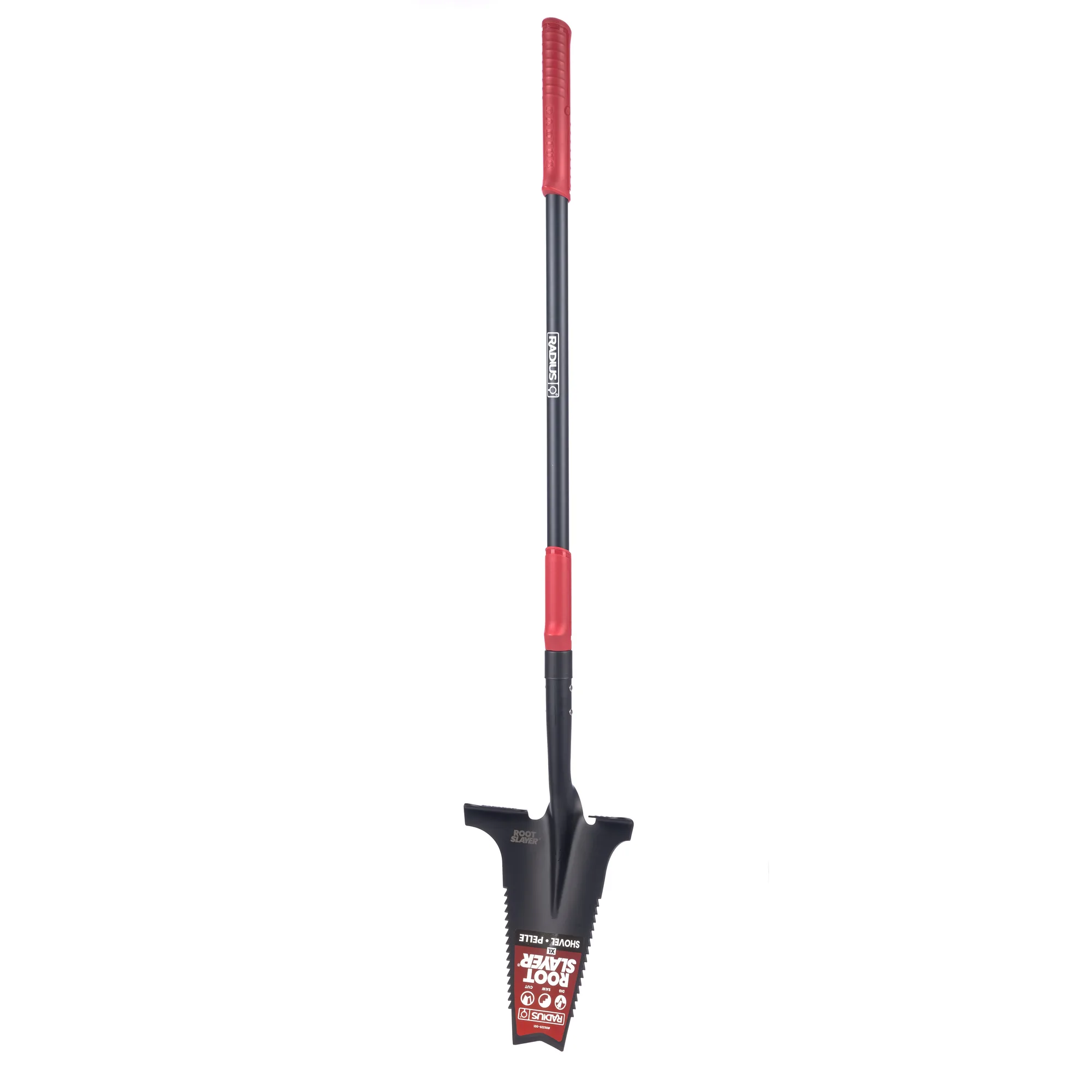
- Rule 4: Budget for the companion tool: A post hole digger makes the hole but does not move much soil or cut surface roots. A long-handled Root Slayer tool such as the 2.0 XL handles trenching and root cutting before you dig. If you are fencing in hard ground, plan for both a digger and a root-cutting shovel.
Product Facts
- Root Slayer Post Hole Digger: Heavy-duty design that reduces digging movement by 30% compared with other hole diggers on Amazon, digs holes 8 inches in diameter, and prevents crushing your knuckles. Less wasted motion and no barked knuckles make repeated fence-post holes more sustainable, and the 8-inch diameter fits common post sizes.
- Root Slayer Round Head Shovel: Root Slayer Round Head Shovel is a heavy-duty, root-cutting version of the most popular shovel type in North America, with an inverted V cutting tip instead of a round point; Radius Garden recommends considering it for dense clay soil, rocks and shale, roots, and other dense organic material. If your ground contains the same roots and shale that make post holes hard, this shovel handles the wider digging and soil moving around the hole.
- Root Slayer Nomad: Root Slayer Nomad is a compact, multi-purpose digging tool that Radius Garden describes as great in small spaces, raised beds, and campgrounds, and as an absolutely awesome weeding tool. For planting and weeding in tight beds, the Nomad is more useful than a dedicated post hole digger, so match the tool to the task.
- Root Slayer 2.0 XL Long Handle: Root Slayer 2.0 XL Long Handle is designed for digging, cutting, and trenching, and Radius Garden says it effortlessly cuts through roots. A long-handled root-cutting tool lets you trench and clear roots before you start a hole, which is often the slowest part of fencing in hard ground.
Who Should Buy the Root Slayer Post Hole Digger
Best for
- Homeowners setting fence posts or planting trees in soil with roots, clay, or shale
- Gardeners who want a manual tool they can control around roots and rocks
- Buyers who value clean 8-inch holes and reduced digging movement
Not for
- Anyone drilling many holes in loose, stone-free soil who should use a powered auger
- Gardeners whose main work is planting and weeding in tight beds, who should choose a Root Slayer Nomad or Round Head Shovel
- Buyers who need to move large volumes of soil, which calls for a shovel rather than a hole digger