Quick answer
NSF Certified for Sport matters if you compete under anti-doping rules or want an extra layer of supply-chain scrutiny, but it is not a guarantee of purity, effectiveness, or better results. Treat it as one useful filter, not a finish line.
What the certification actually covers
NSF Certified for Sport is a third-party program that checks a finished product against a specific set of criteria. It is not a government seal, and it does not mean the powder was tested for every possible contaminant or that it will improve your performance. The value is in the process: an outside body has reviewed the product and its manufacturing against defined standards.
For athletes in drug-tested sports, that outside review is the main reason to care. For a recreational lifter, the same seal is a nice-to-have, not a must-have.
Where the label stops helping you
Certification tells you nothing about whether a protein powder fits your calorie budget, your flavor preferences, or your digestion. A certified product can still be a poor match if it carries more sugar than you want or if you dislike the taste and stop using it. The label also does not replace reading the nutrition panel and ingredient list.
In short: use certification to narrow the field, then use the actual product facts to make the final call.
Four certification claims, judged
- Claim: NSF Certified for Sport means the powder is pure and safe for everyone.: Verdict: partly true, but overstated. The seal reflects third-party review against a defined standard, not a blanket guarantee for every person or every use. It is most relevant for drug-tested athletes and shoppers who want an extra check on sourcing. Check whether the certifying body's scope matches your reason for buying.
- Claim: A third party tested protein powder will improve your performance.: Verdict: false. Certification is about testing and quality processes, not efficacy. A certified powder does not train for you, and no seal replaces consistent training and overall diet. Judge performance claims separately from certification claims.
- Claim: If a protein powder is not NSF Certified for Sport, it is unsafe.: Verdict: false. Many products are made without that specific seal and are still legally sold and widely used. The absence of this one certification tells you only that this particular review was not done, not that the powder is contaminated. Treat missing certification as a missing data point, not a red flag by itself.
- Claim: The certification label is all you need to compare protein powders.: Verdict: false. You still need to read the nutrition panel. For example, a certified powder can vary widely in protein per serving and sugar content, and those numbers decide whether it fits your day. Shortlist by certification, then choose by protein, sugar, and serving size.
One certified option, in context
-
Muscle Milk Genuine Protein Powder, Strawberries ‘N Crème, 1.93 Pounds, 13 Servings, 32g Protein, 3g Sugar, Calcium, Vitamins A, C & D, NSF Certified for Sport, Energizing Snack, Packaging May Vary: Muscle Milk Genuine Protein Powder in Strawberries 'N Crème is NSF Certified for Sport and provides 32g of protein with 3g of sugar per serving. If you want a certified powder that still fits a lower-sugar snack, this one gives you both the seal and the numbers to check against your daily plan.
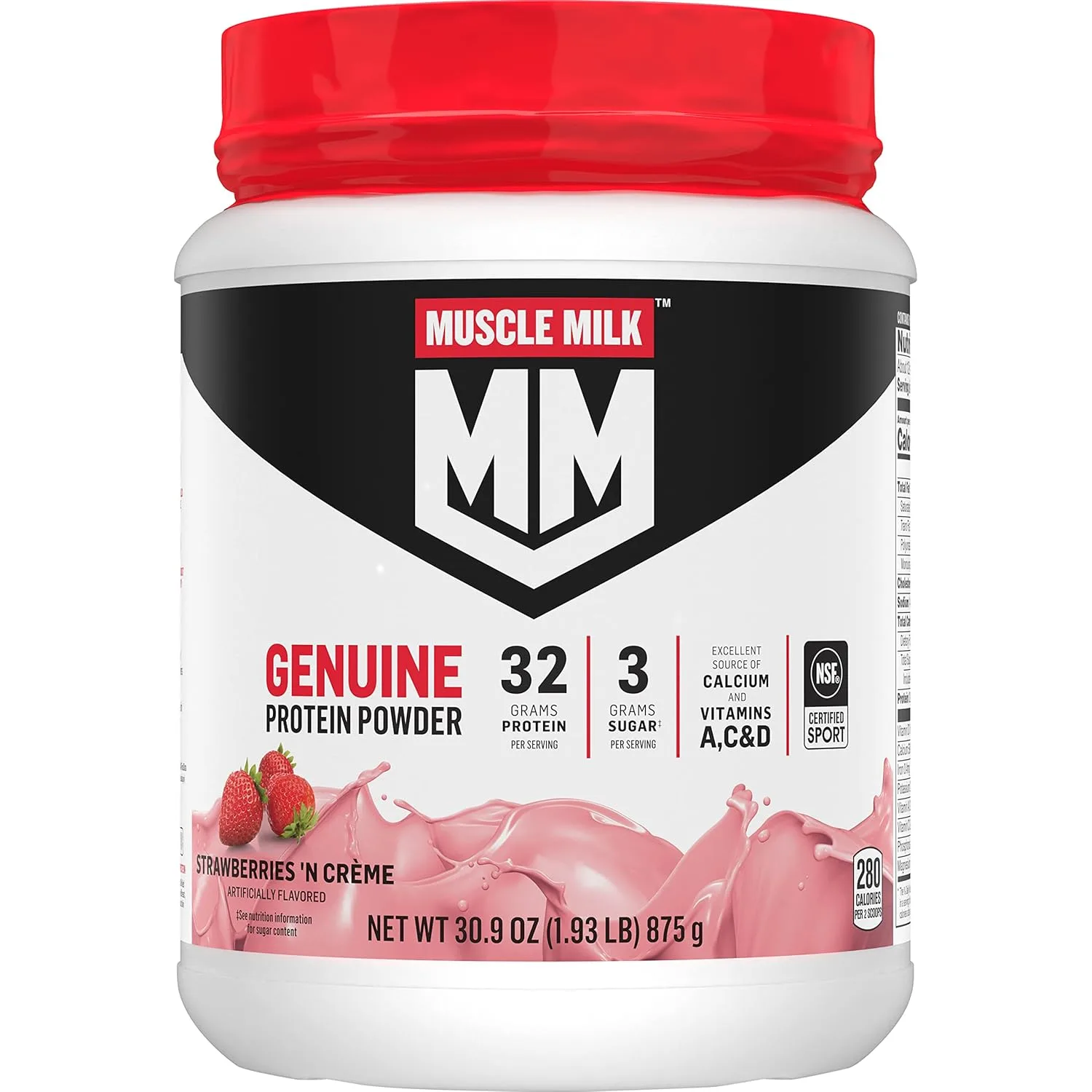
Muscle Milk Genuine Protein Powder, Strawberries ‘N Crème, 1.93 Pounds, 13 Servings, 32g Protein, 3g Sugar, Calcium, Vitamins A, C & D, NSF Certified for Sport, Energizing Snack, Packaging May Vary