The myth that keeps acne-prone skin dry
A common belief is that moisturizer causes breakouts, so skipping it should clear your skin faster. That logic sounds tidy, but it confuses two different things: heavy, pore-clogging formulas and moisturizing itself. The type of moisturizer matters far more than whether you use one at all.
An oil-free, non-comedogenic face lotion is designed to hydrate without adding the kinds of ingredients that tend to sit on skin and clog pores. That doesn't make every moisturizer safe for acne-prone skin, but it does mean the category isn't the enemy. The real question is what's in the bottle and how you use it.
Three moisturizer myths worth retiring
- Myth: Moisturizer always causes breakouts: Breakouts are linked to clogged pores, not to hydration itself. A water-based, oil-free formula is built to absorb quickly without a greasy feel, which is a very different proposition from a rich cream. The label terms oil-free and non-comedogenic are the signals to look for.
- Myth: Oily skin doesn't need moisturizer: Oily and acne-prone skin can still feel dry or tight, especially after cleansing. A lightweight lotion can keep skin comfortable without piling on oil. What it can't do is change how much oil your skin produces, and no moisturizer should be sold as an oil-control switch.
- Myth: Salicylic acid in a moisturizer is just marketing: Salicylic acid is an acne-fighting ingredient, and a leave-on lotion is a way to keep it in contact with skin rather than rinsing it away. That doesn't guarantee a dramatic result, and the supplied information doesn't include clinical outcomes. Treat it as one supporting step, not a standalone cure.
What an oil-free acne moisturizer can realistically do
A daily lotion with 0.5% salicylic acid sits in a useful middle ground: it hydrates and delivers an acne-fighting ingredient in one step. For someone building a lightweight acne moisturizer routine, that convenience is the point. Fewer layers can mean fewer chances to over-apply or irritate skin.
Be honest about the limits, though. The supplied product information describes hydrating skin and helping to clear acne, but it doesn't include timelines, success rates, or suitability for specific skin types beyond acne-prone skin. If you're looking for a guaranteed fix, no moisturizer can promise that. If you're looking for a non-comedogenic face lotion for acne that won't feel heavy, this is the lane it's built for.
What the Neutrogena formula actually contains
-
Neutrogena Oil Free Acne Moisturizer, .5% Salicylic Acid Acne Treatment, Pink Grapefruit Face Lotion for Breakouts, Non-Greasy & Non-Comedogenic, 4 fl. oz: Contains 0.5% salicylic acid, an acne-fighting ingredient, in a lightweight daily face lotion. This is the active detail behind the salicylic acid moisturizer benefits claim. It's a leave-on dose, not a cleanser you rinse off.
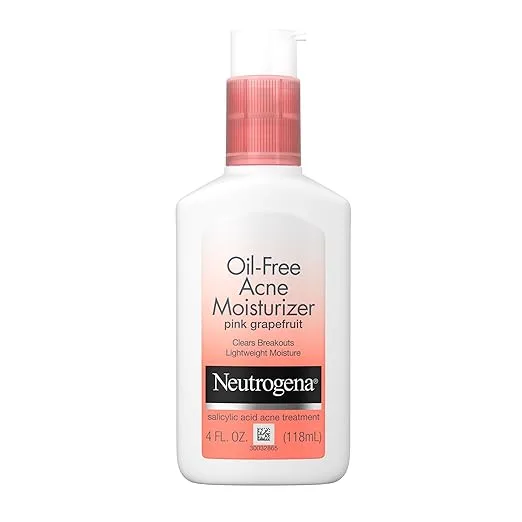
Neutrogena Oil Free Acne Moisturizer, .5% Salicylic Acid Acne Treatment, Pink Grapefruit Face Lotion for Breakouts, Non-Greasy & Non-Comedogenic, 4 fl. oz
-
Neutrogena Oil Free Acne Moisturizer, .5% Salicylic Acid Acne Treatment, Pink Grapefruit Face Lotion for Breakouts, Non-Greasy & Non-Comedogenic, 4 fl. oz: Water-based, oil-free, and non-comedogenic formula that absorbs quickly without a greasy feel. These are the exact label terms that separate a moisturizer built for acne-prone skin from a heavy cream that might feel pore-clogging.
-
Neutrogena Oil Free Acne Moisturizer, .5% Salicylic Acid Acne Treatment, Pink Grapefruit Face Lotion for Breakouts, Non-Greasy & Non-Comedogenic, 4 fl. oz: Designed for acne-prone skin and described as gentle enough for daily use. It signals the intended audience, though the supplied information doesn't confirm suitability for every sensitive or reactive skin type.
The pink grapefruit detail, without the hype
Pink grapefruit shows up in the name and the description as a refreshing twist, not as a treatment ingredient. The supplied information doesn't credit it with clearing acne or controlling oil. If you like a citrus scent in your routine, that's a reasonable preference; if you're sensitive to fragrance, the supplied information doesn't confirm whether this lotion is fragrance-free, so check the full ingredient list before buying.
How to slot it into a lightweight acne routine
The supplied product details give a clear application window: apply one to three times daily after cleansing. That's the anchor. Everything else is about keeping the routine simple enough to repeat.
- Cleanse first: Apply the lotion after cleansing, as directed. A consistent cleanse-then-moisturize order keeps the salicylic acid in contact with clean skin rather than over makeup or sunscreen.
- Choose your frequency within the stated range: Once a day is the low end; up to three times daily is the upper end given in the supplied details. Start at the lower end if your skin is easily irritated, and don't layer it with other salicylic acid products without thinking about total exposure.
- Keep the rest of the routine light: The point of a lightweight acne moisturizer routine is fewer heavy layers. If you add a separate salicylic acid treatment on top, you're stacking the same ingredient, and the supplied information doesn't address that combination.
- Watch your skin, not the calendar: The supplied information doesn't include a timeline for results or a patch-test instruction. If stinging, redness, or peeling appears, stop and reassess rather than pushing through.
Oil-free lotion vs. a rich cream: where the line sits
- Oil-free, non-comedogenic lotion: Water-based, absorbs quickly, no greasy feel. Built for acne-prone skin and easy to layer. This is the category the Neutrogena lotion belongs to.
- Rich or occlusive cream: Can be helpful for very dry skin, but heavier formulas are the ones people usually mean when they say moisturizer caused a breakout. The supplied information doesn't compare specific creams, so judge by the label.
- No moisturizer at all: Leaves skin to feel tight after cleansing and removes the hydrating step entirely. It also removes any leave-on salicylic acid benefit the lotion would have provided.
Where the evidence stops
The supplied records don't include care instructions, warnings, compatibility notes, or clinical results, so this article can't tell you how fast the lotion works, whether it suits rosacea or eczema, or how it interacts with prescription acne treatments. Those are questions for the full label and, where relevant, a clinician.
What the evidence does support is narrower and still useful: a 0.5% salicylic acid, oil-free, non-comedogenic lotion applied one to three times daily after cleansing is a coherent moisturizing step for acne-prone skin. The myth that moisturizer causes breakouts doesn't survive contact with that description. The realistic expectation is hydrated skin and one more consistent acne-fighting step, not a transformation.