The myth: printed mats are slippery from day one
A common claim is that printed yoga mats sacrifice grip for looks—that the artwork sits on top as a slick film. The reality is more nuanced. Grip depends on the surface material and how it's bonded, not on whether there's a design. A well-made printed mat can grip as reliably as a plain one, and sometimes better because the texture is engineered for it.
The "Spirit Wolf" Yoga Mat, for example, uses a soft rubberized surface that grips wet and dry. The print is applied via dye sublimation onto a polymer layer, then bonded with a bio-derived polyurethane blend—so the artwork is integrated, not just laid on top. That construction supports the claim that a printed mat doesn't have to be a slippery mat.
Myth: the print rubs off and takes grip with it
Another myth is that printed designs wear away quickly, leaving a slick patch. In reality, surface wear happens on any mat—plain or printed—through friction, dirt, and improper cleaning. The key is whether the print is sealed under a durable top layer. With dye sublimation and a polyurethane bond, the artwork is protected beneath a textured surface, so normal use shouldn't cause the print to flake or fade prematurely.
That said, no mat is indestructible. Abrasion from shoes, rough floors, or harsh scrubbing can degrade any surface over time. The difference is that a quality printed mat is built to resist that wear, not accelerate it.
How the Spirit Wolf mat addresses grip and durability
-
"Spirit Wolf" Yoga Mat: Soft rubberized and durable surface that grips wet and dry. Directly counters the idea that printed mats can't handle sweat or slippery conditions.
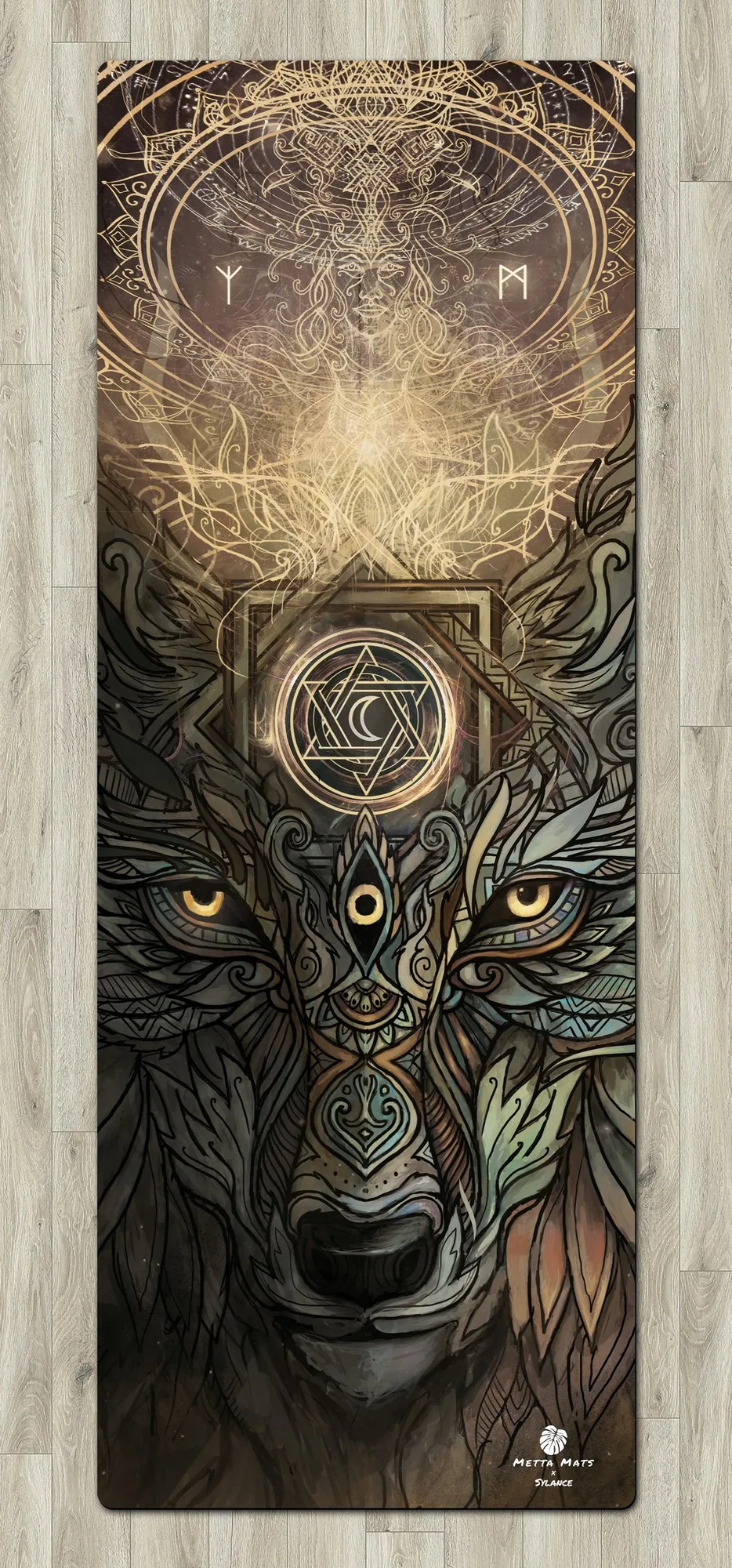
"Spirit Wolf" Yoga Mat
-
"Spirit Wolf" Yoga Mat: Surface is made from a blend of O-zone safe rubber and acrylic components, applied by hand. Shows the grip layer is a deliberate, textured material—not a thin printed film.
-
"Spirit Wolf" Yoga Mat: Printing uses dye sublimation on a polymer layer, bonded with a bio-derived polyurethane. Explains why the artwork is integrated and protected, supporting print durability.
-
"Spirit Wolf" Yoga Mat: Mat is 3.5 mm thick with a 3 mm natural tree-based rubber base. The base provides support and stability, which contributes to consistent grip.
Myth: you can't clean a printed mat without ruining the grip
Some people worry that cleaning a printed mat will strip the design or leave it slick. In truth, proper cleaning preserves grip by removing oils and dust that cause slipping. The Spirit Wolf mat is easy to clean: wipe with soap, diluted vinegar, or a natural cleaner, or hose it off. No harsh chemicals needed—and avoiding them actually protects the surface.
The myth likely comes from mats with poor-quality prints that do degrade when cleaned. But when the print is bonded under a durable topcoat, gentle cleaning is safe and recommended.
Reality check: when grip loss is real—and what to do
Grip can diminish over time, but it's usually due to buildup of sweat, oils, and dirt rather than the print itself. Heavy sweaters may find that excessive moisture requires a towel, as the mat's surface—while grippy wet or dry—can become overwhelmed. Regular cleaning and occasional deep cleaning restore tackiness.
If you notice slick spots, first clean the mat thoroughly. If grip issues persist, check for physical damage like cuts or worn areas. With normal use and care, a quality printed mat like the Spirit Wolf should maintain its grip for years—the manufacturer notes durability through consistent use.
Printed vs plain: grip and durability compared
- Grip: Quality printed mats use textured rubber surfaces that grip wet and dry, matching or exceeding plain mats. The print doesn't inherently reduce grip.
- Durability: Dye-sublimated prints bonded under polyurethane resist fading and wear. Plain mats may show wear similarly, but without the visual feedback of a print.
- Care: Both benefit from gentle cleaning. Printed mats may require avoiding abrasive cleaners to protect the artwork, but the grip layer is robust.