Quick Answer
Measure your dog's height and length, then add 2–4 inches for a snug but comfortable fit. Choose a crate that lets your dog stand, turn, and lie down easily, and pick a style that matches your home and your dog's needs.
Why Crate Size Matters
A crate that's too small makes your dog uncomfortable and can discourage use. A crate that's too large may encourage your dog to use one end as a bathroom, undermining house training. The right size creates a cozy den that feels secure and helps with training.
Measure your dog from the tip of the nose to the base of the tail for length, and from the floor to the top of the head (or ear tips if they stand up) for height. Add 2–4 inches to both measurements to find the minimum interior size.
If your dog is still growing, choose a size that accommodates their adult size, but use a divider panel to temporarily reduce the space. This keeps the crate comfortable now and saves you from buying a second one later.
Wire vs. Furniture Crates: Which Is Right?
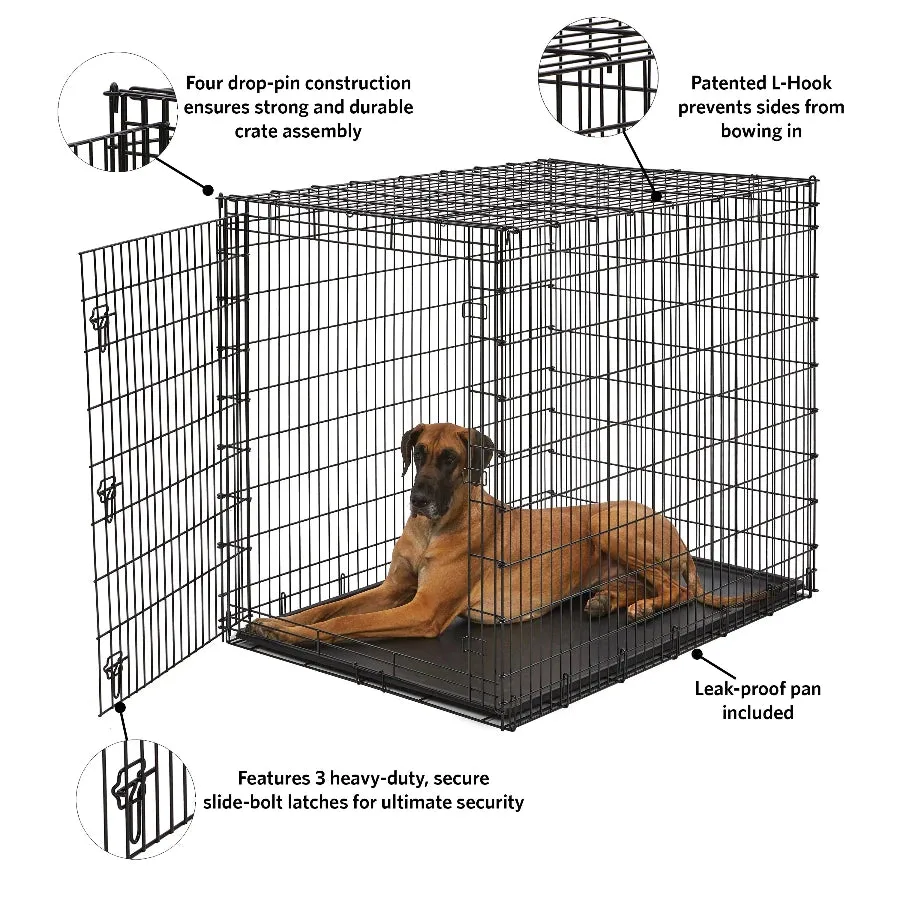
Wire crates are practical and easy to clean, with good ventilation. They fold flat for storage or travel and often include a removable tray. Furniture-style crates blend into your home and can double as a side table, but they are heavier and less portable.
If you plan to move the crate between rooms or take it on trips, a wire crate is more convenient. If the crate will stay in one spot and you want it to look like part of your decor, a furniture-style crate may be worth the extra cost.
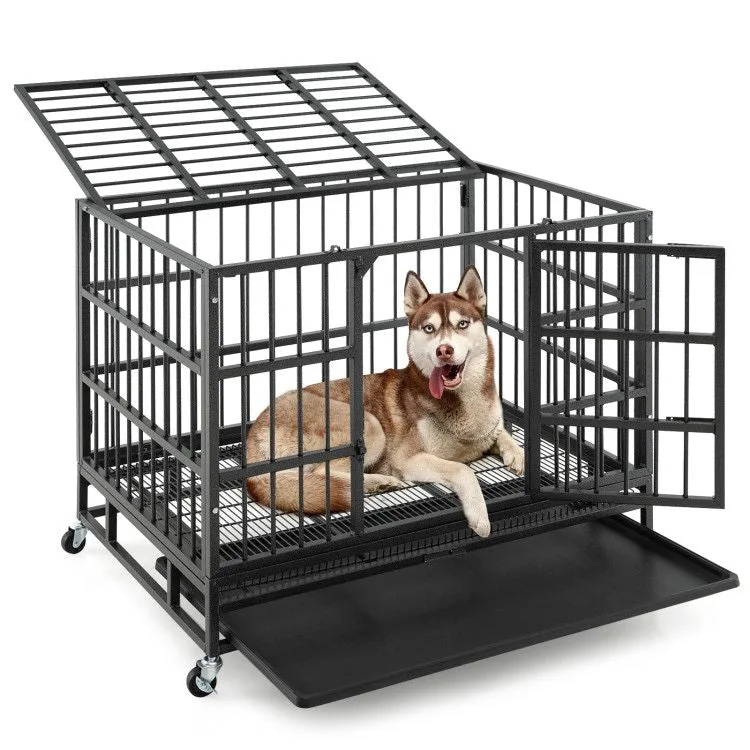
Both styles are sturdy for everyday use, but consider your dog's chewing habits. A heavy-duty metal crate is a better choice for strong chewers or escape artists.
Decision Rules for Choosing a Crate Size
- Measure your dog: Measure from nose to base of tail for length, and from floor to top of head or ears for height. Add 2–4 inches to both. Write down these numbers and keep them with you when shopping.
- Check the fit: Your dog should be able to stand without crouching, turn around easily, and lie down in a natural position. If they can't, size up.
- Choose the right style: Pick a wire crate for portability and easy cleaning, a furniture crate for aesthetics, or a heavy-duty metal crate for strong chewers. Consider your dog's chewing habits and how often you'll move the crate.
- Plan for growth: For puppies, buy a crate sized for their adult size and use a divider panel to reduce space until they grow into it. Check the divider panel availability before purchasing.
Product Facts
-
Dog Crate Furniture with Cushion and Double Doors for Small/Medium: This dog crate furniture includes a cushion and double doors for small/medium dogs. The cushion adds comfort, and double doors make it easy to place in any room and access from either side.
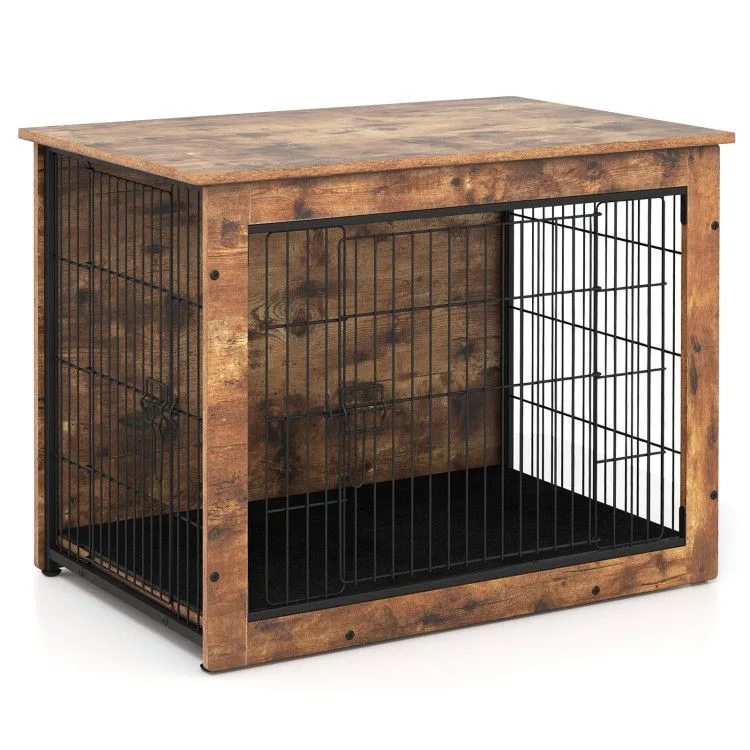
Dog Crate Furniture with Cushion and Double Doors for Small/Medium
-
Dog Crate Indoor Dog Cage with Removable Tray and Lockable Door: This indoor dog cage features a removable tray and lockable door. The removable tray simplifies cleaning, and the lockable door adds security for escape-prone dogs.
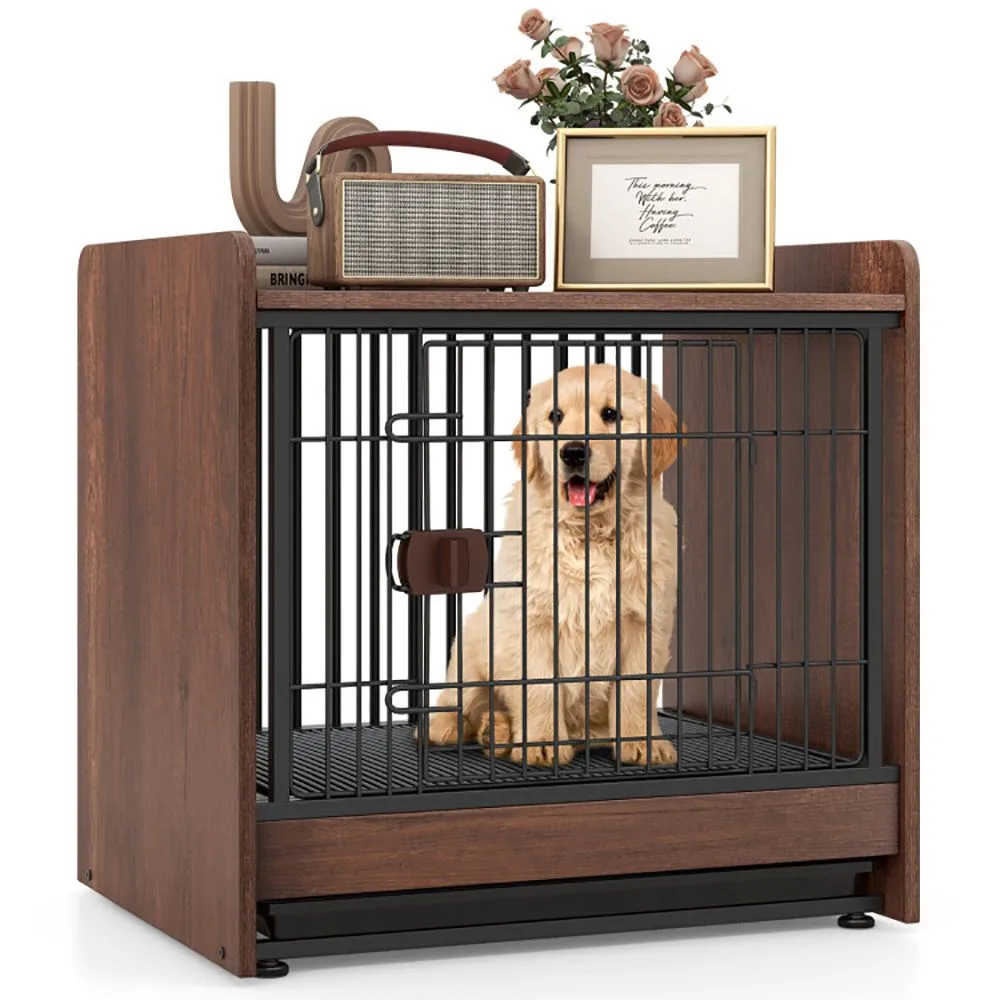
Dog Crate Indoor Dog Cage with Removable Tray and Lockable Door
-
Inch Foldable Heavy-Duty Metal Dog Cage with Lockable Rolling: This foldable heavy-duty metal dog cage has lockable rolling wheels. It offers durability for strong chewers and easy mobility, so you can move it from room to room without lifting.
Who Should Choose Which Crate
Best for
- A wire crate with a removable tray for easy cleaning and travel
- A furniture-style crate with a cushion for a permanent spot in your living room
- A heavy-duty metal crate for strong chewers or escape artists
Not for
- A furniture crate if you need to move it frequently or take it on trips
- A wire crate if you want a piece that blends with your home decor
- A heavy-duty metal crate if portability is your top priority