Quick Answer
Choose double edge hobby blades when you need to cut in both directions without rotating the handle, but if you prioritize control and safety for detailed work, opt for single edge blades.
Cutting Efficiency vs Control
Double edge blades cut on both sides, letting you slice through materials like foam, leather, and plastic with a simple back-and-forth motion. This speeds up straight cuts and reduces the need to reposition your hand.
Single edge blades concentrate all pressure on one sharp side, giving you more leverage and precision for intricate curves or tight corners. The blunt back edge also lets you rest your finger or guide the blade without risk.
Safety and Handling Trade-offs
Double edge blades are inherently more hazardous because both edges are exposed. Even a slight slip can cause a cut, and they require careful storage and handling.
Single edge blades are safer for beginners or when working with children. The unsharpened back edge provides a secure grip point and reduces accidental injuries.
Trade-offs at a Glance
- Double Edge for Speed: Use double edge blades when you need to cut in both directions without rotating the handle, such as trimming foam or slicing leather strips.
- Single Edge for Precision: Choose single edge blades for detailed carving or cutting curves where you need maximum control and a safe finger rest. If you do both types of work, keep a mix of both blade types in your kit.
- Safety Consideration: If you are new to craft cutting or work in a shared space, start with single edge blades to build confidence before handling double edge blades. Always store double edge blades in a protective case or dispenser to avoid accidental cuts.
Product Fact
-
#23 Double Edge Hobby Blades Multi Pack: The Excel Blades #23 Double Edge Hobby Blades are made from high-quality carbon steel and are 100% manufactured in the USA. Carbon steel holds a sharp edge for repeated cuts, and the US manufacturing ensures consistent quality for hobby work.
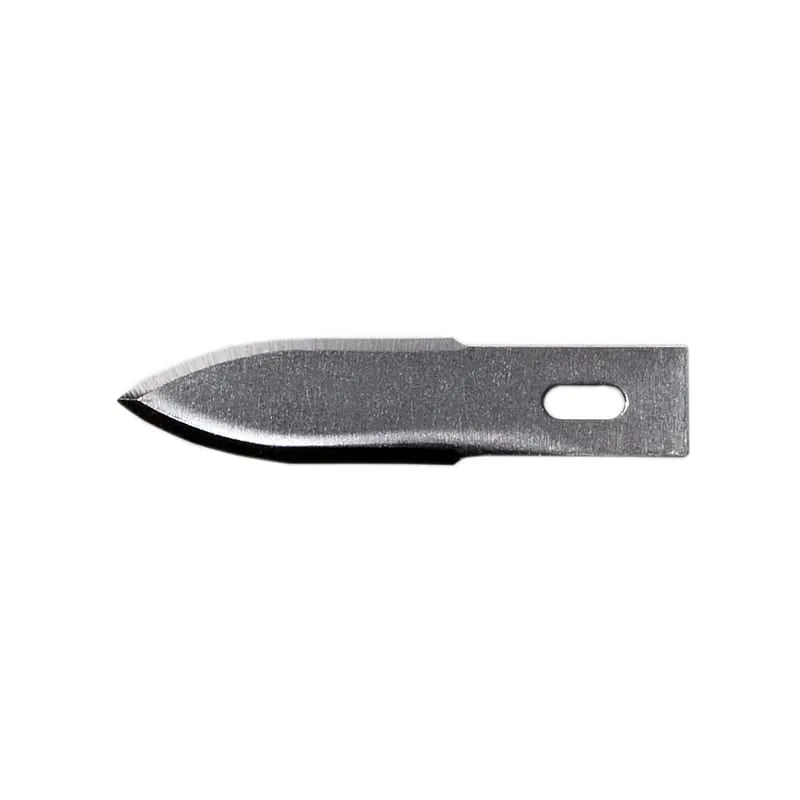
#23 Double Edge Hobby Blades Multi Pack
Which Blade Fits Your Cutting?
Best for
- Crafters who make long, straight cuts in soft materials like foam or leather
- Users who want to cut in both directions without repositioning the blade
Not for
- Detailed, intricate cuts that require a stable finger rest
- Beginners or anyone who prioritizes maximum safety over cutting speed