What the double-serrated edge is designed to cut
What does a double-serrated bread knife do differently?
WÜSTHOF describes the Classic 9" Precision Double-Serrated Bread Knife as having serrations within the serrations. That construction is meant to keep the edge sharp for longer, require less pressure and support precise, smooth cuts. The practical result is a blade that can move through a loaf without the sawing force a simpler serrated edge sometimes needs.
Does it work on bread with a hard crust?
Yes. The supplied product information says bread with a hard crust is not crushed when sliced with this double-serrated blade. That matters for sourdough-style loaves and other firm-crust breads where a dull or single-serrated edge tends to press down before it starts cutting.
Can it slice soft bread such as brioche?
The record states that bread with a soft crust is also sliced cleanly, without tearing the delicate surface. So slicing brioche and similar soft-crumb breads is within the intended use. The double-serrated edge is presented as the reason the cut stays smooth rather than ragged.
What is the blunt section at the tip for?
The small blunt section at the tip of the blade is designed for extra crusty loaves. As you slice down to the bottom of the loaf, the supplied instructions say to lift the handle up and use the blunt tip to slice through the hard bottom crust. That keeps the bottom crust from fighting the main serrated edge.
Is it a serrated knife for tomatoes?
The supplied record describes bread, crusty loaves and soft-crust bread, not tomatoes. A serrated edge is commonly used on tomatoes, but this product's evidence does not confirm tomato-specific performance. If tomatoes are your main task, check the smaller serrated knives in the range instead of assuming this loaf-sized blade is the right fit.
How does it help with crumb control?
Crumb control comes from the combination of a double-serrated edge and the cutting method. The edge is described as needing less pressure and producing precise, smooth cuts, while the blunt tip handles the hard bottom crust separately. Together, those two features address the two places where loaves usually tear or compress: the top crust and the base.
Catalog details behind these answers
-
Classic 9" Precision Double-Serrated Bread Knife: Classic 9" Precision Double-Serrated Bread Knife, catalog price USD 112.50 (comparison price USD 150.00). Identifies the exact model discussed and its current listed price so you can compare it with other bread knives.
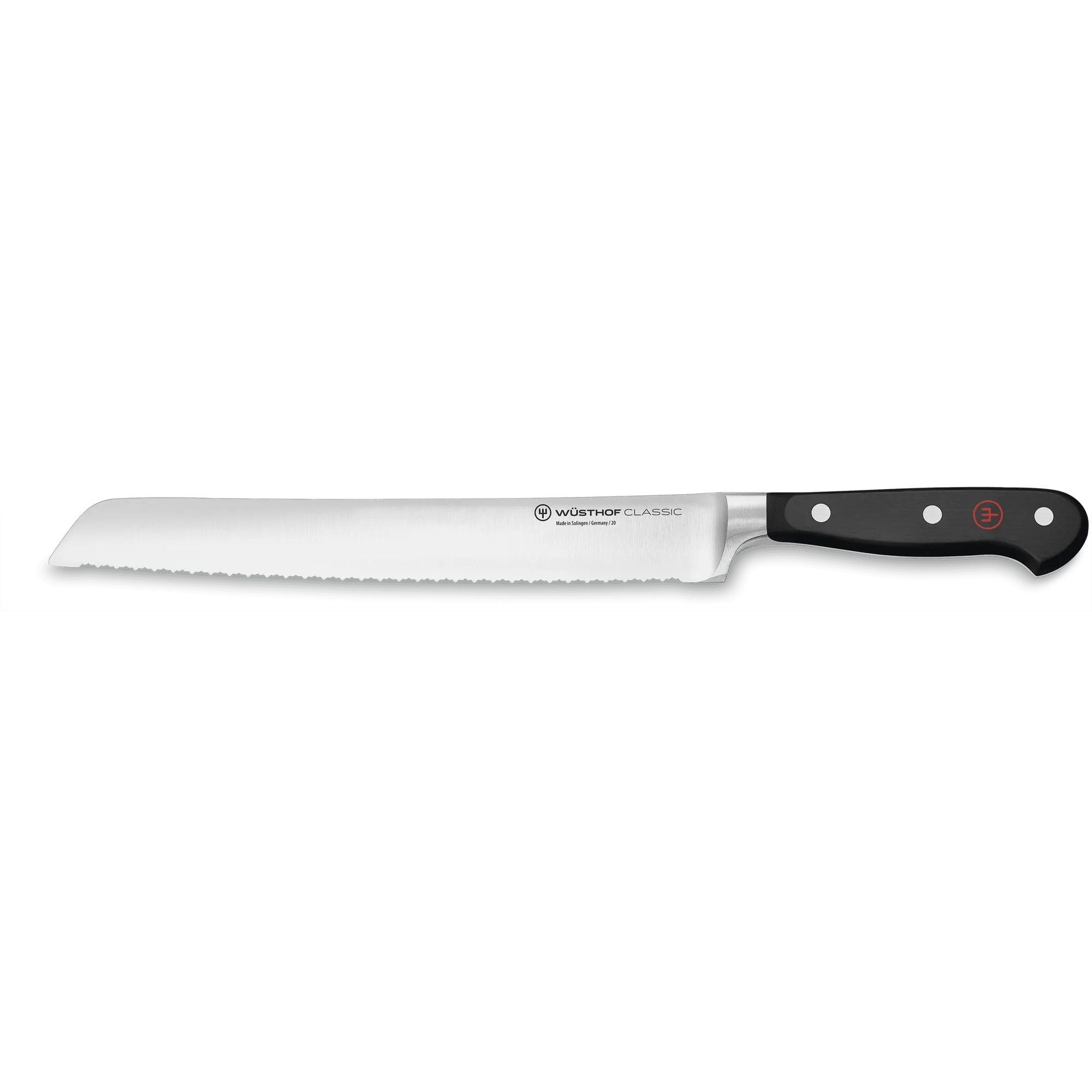
Classic 9" Precision Double-Serrated Bread Knife
-
Classic 9" Precision Double-Serrated Bread Knife: WÜSTHOF's precise, double-serrated edge has serrations within the serrations, which the record says keeps it sharp for longer, requires less pressure and supports very precise, smooth cuts. This is the core claim behind the knife's performance on both hard-crust and soft-crust bread.
-
Classic 9" Precision Double-Serrated Bread Knife: Bread with a hard crust is not crushed when sliced with this double-serrated blade, while bread with a soft crust is sliced cleanly without tearing the delicate surface. Confirms the two bread categories the product record explicitly supports.
-
Classic 9" Precision Double-Serrated Bread Knife: The small blunt section at the tip is designed for extra crusty loaves; lift the handle and use the blunt tip to slice through the hard bottom crust. Explains the intended technique for the bottom crust rather than leaving it to the serrated edge.
Using the blunt tip on a crusty loaf
The tip feature is easy to overlook. On a very crusty loaf, the bottom crust can be tougher than the top and can resist the main serrated edge. The supplied instructions describe a two-stage approach: slice down through the loaf with the serrated edge, then lift the handle and use the blunt tip to cut through the hard bottom crust.
This is a technique the product record supports specifically for extra crusty loaves. It is not presented as a rule for every bread. For softer loaves, the double-serrated edge alone is described as producing clean cuts without tearing.
What the record does not confirm
The supplied information covers the edge construction, the bread types it is intended for and the blunt-tip technique. It does not list blade length in inches, blade material, handle material, weight, dishwasher suitability or a sharpening method. Those details should be confirmed on the product page or with WÜSTHOF before you buy if they matter to your decision.
The record also does not confirm performance on tomatoes, citrus or other produce. Treat the double-serrated bread knife as a bread knife first; for small serrated tasks, the dedicated serrated utility and paring knives in the range are the more direct fit.