Start with the finished size, not the box art
Before you tip 1,500 pieces onto a table, check the space you have. The Dragon Ball Z 1500-piece puzzle builds to 59,2 x 84,3 cm, so your work surface needs to hold that footprint plus room to lay out sorted pieces around it. A dining table or a large puzzle board works; a coffee table usually does not.
That finished size also tells you something about pacing. This is a long build, not an evening project. Plan to leave it out between sessions, or use a board you can slide under a sofa. The sorting method below is designed to keep a large anime jigsaw manageable when you cannot finish it in one sitting.
What the Clementoni Dragon Ball Z puzzle gives you
-
Dragon Ball Z - 1500 pezzi: Puzzle adulti 1500 pezzi, complete size 59,2 x 84,3 cm The piece count and finished footprint define how much table space and sorting area you need before you start.
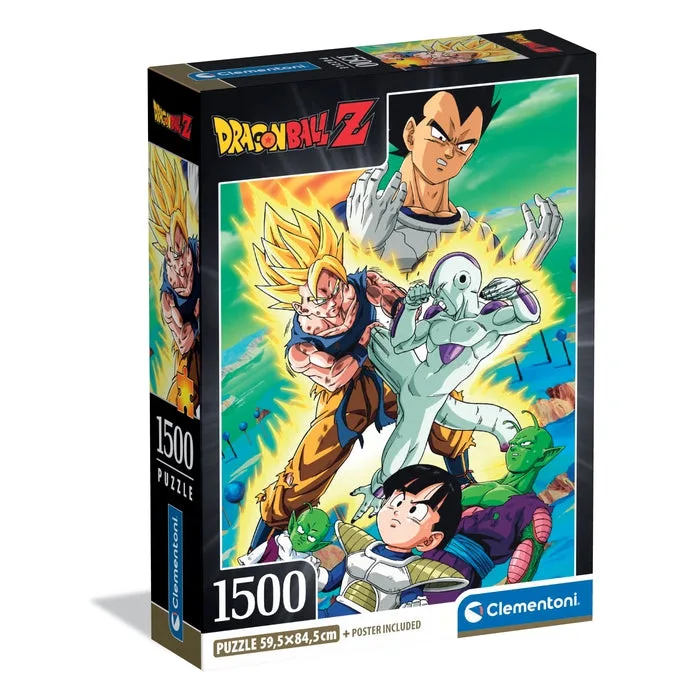
Dragon Ball Z - 1500 pezzi
-
Dragon Ball Z - 1500 pezzi: Made in Italy with a high use of recycled materials and no polluting components, per Clementoni Useful if material sourcing matters to you; it does not change how you sort or assemble the puzzle.
How to sort 1,500 pieces without losing momentum
The goal of sorting is not to organize every piece perfectly. It is to turn a pile of 1,500 into a few smaller, recognizable groups you can attack one at a time.
- 1. Flip and separate edges first: Turn every piece face up and pull out the straight-edged border pieces into one tray. On a 1,500-piece puzzle this is a meaningful group, and it gives you a clear first task: build the frame.
- 2. Sort by dominant color, not by character: Dragon Ball Z art typically mixes skin tones, orange clothing, sky, and dark backgrounds. Make one pile per dominant color family rather than trying to identify characters piece by piece. Color sorting is faster and more reliable at this stage.
- 3. Set aside distinctive fragments: Any piece with a face, an eye, a logo, or a sharp graphic line goes into a small 'detail' pile. These are the pieces you will place last, and keeping them separate stops them from getting buried.
- 4. Keep a 'not sure' pile and revisit it: Do not force ambiguous pieces into a group. A small leftover pile is normal; it shrinks as the frame and color zones come together.
Assembling the frame and the color zones
Build the border first using the edge pieces. The 59,2 x 84,3 cm finished size means the frame is large, so assemble it in sections on the table rather than trying to connect all four sides at once. Once the frame holds, you have a boundary that stops loose pieces from drifting and a reference for where interior sections belong.
Next, work one color zone at a time inside the frame. Start with the zone that has the most pieces, because it gives you the fastest visible progress. Keep the detail pile untouched until the surrounding color areas are mostly filled. When you reach the detail pieces, match them by the shape of the surrounding gap rather than by the picture alone; that is usually faster on a busy anime image.
Checkpoints that tell you the build is on track
There is no official instruction sheet for sorting a jigsaw, so use these practical checkpoints rather than a fixed timetable.
- The frame is closed: All four borders connect and the overall rectangle matches the stated 59,2 x 84,3 cm footprint. If the frame will not close, you likely have an edge piece sorted into the wrong pile.
- Color zones have clear boundaries: You can point to where one color family ends and another begins. If zones blur together, re-sort the ambiguous pieces before continuing.
- The detail pile is shrinking: Faces and graphic lines should be the last pieces placed. If the detail pile is still large when the color zones are nearly full, check whether some pieces were mis-sorted.
Honest trade-offs of a 1,500-piece anime puzzle
A 1,500-piece puzzle at this finished size is a commitment. The image is rewarding, but large areas of similar color or dark background can slow you down, and the puzzle needs a dedicated surface for days rather than hours. If you have limited table space or want a build you can finish in one or two sittings, a smaller piece count is the more realistic choice.
One practical safety net: Clementoni directs buyers to its assistance section for a 'pezzi smarriti' (missing pieces) service. The supplied product information does not state the exact terms, turnaround, or eligibility, so check that section directly if a piece goes missing rather than assuming a replacement will be sent.