Quick answer
The most reliable dried fruit and nut pairings balance sweetness with richness and acidity with salt. Start by matching texture and intensity: soft, tart dried fruit like cherries or cranberries works best with buttery or roasted nuts, while dense, sweet fruit like prunes or mango pairs well with crunchy, lightly salted nuts. If you are building a snack board or gift, choose two or three complementary combinations rather than many random ones.
The three flavour rules that make pairings work
Every good dried fruit and nut pairing follows at least one of three rules. First, contrast: sweet fruit with salty or bitter nuts, or tart fruit with rich, buttery nuts. Second, bridge: ingredients that share a flavour note, like orange with almonds or cherry with dark chocolate. Third, texture: something soft and chewy next to something crunchy or creamy. When you apply these rules, you can pair almost anything without a recipe.
A common mistake is pairing two very sweet or two very rich items together. For example, sweetened dried mango with honey-roasted nuts will taste flat and cloying. Instead, use a tart or tangy fruit to cut through richness, or a plain roasted nut to let the fruit shine. The goal is balance, not just novelty.
How to match specific dried fruits with nuts
Tart and tangy fruits like sour cherries, cranberries, and blueberries need nuts that are creamy or lightly salted. Almonds, cashews, and pistachios work well because their mild flavour and fat content soften the acidity. Soft, sweet fruits like prunes and raisins pair best with crunchy, roasted nuts such as walnuts or pecans, which add a pleasant bitterness and textural contrast. Dense, tropical fruits like mango and pineapple go with macadamia nuts or coconut-dusted almonds for a richer, more dessert-like combination.
If you are working with chocolate-dipped nuts, treat the chocolate as a flavour bridge. Milk chocolate with orange and almonds pairs naturally with dried cherries or cranberries because the citrus and red fruit notes overlap. Dark chocolate with nuts is more forgiving with tart fruits, while white chocolate or yogurt coatings need brighter, more acidic fruits to avoid tasting too sweet.
Building a balanced snack board or gift box
For a snack board, aim for three to five components that cover different flavour profiles: something tart, something sweet, something salty, and something crunchy. A simple formula is one soft dried fruit, one chewy dried fruit, one plain roasted nut, and one chocolate-dipped nut. This gives you multiple pairing options without overwhelming the palate.
When buying pre-mixed packs, check the ingredient list for added sugar and oil. Some dried fruits are sweetened heavily, which limits how well they pair with already sweet nuts. If you are unsure, choose unsweetened or lightly sweetened dried fruit and plain roasted nuts, then add a small amount of chocolate-dipped nuts for indulgence. This gives you more control over the final balance.
Decision rules for pairing dried fruit and nuts
- Match acidity with richness: If the dried fruit is tart (cherries, cranberries, blueberries), choose a rich or buttery nut (macadamia, cashew, milk chocolate-covered almond). If the fruit is very sweet (prunes, raisins, dates), choose a crunchy, lightly bitter nut (walnut, pecan, plain roasted almond). Taste a small piece together before committing to a full bowl.
- Use chocolate as a bridge, not a cover-up: Chocolate-dipped nuts work best when their flavour notes echo the fruit. Orange with almonds pairs with cherries; dark chocolate with nuts pairs with tart berries; white chocolate needs very acidic fruit to avoid cloying. If the chocolate is sweet, pick the tartest fruit you have.
- Balance texture across the board: Every pairing should have at least one soft or chewy element and one crunchy element. Soft dried fruit with crunchy nuts is the easiest win. If both are soft, add a crunchy cracker or seed. A snack board with no textural contrast feels monotonous.
- Limit added sugar in the fruit: Heavily sweetened dried fruit narrows your pairing options because it clashes with sweetened or chocolate-coated nuts. Check labels: if sugar is listed first or second, treat it as a dessert element, not a base. Unsweetened or juice-sweetened fruit gives you more flexibility.
Product facts that guide pairing choices
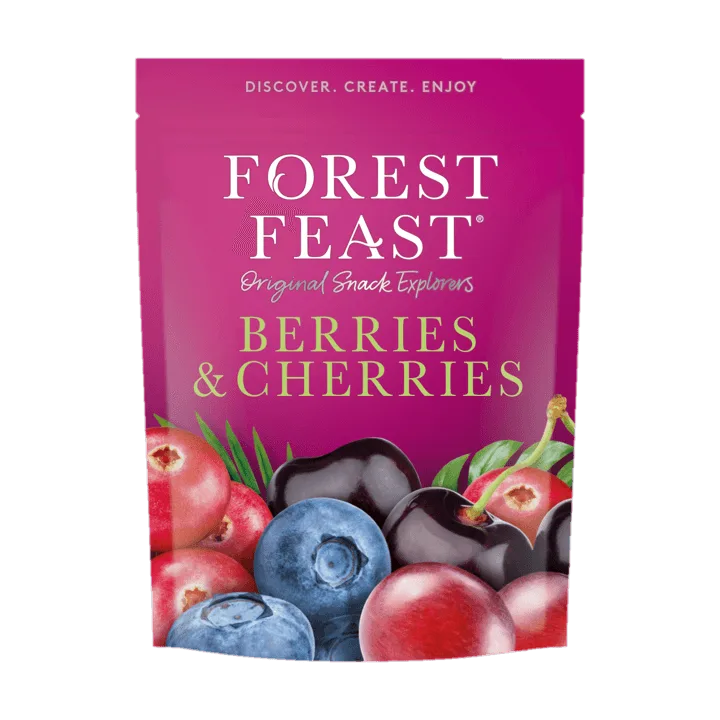
- Berries & Cherries: Forest Feast Berries & Cherries are a specially selected mix of sweetened dried sour cherries, cranberries, blueberries and jumbo flame raisins, that are bursting with flavour and goodness. 30g of dried fruit equates to one of your five-a-day. This mix already balances tart cherries and cranberries with sweet raisins, so it pairs well with plain or lightly salted nuts without extra sweetening.
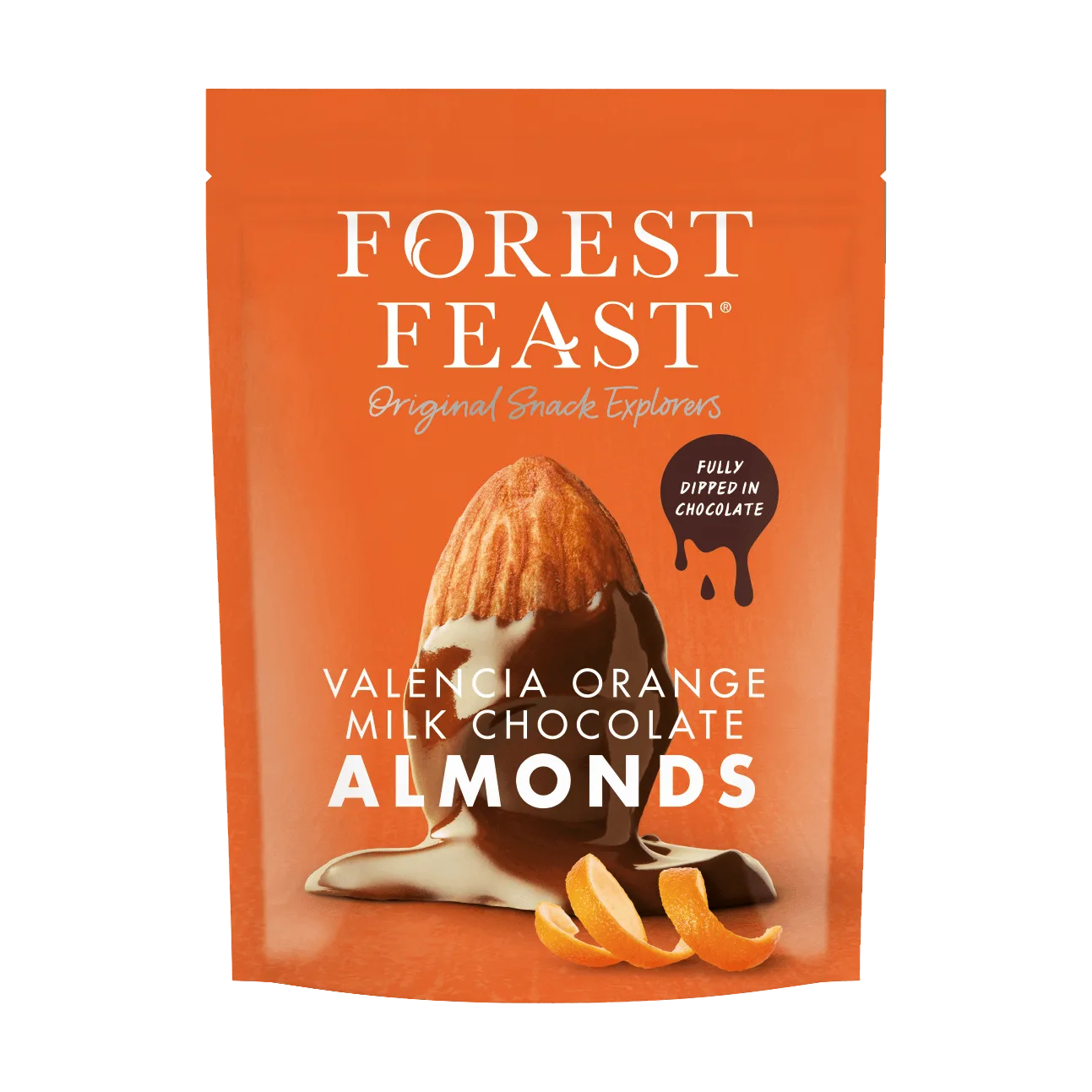
- Valencia Orange Milk Chocolate Almonds: We oven-roast our whole almonds, smother them in rich Belgian milk chocolate and add a burst of Valencia orange for a gorgeous creamy, zesty treat. The orange note bridges naturally with tart dried cherries or cranberries, while the milk chocolate and almond add richness and crunch.
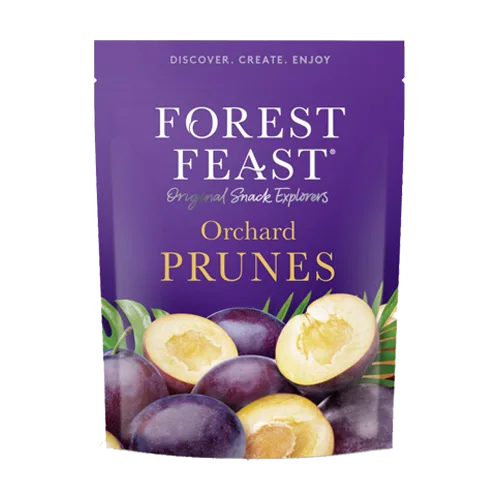
- Orchard Prunes: Forest Feast Prunes are grown in abundant plum orchards where the trees take between four to six years to bear fruit. The unique climate and growing conditions means they reach the perfect ripeness in August when they are harvested, pitted and slow dried to lock in their intense flavour and rich purple colour. 30g of dried fruit equates to one of your five-a-day. Their dense, sweet flavour and soft texture call for a crunchy, lightly bitter nut like walnut or pecan to create contrast.
Is this pairing guide right for you?
Best for
- People building snack boards, gift boxes, or party platters who want reliable combinations without guesswork
- Shoppers who want to choose dried fruit and nuts that complement each other instead of buying random packs
- Anyone who prefers a simple rule-based approach to flavour matching rather than complex recipes
Not for
- Shoppers looking for a single pre-made snack mix with no intention of pairing components
- People who dislike either dried fruit or nuts and want alternatives like cheese or crackers only
- Those seeking medical or nutritional advice on sugar intake or allergen management