The chew-toy claim, checked against the record
A dried okra pod is often filed under natural chew toys for small pets, which makes it sound like a tool for wearing down teeth. The supplied record does not make that claim. It describes a crunchy edible pod with fiber and tiny seeds, sourced from a US farm where everything is organic and safe.
That distinction matters. A chew toy implies a job: grinding, shaping, or cleaning teeth. An edible pod is something a small pet eats, crunches, and sometimes plays with. It can still be enriching, but it is not a substitute for hay, a dental check, or a complete diet.
What the Dried Okra Pod record actually confirms
-
Dried Okra Pod: Each order contains one okra pod (Qty: 1). One pod is a single enrichment item, not a bulk supply, so plan it as an occasional extra rather than a staple.
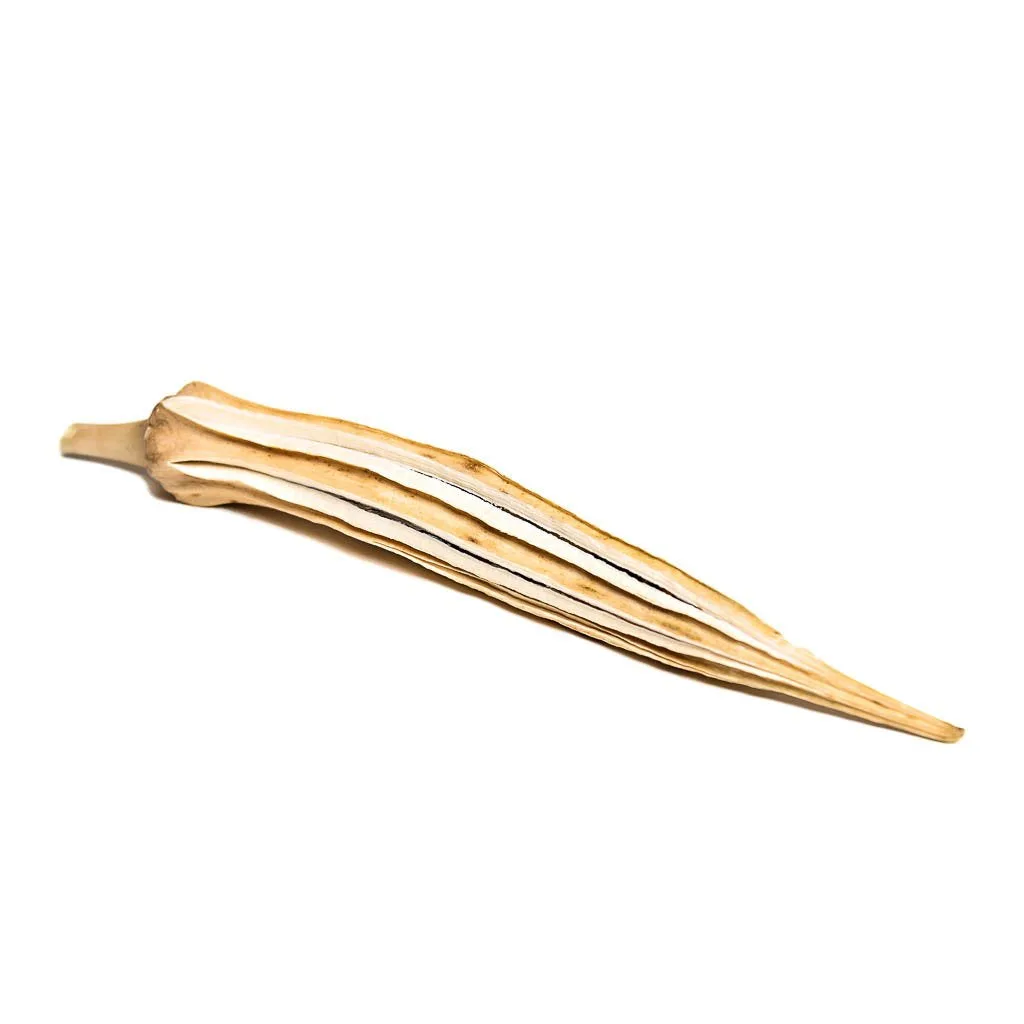
Dried Okra Pod
-
Dried Okra Pod: The pods crunch, and the record calls this a satisfying sensation for small animals. The appeal is texture and sound, which is enrichment value, not a verified dental benefit.
-
Dried Okra Pod: The record describes super nice fiber in this edible. Fiber is a genuine nutritional feature, but the record gives no amount, so it cannot be used to calculate a portion.
-
Dried Okra Pod: There are seeds inside, and sometimes you can hear them rattle around a bit. The rattle is normal, not a defect, and the record says the seeds are part of the package.
-
Dried Okra Pod: The seeds are described as low in oils and tiny, and the record says it is easy to take them out if you are worried. You have a choice: offer the pod as supplied, or remove the seeds first if that makes you more comfortable.
-
Dried Okra Pod: The pods are totally pesticide-free and sourced from a US farm where everything is organic and safe. This addresses the common worry about residues on natural chews, though it is a sourcing statement rather than a laboratory test result.
Claims worth separating from the evidence
- Myth: an okra pod cleans teeth: The record never mentions dental cleaning, plaque, or tartar. Crunching may be satisfying, but do not rely on a pod to manage dental health.
- Myth: the seeds are dangerous and must always be removed: The record explicitly says the seeds are part of the package, low in oils, and tiny. Removing them is an optional comfort measure, not a stated requirement.
- Myth: one pod a day is a balanced treat plan: The record gives no feeding frequency. A customer quote mentions a tablespoon a day, but that is one owner's comment, not a manufacturer instruction.
- Myth: organic means you can skip portion control: Organic sourcing speaks to how the pods were grown, not to how much any pet should eat. The record supplies no species-specific quantity.
Is dried okra safe for guinea pigs and rabbits?
The supplied record does not list species, size limits, or a maximum daily amount. That is a real gap, not a hidden warning. It means you should treat the pod as an occasional edible enrichment item and let your own animal's response guide you.
For guinea pigs, the record's customer story describes Betty the guinea pig popcorning over her okra pod, which is a positive anecdote rather than a safety study. For rabbits, the record supports the same crunchy, fibrous character but does not confirm a portion. If your pet has a history of gut stasis, dental problems, or a prescribed diet, ask your vet before adding any new edible item.
The okra pod toy for rabbits and guinea pigs: practical evidence
- Dried Okra Pod: The record includes a customer account of a guinea pig named Betty digging into her okra pod and popcorning. This is owner-reported enthusiasm, useful as a hint about palatability but not proof that every guinea pig will react the same way.
- Dried Okra Pod: The same customer wrote that she thought Betty would be disappointed to learn she could only have a tablespoon a day. The tablespoon figure comes from an owner, not from the product record, so treat it as an anecdote rather than a rule.
- Dried Okra Pod: The record says the pods are totally pesticide-free and sourced from an organic US farm. For owners choosing natural chew toys for small pets, this is the clearest safety-related sourcing statement in the record.
How to offer one pod without overdoing it
Because the record gives no species-specific serving size, these steps focus on observation and restraint rather than a prescription.
- Offer the pod whole first: The record presents the pod as supplied, seeds included. Let your pet investigate the shape and rattle before you change anything.
- Watch the first session: Note whether your pet chews, nibbles, or ignores it. The record's appeal is crunch and texture, so a pet that does not engage is telling you something useful.
- Remove seeds only if you prefer: The record says it is easy to take the seeds out if you are worried. This is a comfort choice, not a correction of a defect.
- Keep it occasional: The record supplies no daily frequency. Use the pod as an enrichment extra alongside hay and the usual diet, not as a replacement for either.
- Take the pod away when it is done: The record does not describe how long a pod lasts or how to store a half-eaten one. If it becomes wet, soiled, or uninteresting, discard it rather than leaving it in the enclosure indefinitely.
What the record leaves open
The supplied information does not state a recommended portion, a frequency, a species list, or a storage life. It also does not confirm any dental or medical benefit. Those are limits of the record, not proof that the product lacks such features.
What you can rely on is narrower and still useful: one crunchy, pesticide-free okra pod per order, with edible fiber and tiny seeds that may rattle. As a natural chew toy for small pets, it earns its place as enrichment. As a health treatment, it has no support in the supplied evidence.