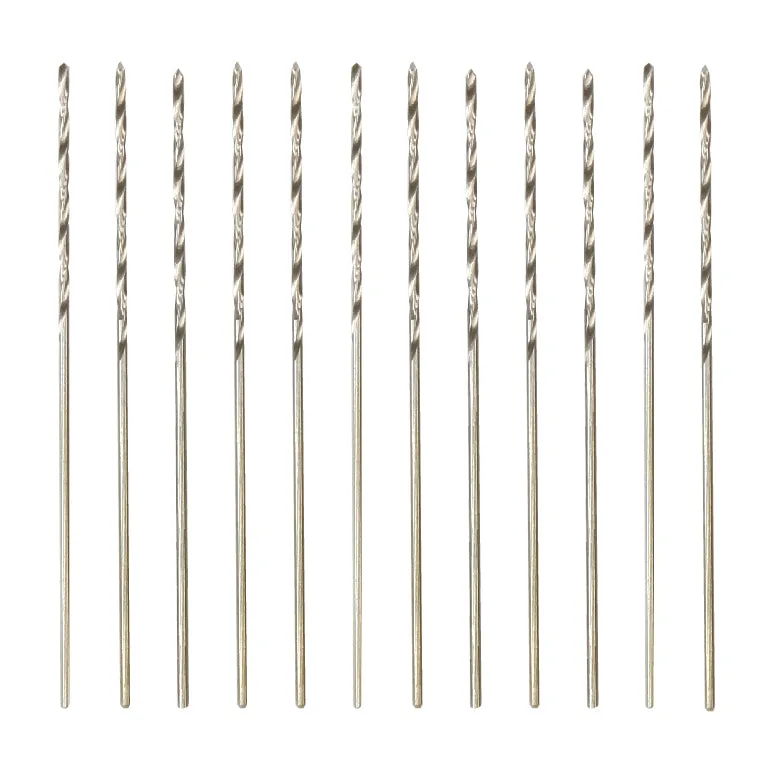
Quick answer
For the smallest holes in beads, resin, and fine model parts, choose #73 at 0.610 mm; for slightly larger holes in wood, plastic, and jewelry, choose #62 at 0.965 mm; and for a middle size that handles delicate hobby work, choose #65 at 0.88 mm. All three come in 12-piece sets, so the real decision is matching diameter to material and hole size.
Why diameter drives the choice more than the number
Number drill bits are sized by a gauge system, not by a simple millimeter step. That means the difference between #62, #65, and #73 is not linear: #73 is the smallest at 0.610 mm, #65 sits in the middle at 0.88 mm, and #62 is the largest at 0.965 mm. If you are drilling a hole for a wire, pin, or bead, measure the item first and pick the bit that is just slightly larger. A bit that is too small will bind; one that is too large will leave a loose fit.
Material matters as much as size
The supplied catalog facts list #62 and #73 as twist drill bits for wood, plastic, and jewelry, while #65 is described as a high-speed drill bit set for hobby use. In practice, all three are micro bits intended for fine work, but the smaller the bit, the more fragile it becomes. #73 at 0.610 mm is the most delicate and works best in soft materials like resin, beads, and PVC. #62 at 0.965 mm has more material behind the cutting edge, so it tolerates slightly tougher jobs in wood and plastic. #65 at 0.88 mm is a compromise: small enough for detail work, but not as fragile as #73.
The trade-off: precision versus durability
Choosing a smaller bit gives you finer holes, but it also means a higher risk of breakage if you apply side pressure or drill too fast. The #73 set is the most precise of the three, yet it is the least forgiving. The #62 set is the most robust, but it may be too large for tiny beads or delicate model parts. The #65 set sits in the middle, which makes it a sensible default when you are unsure, but it may not be the perfect fit for either extreme. None of the supplied records include a hardness rating or recommended RPM, so treat those as unknowns and test on scrap material first.
Trade-offs at a glance
- #73 (0.610 mm): Choose this for the smallest holes in beads, resin, and fine model parts. It is the most precise but also the most fragile, so use minimal pressure and a steady hand. If you regularly drill beads or tiny details, keep a spare set on hand.
- #65 (0.88 mm): A middle size that suits general hobby drilling in wood, plastic, and jewelry. It is less fragile than #73 but not as strong as #62, making it a good all-rounder when hole size is not critical. Start here if you are buying your first micro drill set.
- #62 (0.965 mm): Pick this when you need a bit more strength for slightly larger holes in wood or plastic. It is the most durable of the three, but may be too big for very small beads or delicate model parts. Measure your hardware first; #62 is close to 1 mm, which is a common size for small pins and wire.
Product facts
-
Drills #65: 12-pack of #65 high-speed drill bits, 0.88 mm (0.035 in) diameter. The middle diameter handles delicate hobby holes without being as fragile as the smallest size.
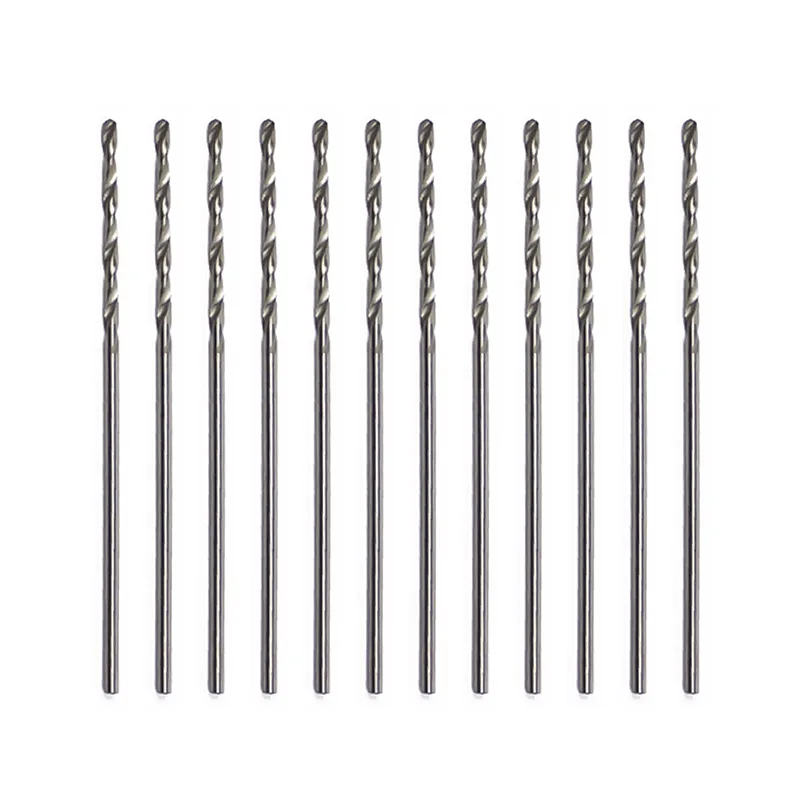
Drills #65
-
Drills #62: 12-piece #62 twist drill bit set, 0.965 mm (0.0380 in) diameter, for wood, plastic, and jewelry. The largest of the three gives you a bit more strength for slightly tougher materials.
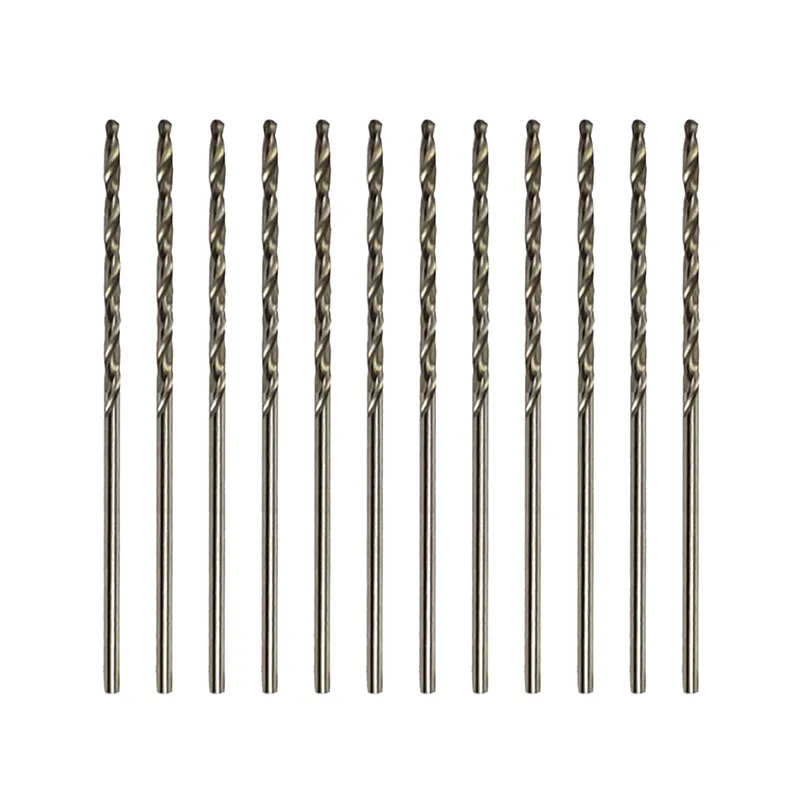
Drills #62
-
Drills #73: 12-piece #73 twist drill bit set, 0.610 mm (0.0240 in) diameter, for wood, resin, plastic, beads, PVC, jewelry, and model making. The smallest size is the best choice for tiny beads and fine model details, but it demands a light touch.
Which micro drill bit should you choose?
Best for
- Hobbyists drilling beads, resin, and fine model parts who need the smallest holes (#73).
- Crafters who want one versatile set for wood, plastic, and jewelry work (#65).
- Modelers and jewelry makers who need a bit more strength for slightly larger holes (#62).
Not for
- Drilling hard metals or masonry; these micro bits are intended for wood, plastic, and similar materials.
- Projects that require a specific hole size outside the 0.610–0.965 mm range; you will need a different gauge.
- Heavy-handed drilling without a pin vise or drill press; the smallest bits can snap under side load.