Quick answer
The right latch depends entirely on your door's edge preparation, not on the lock brand. A square corner latch drops into a rectangular mortise cut at the door edge, while a drive-in latch presses into a rounded bore with no faceplate screws. If your door has a round edge hole, a square corner latch will not seat without chiseling. If it has a rectangular cut, a drive-in latch will sit loose and rattle. Measure the edge hole before ordering.
Replacing a latch sounds like a five-minute job until you pull the old one out and realize the new one does not sit flush. The culprit is almost always the door edge preparation: the shape of the cut where the latch exits the door. Drive-in and square corner latches look similar in a product photo but fit completely different doors.
This guide explains the difference, shows you how to identify your door in under a minute, and covers what changes when you pair a new latch with a smart lock such as the Yale Assure Lock 2. It also flags the trade-offs so you can decide whether to match your existing cut or modify the door.
What a drive-in latch actually is
A drive-in latch has a rounded, cylindrical body with no faceplate. It presses or taps into a round bore drilled into the edge of the door, so the latch body itself is visible at the edge. There are no screws holding it in place; friction and the surrounding wood or metal do the work. This style is common on older homes, mobile homes, and doors that were prepped with a single round hole rather than a routed rectangular pocket.
Because there is no faceplate, drive-in latches sit flush with the door edge and leave a cleaner line. That also means the door edge must be in good condition. If the round bore is wallowed out or splintered, the latch can spin or slide. The Adjustable Spring Drive-In Latch is an example of this style, and its adjustable design helps compensate for minor alignment differences between the door and frame.
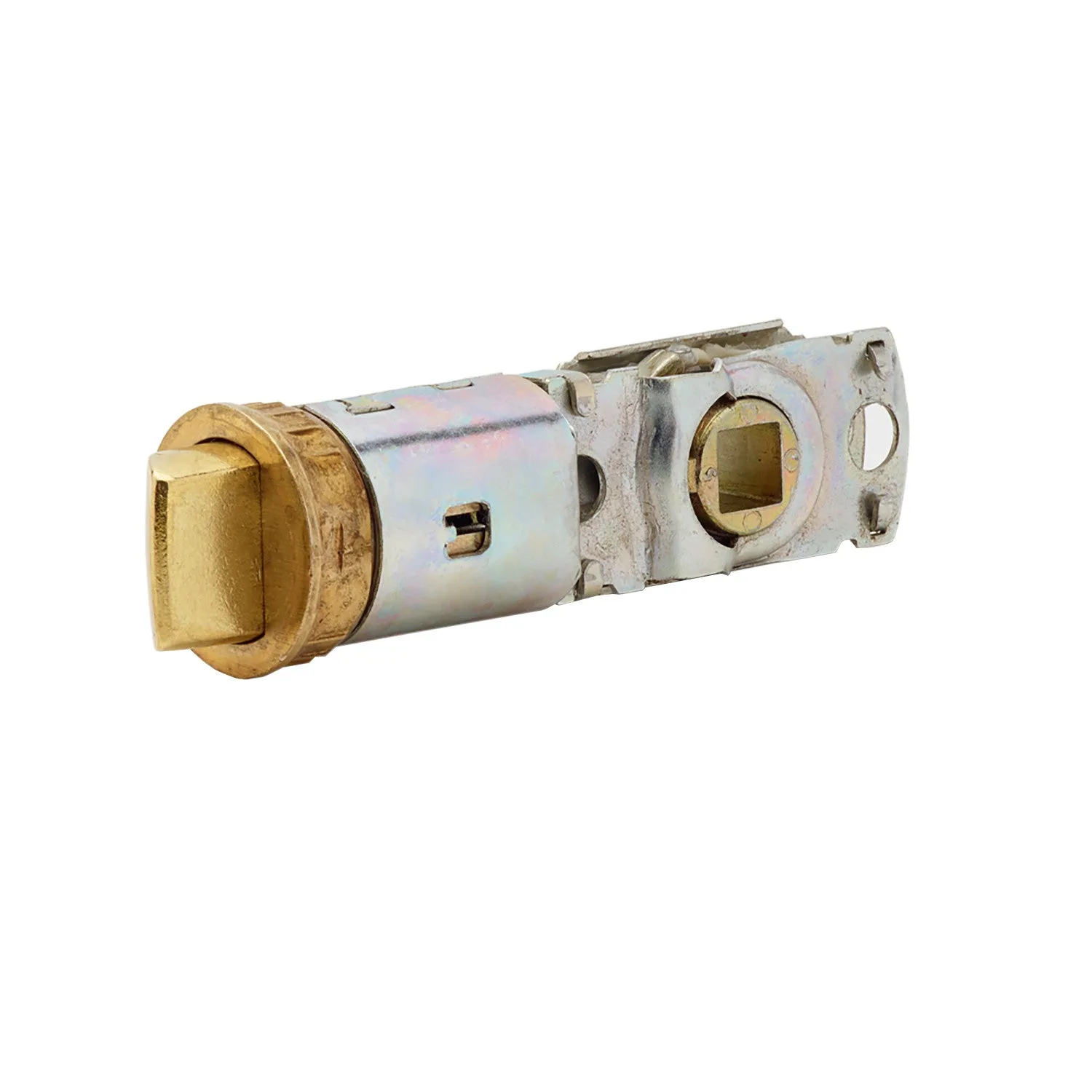
Adjustable Spring Drive-In Latch
- Look for a round hole at the door edge with no visible screws.
- The latch body is usually visible and sits flush with the edge.
- Adjustable versions can help when the door and frame are slightly out of line.
What a square corner latch actually is
A square corner latch, sometimes called a faceplate latch, has a flat rectangular faceplate with two screws. It sits in a mortise cut into the door edge, so the faceplate is flush and the screws hold the latch in place. This is the most common preparation on modern residential doors because it is easy to install and easy to replace.
The faceplate is what gives this style its name: the corners of the plate are square rather than rounded. Rounded-corner faceplates exist too, and they fit the same rectangular mortise but leave small gaps at the corners. If you are replacing a square corner latch, match the corner shape and the faceplate dimensions, because a plate that is too tall or too narrow will not cover the old cut.
- Look for a rectangular cut with a screwed-on faceplate.
- Measure the faceplate height and width before ordering a replacement.
- Match square corners to square corners for a clean cover.
How to identify your door in under a minute
Open the door and look at the edge where the latch extends. If you see a flat metal plate with two screws, you have a square corner or rounded corner faceplate latch. If you see a rounded metal cylinder pressed into the wood with no screws, you have a drive-in latch. That single look tells you which family you need.
If the latch is painted over or hard to see, remove the interior handle and slide the latch out. Measure the diameter of the hole in the door edge and the distance from the edge to the center of the handle bore, called the backset. Standard backset is either 2-3/8 inches or 2-3/4 inches. Write both numbers down before you shop, because a latch with the wrong backset will not line up with the strike.
- Screws visible at the edge means a faceplate latch.
- No screws and a round body means a drive-in latch.
- Record the backset and edge hole diameter before ordering.
Why this matters when you add a smart lock
Smart locks replace the interior and exterior handles and the deadbolt, but they generally reuse the existing latch or deadbolt bolt. That means the latch type on your door usually stays the same unless you are willing to modify the door edge. If you are switching from a mechanical knob to a keypad lever, the latch is often the one part that carries over.
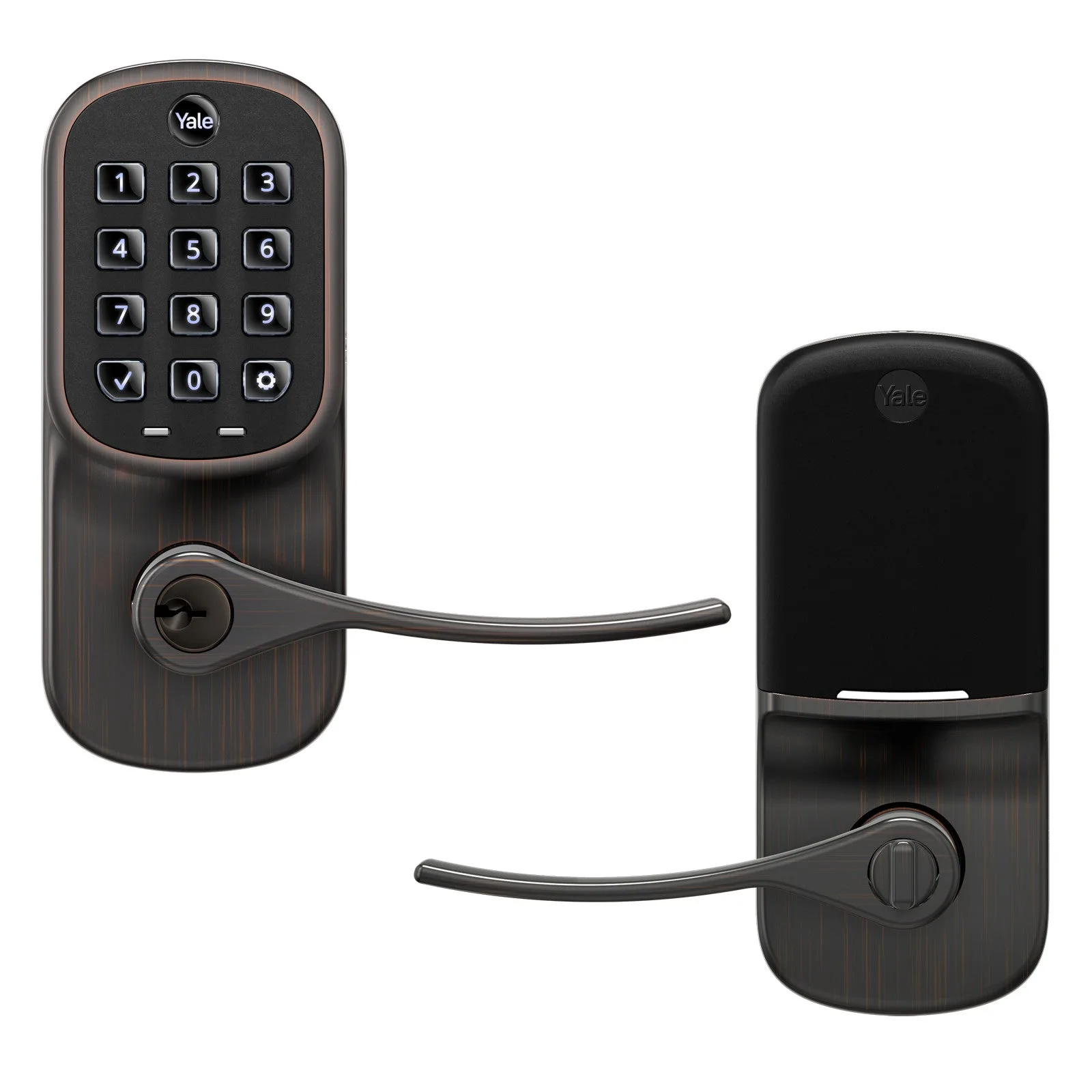
The Yale Assure Lever Keypad with Wi-Fi is a keyed entry lever lock, so it pairs with a lever-style latch rather than a deadbolt. The https://yalehomeju.com/products/yale-assure-lock-sl-with-wi-fi-7342e1b2a4e63635d3eaa89d-1480785Yale Assure Lock SL with Wi-Fi is a touchscreen deadbolt, so it pairs with a deadbolt bolt, not a latch. Knowing which hardware you are installing keeps you from buying the wrong replacement part.
- Lever locks use a latch; deadbolts use a bolt.
- Reuse the existing latch when possible to avoid door modification.
- Check the lock's required backset before assuming your door will fit.
The trade-offs of converting one type to the other
Converting a drive-in door to a square corner latch means chiseling or routing a rectangular mortise into the door edge. On a solid wood door this is straightforward with a sharp chisel and patience. On a metal or fiberglass door it is difficult without the right tools, and a mistake is visible and permanent. Many people choose to keep the drive-in style for this reason.
Converting a square corner door to a drive-in latch is easier in theory but rarely clean. You would need to fill the rectangular mortise and drill a round bore, and the patch may not hold screws well. In most cases the practical answer is to match what you already have. If you cannot find an exact match, an adjustable latch is the safer bet because it tolerates small alignment differences.
- Matching the existing cut is almost always faster and less risky.
- Chiseling a new mortise is permanent; measure twice before cutting.
- Adjustable latches help when the door and frame have shifted over time.
Trade-offs at a glance
- Drive-in latch: No faceplate and no screws, so it sits flush and installs by pressing into a round edge bore. It looks cleaner but depends on a tight, undamaged bore to stay put. Choose it if your door already has a round edge hole and you do not want to cut wood.
- Square corner latch: A screwed-on rectangular faceplate that covers the mortise cut. It is secure and easy to replace, but the plate must match the existing cut in height and width. Choose it if your door has a rectangular mortise and you want a straightforward screw-in swap.
- Converting between them: Switching from drive-in to square corner requires chiseling a mortise. Switching the other way requires filling a mortise and drilling a round bore. Both are permanent changes to the door edge. Match your existing preparation unless you are prepared to modify the door.
Products that use these latch types
- Adjustable Spring Drive-In Latch: A drive-in style latch from the YH Collection, which combines design, high standards, and performance to offer ANSI/BHMA Grade 2 commercial quality. A good match for doors with a round edge bore and no faceplate cut, and the Grade 2 rating gives you a durability reference when comparing replacements.
- Yale Assure Lever Keypad with Wi-Fi: A keyed entry lever lock with Wi-Fi and Bluetooth connectivity that works with Amazon Alexa and Apple HomeKit, available in Black Suede, Oil Rubbed Bronze, and Satin Nickel. Because it is a lever lock, it pairs with a latch rather than a deadbolt, so your door edge preparation determines which latch you need.
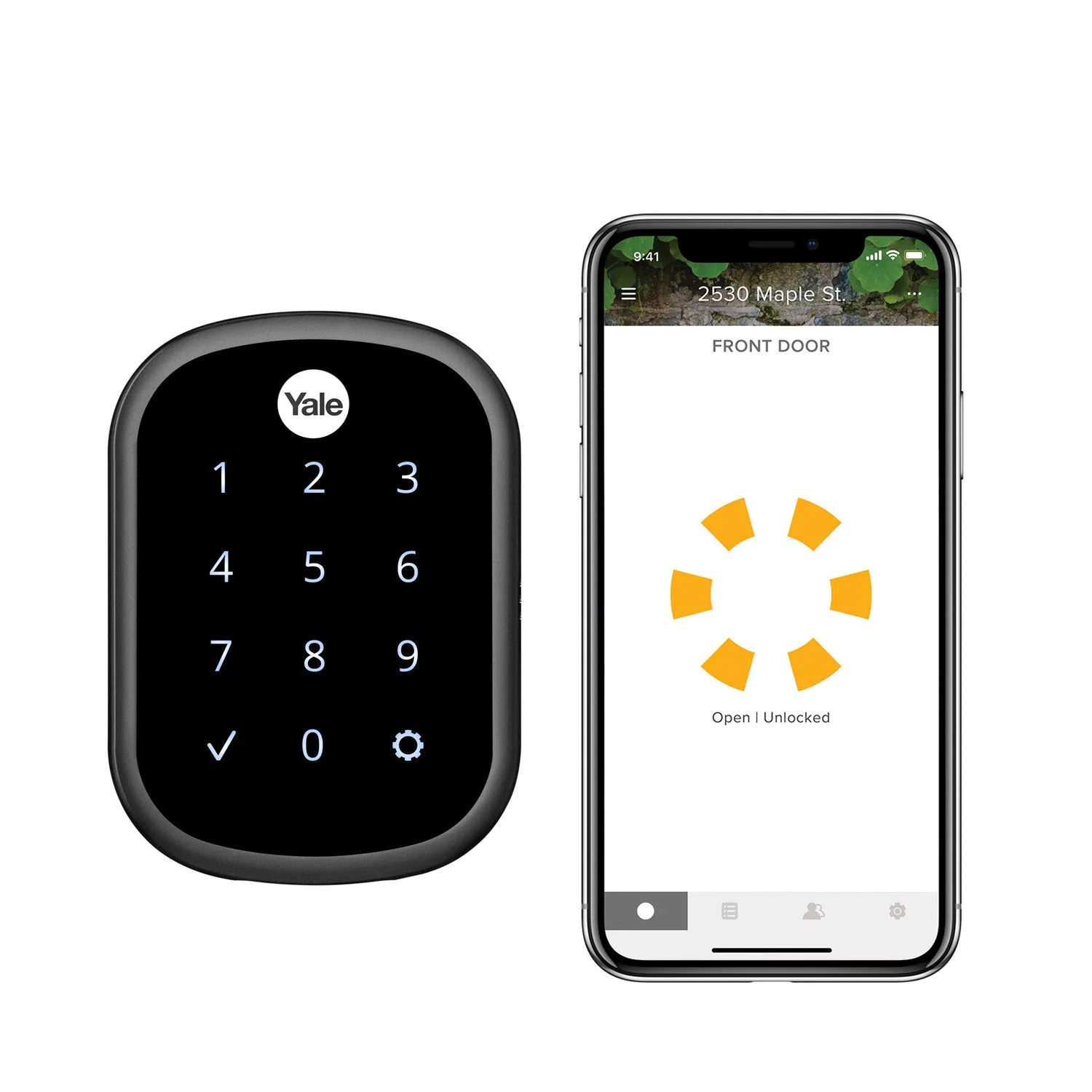
- Yale Assure Lock SL with Wi-Fi: A slim touchscreen deadbolt that is 100% key free, unlocked with a 4-8 digit entry code and locked by tapping the keypad. It uses a deadbolt bolt, not a latch, so it is the wrong hardware to compare against a drive-in or square corner latch.
Which latch should you choose?
Best for
- Doors with a round edge bore and no faceplate cut, where a drive-in latch drops in without woodworking.
- Older homes or prepped doors where the edge has already been drilled round and you want to avoid chiseling.
- Situations where the door and frame are slightly out of alignment and an adjustable latch can compensate.
Not for
- Doors with a rectangular mortise and a screwed-on faceplate, which need a square corner or rounded corner latch instead.
- Anyone installing a deadbolt, since deadbolts use a bolt rather than a latch.
- Doors with a damaged or oversized edge bore, where a drive-in latch may not hold securely.
Pull the old latch, look at the door edge, and measure the backset before you buy anything. Matching the existing preparation is nearly always faster and less risky than converting, and it keeps your smart lock installation on track.