Quick answer
Treat the hood as part of the cooking surface: wipe it down while the griddle is still warm, keep the drain path clear, and cover the unit between cooks. If you see rust or a flame problem, diagnose it before scrubbing or adjusting gas settings.
Why a built-in hood ages differently from a freestanding one
A drop-in griddle sits in a cutout, so the hood and the surrounding counter form a pocket where heat, steam, and grease collect. That trapped moisture is what drives most hood staining and surface rust, not the cooking itself.
Natural gas units also stay connected to a fixed line, which makes it tempting to skip the end-of-season check. A short monthly inspection of the hood, knobs, and drain area catches small issues before they become repairs.
When cleaning makes it worse
Harsh abrasive pads and oven cleaner can dull a hood finish and strip the thin oil film that helps shed grease. Use a degreaser diluted for outdoor equipment and a soft cloth, then dry the surface instead of letting it air-dry.
Skip the pressure washer. Forced water pushes past seams and into the cutout, which is the opposite of outdoor griddle rust prevention.
Diagnose the hood problem before you fix it
- Symptom: sticky brown film on the hood underside: Likely cause is polymerized cooking grease that was never wiped while warm. Corrective action: with the griddle off and cool enough to touch, apply a diluted degreaser, let it sit for a few minutes, wipe with a soft cloth, and dry. Stop and choose a professional hood service if the film has hardened into a varnish that does not lift after two attempts. Wipe the hood underside after every cook while it is still warm to prevent the film from forming.
- Symptom: rust spots on the hood edge or cutout rim: Likely cause is trapped moisture between the hood and the counter, often from rain or cleaning water. Corrective action: dry the area thoroughly, apply a thin coat of food-safe oil to bare steel edges, and cover the unit between cooks. Stop and call the installer if rust is coming from inside the cutout or the hood no longer sits flush. A cover is the cheapest rust prevention for a built-in griddle; use it every time the unit cools.
- Symptom: knobs feel stiff or the LED flame light flickers: Likely cause is grease or moisture in the control area, not a gas supply problem. Corrective action: shut off the gas, wipe the knob bezels with a barely damp cloth, dry fully, and test ignition. Stop and contact a qualified gas technician if the flame failure device does not shut off gas when the flame goes out. Never force a stiff knob; stiffness is a cleaning signal, not a reason to turn harder.
- Symptom: hood interior stays wet after a cook: Likely cause is a blocked drain path or a hood left closed while the griddle cools. Corrective action: clear grease from the drain channel, leave the hood open during cool-down, and check that the cutout has a way for moisture to escape. Stop and consult the installer if water pools in the cutout itself. Cool-down with the hood open is part of natural gas griddle upkeep, not an optional step.
Product facts that affect hood care
-
28" Drop-in Griddle with Hood (Natural Gas): The 28" Drop-in Griddle with Hood is natural gas ready and includes a hood, LED knob lights for ignition and flame status, ambient puddle lighting, and a flame failure device. Because the hood is part of the unit and the knobs carry electronics, cleaning should avoid soaking the control panel and should confirm the flame failure device is working after any hood service.
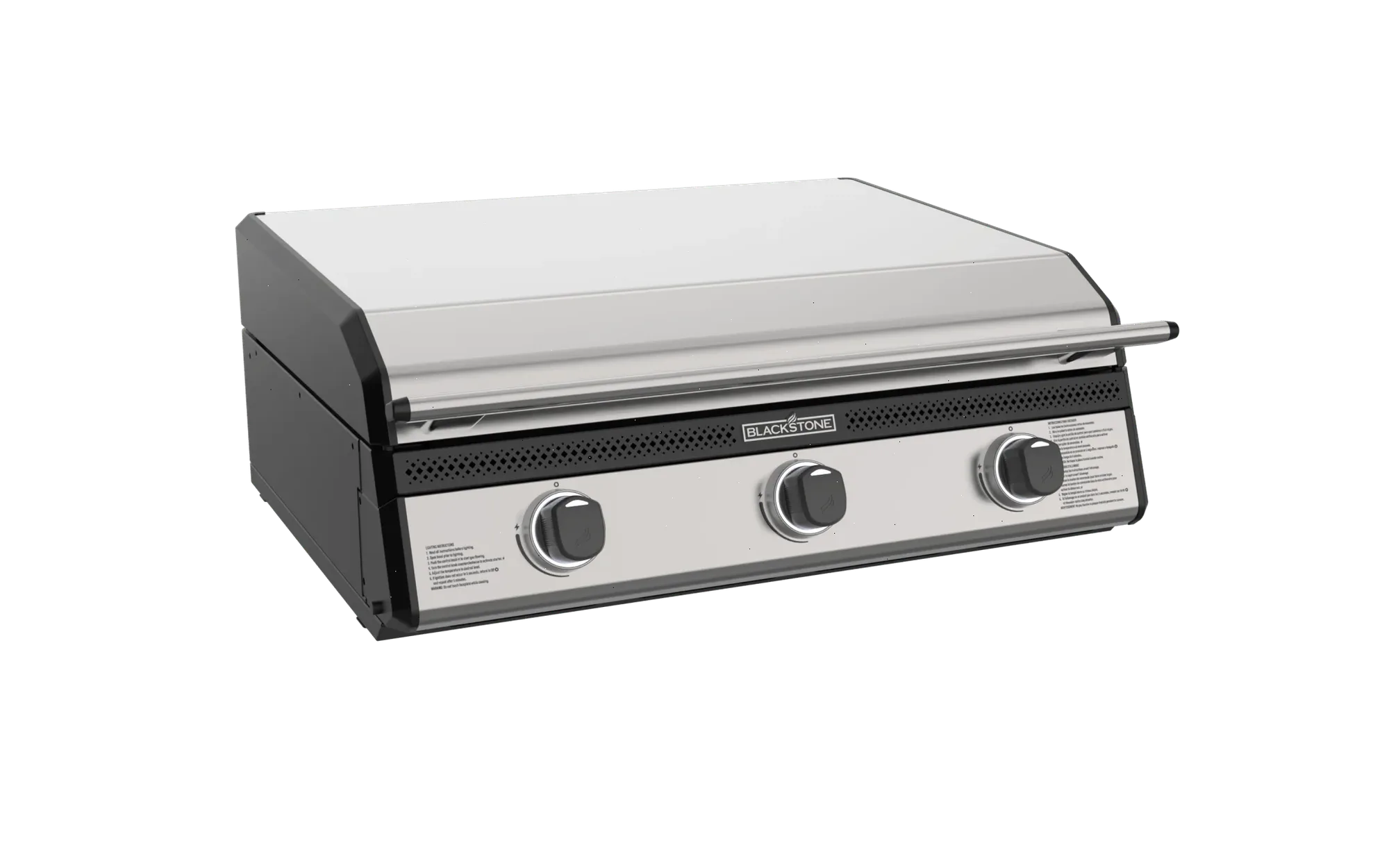
28" Drop-in Griddle with Hood (Natural Gas)