What “no crossbody strap” actually changes
The Duffle Bag Jacket is sold as the no-crossbody-strap version, so the usual hands-free sling carry isn't part of the setup. That is a design choice, not a fault: the garment is built around three modes — pouch, jacket and duffle bag — and each one gives you a different way to move it.
The practical question is which mode to use for the leg of the trip in front of you. Below are the carry options the supplied product information supports, and the tradeoffs of each.
Three carry modes, three different jobs
The 3-in-1 design is the strap alternative: instead of hanging the bag across your body, you change what the item is.
- Pouch mode: The most compact form. Use it when you want the item stowed and out of the way — for example while you're wearing the jacket or moving through a station. It keeps the piece small rather than slung.
- Jacket mode: Wear it as a jacket when you want your hands free without a strap over your shoulder. This is the closest thing to hands-free carry in the no-strap design, because the garment is on your body rather than hanging from it.
- Duffle bag mode: The largest form, for when you need to carry more. Without a crossbody strap, plan on holding it by hand or using whatever carry point the bag itself provides; the supplied information doesn't specify a shoulder strap, so don't assume one is included.
How to choose a carry mode before you leave
Work backwards from the leg of the journey rather than picking a mode in advance and hoping it fits.
- Count what you're carrying: If it's a light layer and a few essentials, pouch or jacket mode keeps things simple. If you're moving a fuller load, duffle mode is the one that holds it.
- Decide whether you need your hands: For cycling, stairs or holding a coffee, jacket mode is the most practical no-strap option. For waiting and sitting, the duffle or pouch form is easier to set down.
- Check the weather and layer plan: The jacket is the wearable part, so if you expect to take it off mid-trip, plan where the pouch or duffle form goes — over a shoulder isn't available, so it will be in hand or on your back in jacket form.
- Convert before you're in a hurry: The product description says it transforms in seconds. Practise the pouch-to-jacket and jacket-to-duffle changes at home so the switch is quick at a gate or on a platform.
What the product record confirms
-
Duffle Bag Jacket (No Crossbody Strap): 3-in-1 design: transforms from a pouch to a jacket to a duffle bag. These three forms are the carry options you have instead of a crossbody strap.
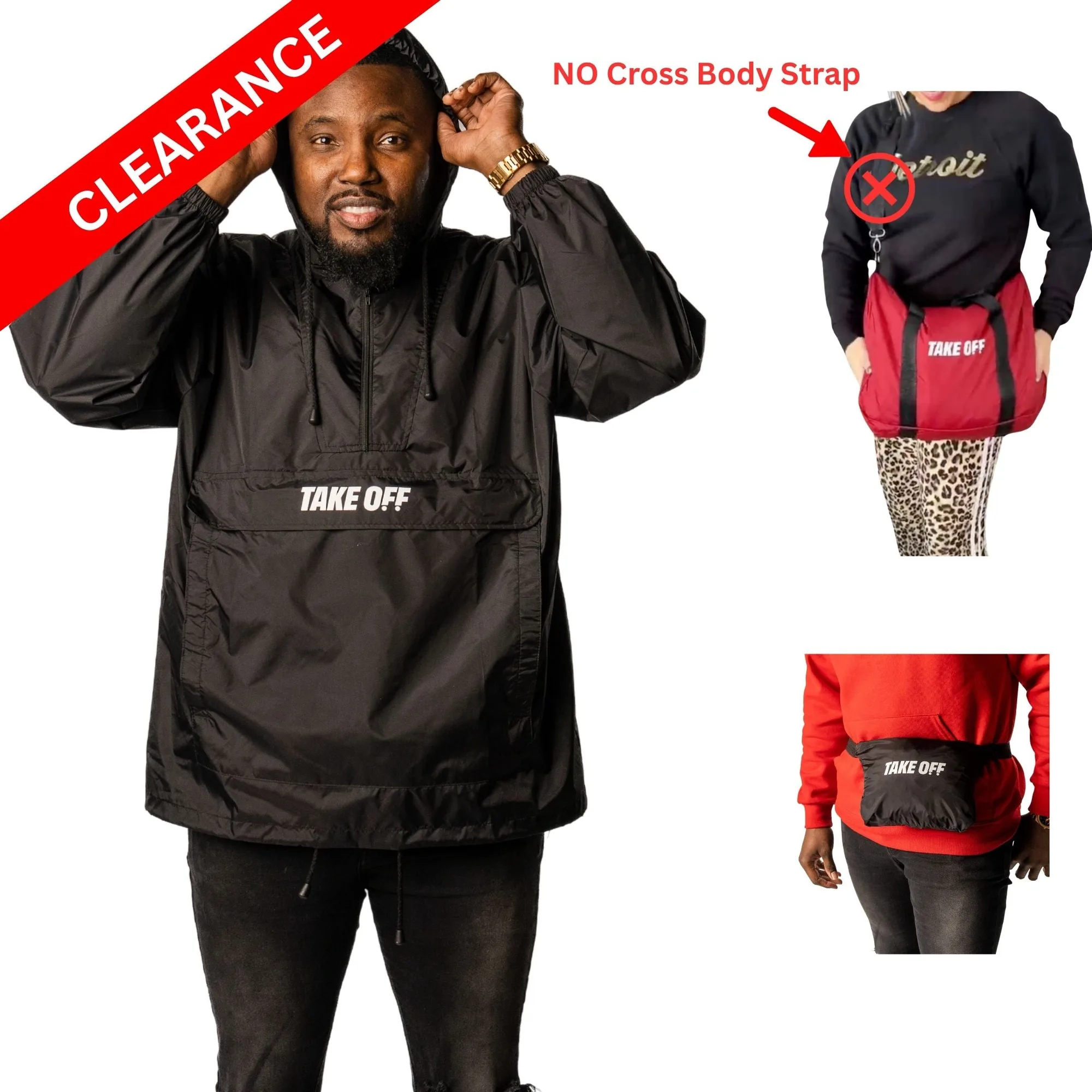
Duffle Bag Jacket (No Crossbody Strap)
-
Duffle Bag Jacket (No Crossbody Strap): Available in Black or Pink, in Small, Medium and Large. Size affects how the jacket fits when worn, which is the main hands-free carry mode.
-
Duffle Bag Jacket (No Crossbody Strap): Described as suitable for cycling through the city or exploring the outdoors. Those are exactly the situations where a strap-free, wearable carry makes sense.
When the missing strap is a real limitation
Be honest about the tradeoff. A crossbody strap spreads weight across the body and keeps a bag close in crowds. Without one, duffle mode means carrying the load in your hand, which gets tiring on long walks and leaves one hand occupied.
If your trip is mostly long transits with a heavy load, the no-strap Duffle Bag Jacket is a weaker fit than a bag with a shoulder strap. If your trip is short hops, cycling, or days where you want one item that can be a layer, a pouch and a bag, the three modes cover more situations than a single strap would.
Sizing matters more without a strap
Because jacket mode is your main hands-free option, fit is the deciding factor. The Duffle Bag Jacket comes in Small, Medium and Large in both Black and Pink, but the supplied information doesn't include a size chart or measurements. Check the size guide on the product page before ordering rather than guessing from your usual jacket size.
The supplied information also doesn't list care instructions or fabric details, so don't assume how it should be washed or how it performs in rain. If those points matter to you, confirm them before you buy.
Practical habits for strap-free carry
A few small habits make the no-strap design easier to live with.
- Keep valuables on your person: With no strap holding the bag against your body, keep phone, wallet and passport in a pocket or small pouch rather than loose in duffle mode.
- Set the bag down deliberately: In duffle mode you'll often be holding it, so use the moments when you're stationary to put it down and rest your hand.
- Use jacket mode for queues and platforms: Standing around is when a hand-carried bag is most annoying; wearing the jacket frees both hands.
- Pack for the mode you'll use most: If most of your trip is in jacket mode, keep the load light. Save the fuller packing for the legs where you'll be in duffle mode.