Start with the two-part Pooba ball, not the shelf
The Dungby & Pooba mini blind box figures arrive with a built-in display decision: each mini Dungby figure comes packed inside a companion two-part Pooba ball. Before you plan a shelf layout, open the ball and decide whether it will stay part of the display or become storage. The ball is part of the product, not just packaging, so treating it as a display piece is the most natural starting point.
Because the figures are mini size and the ball is part of the set, your display does not need deep shelving or heavy risers. A narrow ledge, a small floating shelf, or the top of a low bookcase can work. The goal is to give each figure enough space for its six articulated legs without crowding the next piece.
What the catalog confirms about the set
-
Dungby & Pooba Mini Blind Box Figures: Each mini Dungby figure features six individually articulated legs and comes packed inside a companion 2-part 2" wide Pooba ball. The articulated legs and the ball are the two elements that shape every display choice, so plan around both.
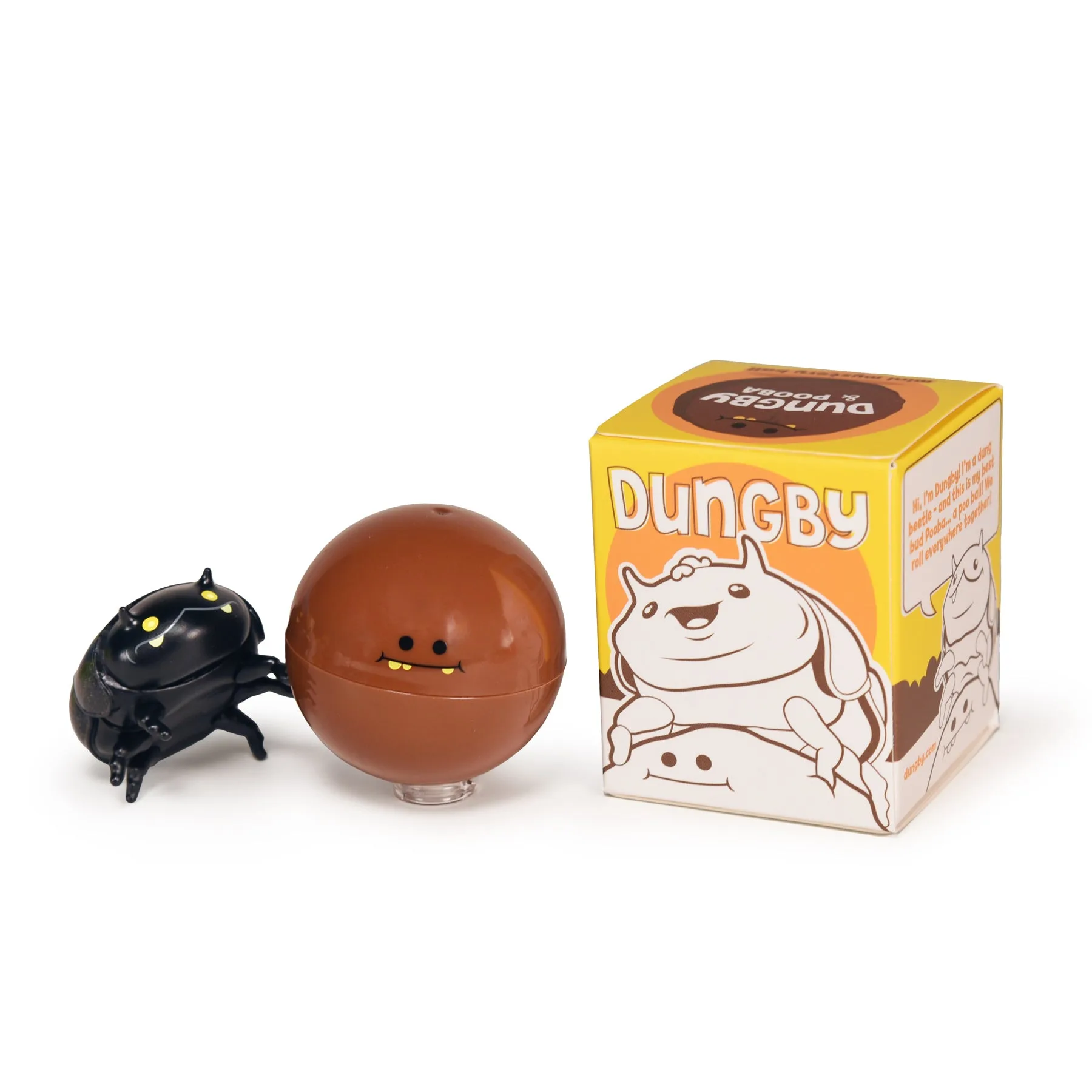
Dungby & Pooba Mini Blind Box Figures
-
Dungby & Pooba Mini Blind Box Figures: Includes a small stabilizing display ring. The ring gives you a ready-made way to keep a figure upright instead of propping it against the shelf wall.
-
Dungby & Pooba Mini Blind Box Figures: 8 regular editions: Dark Sparkle, Baby Boomer, Toxic Diet, Fire Ball, Purple Party, Pearl Pusher, Snowball, Red Devil and one of two variants. Knowing the edition count helps you decide how much shelf space to reserve if you plan to collect more than one.
A simple display routine for each figure
These steps use only what the catalog supplies. They are a practical order of operations, not a manufacturer instruction.
- Open the Pooba ball carefully: The ball is two parts. Separate them slowly so the figure inside does not drop onto a hard surface.
- Set the stabilizing ring first: Place the small stabilizing display ring where you want the figure to stand. This gives you a fixed spot before you pose the legs.
- Pose the six articulated legs: Adjust each leg individually to find a stance that sits naturally on the ring or shelf. Articulation means you can change the pose later without moving the display.
- Decide the ball's role: Keep the two-part ball beside the figure as a companion piece, or close it and store it. Either way, keep both halves together so the set stays complete.
Small figure shelf ideas that suit this set
The Dungby figures are mini, so the display does not need to be elaborate. These layouts work with the supplied components.
- Ring-and-ball pairing: Place the figure on its stabilizing ring and set the opened two-part Pooba ball directly behind it. The ball becomes a small backdrop and keeps the set visually connected.
- Low ledge line-up: Use a narrow shelf or ledge and space figures along it with the balls alternating in front and behind. This adds depth without needing a deep cabinet.
- Single-figure spotlight: If you only have one figure, give it the center of a small shelf and let the Pooba ball sit beside it. A mini figure can look lost on a large surface, so a smaller footprint helps.
- Ball-only storage display: If you rotate figures, keep the empty Pooba balls lined up as a small collection of their own. The two-part design means they can be closed and stacked or lined up neatly.
Where articulation helps and where it limits you
Six individually articulated legs give you freedom to change a pose, but they also mean the figure can shift if you knock the shelf. The stabilizing ring is the catalog's answer to that, so use it rather than balancing the figure on its legs alone. If you pose a leg outward for a walking stance, check that the figure still rests securely on the ring before you walk away.
Articulation is also a reason to avoid tight groupings. Give each figure enough clearance that moving one leg does not bump the next figure. On a small shelf, two or three figures with their balls is a more comfortable arrangement than a dense row.
Keeping the ball out vs. using it in the display
Both approaches are valid. The choice depends on whether you want the figure to read as a standalone character or as part of a matched set.
- Ball kept as part of the display: Best if you like the companion concept. The two-part ball adds visual interest and makes the set feel complete. It also gives you a place to rest the figure's display ring against.
- Ball closed and stored: Best if shelf space is tight or you prefer a cleaner line-up. Keep both halves together in a small bag or box so the set stays intact if you later want to display it as packaged.
What the listing leaves open before you order
The supplied catalog information does not state an age range, care instructions, or specific shelf dimensions. It also does not confirm whether the two variants differ in color or pose. If any of those details matter to your display plan, treat them as unconfirmed rather than assuming a feature is present or absent.
The catalog does list a price of USD 8.16 against a comparison price of USD 12.00, which is useful context if you are deciding how many figures to buy for a grouped display. Beyond that, the display advice here rests on the confirmed components: the articulated figure, the two-part Pooba ball, and the stabilizing ring.