Quick Answer
Choose a Dutch oven for deep braises, soups, and large roasts; choose a braiser for wide, shallow searing and quicker braises. Both work beautifully for braising, but their shapes suit different dishes.
Shape and Capacity Matter Most
The biggest difference between a Dutch oven and a braiser is their shape. A Dutch oven is tall and deep, typically holding 5 to 7 quarts, which makes it ideal for submerging large cuts of meat in liquid. A braiser is wider and shallower, usually 3 to 4 quarts, giving you more surface area for browning multiple pieces at once.
For classic braised dishes like pot roast or coq au vin, the deep sides of a Dutch oven keep splatter contained and allow you to build a full braising liquid. For recipes that start with a heavy sear and finish with a shallow amount of liquid — think chicken thighs with vegetables — the braiser's wide base lets you develop more fond (browned bits) faster.
Heat Retention and Versatility
Both the Bloomhouse and Martha Stewart options are enameled cast iron, which means they distribute heat evenly and hold it well. That shared trait makes either one excellent for slow, gentle cooking. The trade-off comes in how you use that heat.
A Dutch oven's tall walls trap steam and moisture, making it a better choice for long, unattended simmering. A braiser's low profile allows steam to escape more easily, which can be an advantage when you want to reduce a sauce or achieve a drier finish. Both can go from stovetop to oven, but the braiser's lower height fits more easily in smaller ovens.
How to Choose: Trade-offs at a Glance
- Need more capacity?: A Dutch oven (like the Bloomhouse 7 Qt) holds more food and is better for large cuts or feeding a crowd. The trade-off is that it takes up more space in your cabinet and is heavier to handle.
- Want better browning?: A braiser's wide base gives you more surface area for searing meat and vegetables in batches. The trade-off is that you cannot submerge large roasts completely.
- Plan to simmer for hours?: A Dutch oven's tall sides trap steam and keep liquid from evaporating too quickly, making it ideal for long braises. A braiser's lower profile evaporates liquid faster, which can be useful for reducing sauces.
Two Solid Options Compared
-
Bloomhouse 7 Qt Cast Iron Dutch Oven W/ Embossed Lid, European Enamel, & Olive Wood Trivet: The Bloomhouse 7 Qt Cast Iron Dutch Oven features an embossed lid and European enamel finish, and includes an olive wood trivet. Its 7-quart capacity and tall sides give you room to braise large roasts or cook big batches of soup, and the trivet protects your table when serving directly from the pot.
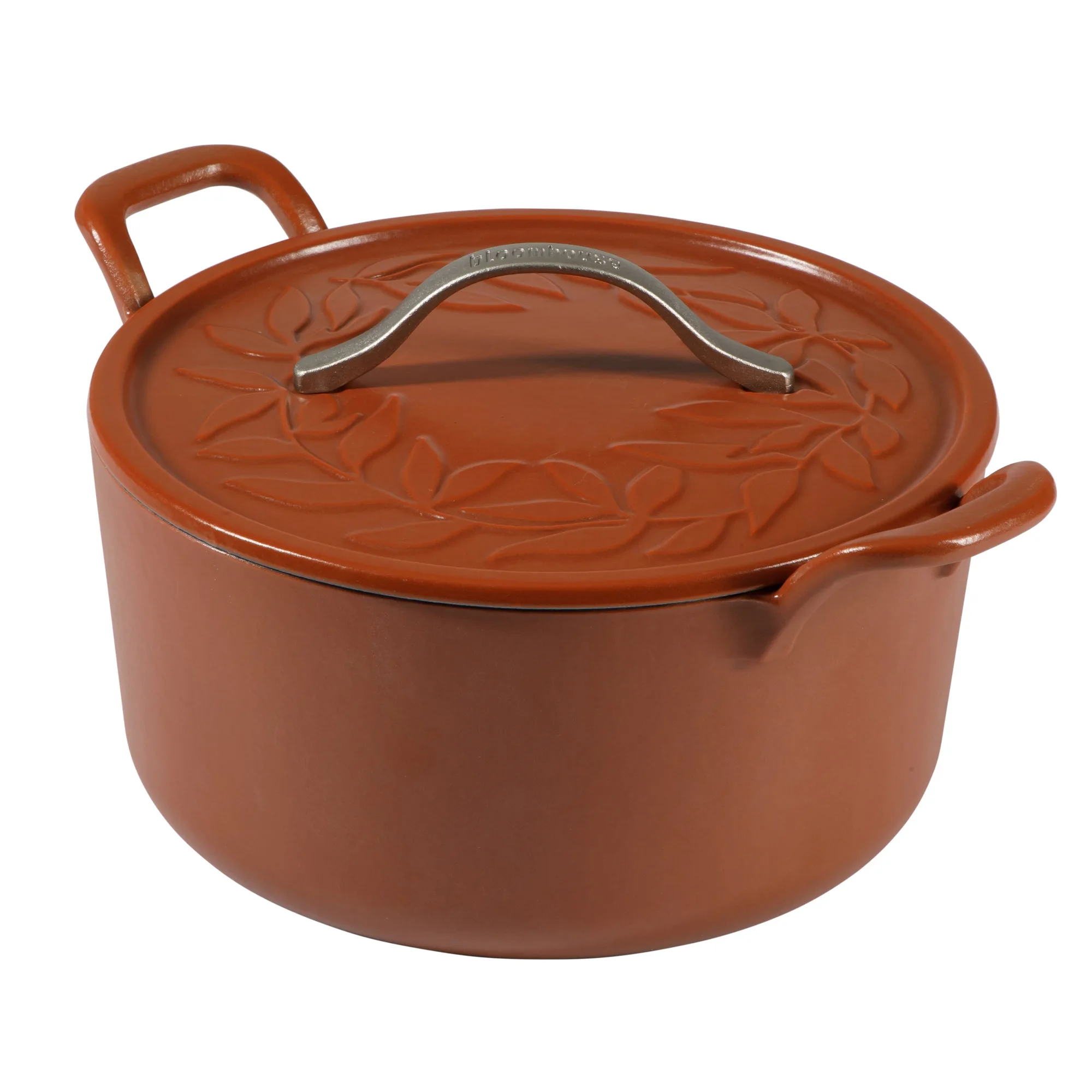
Bloomhouse 7 Qt Cast Iron Dutch Oven W/ Embossed Lid, European Enamel, & Olive Wood Trivet
-
Martha Stewart Gatwick Enameled Cast Iron Braiser with Lid, 3.5-Quart Braiser Pan for Stovetop & Oven, Cast Iron Braising Pan with Gold Knob: The Martha Stewart Gatwick 3.5-Quart Enameled Cast Iron Braiser has a self-basting lid and a gold knob, designed for braising, simmering, baking, and slow cooking. The wide, shallow shape maximizes browning area for quick searing and shallow braises, while the self-basting lid keeps food moist without needing a deep pool of liquid.
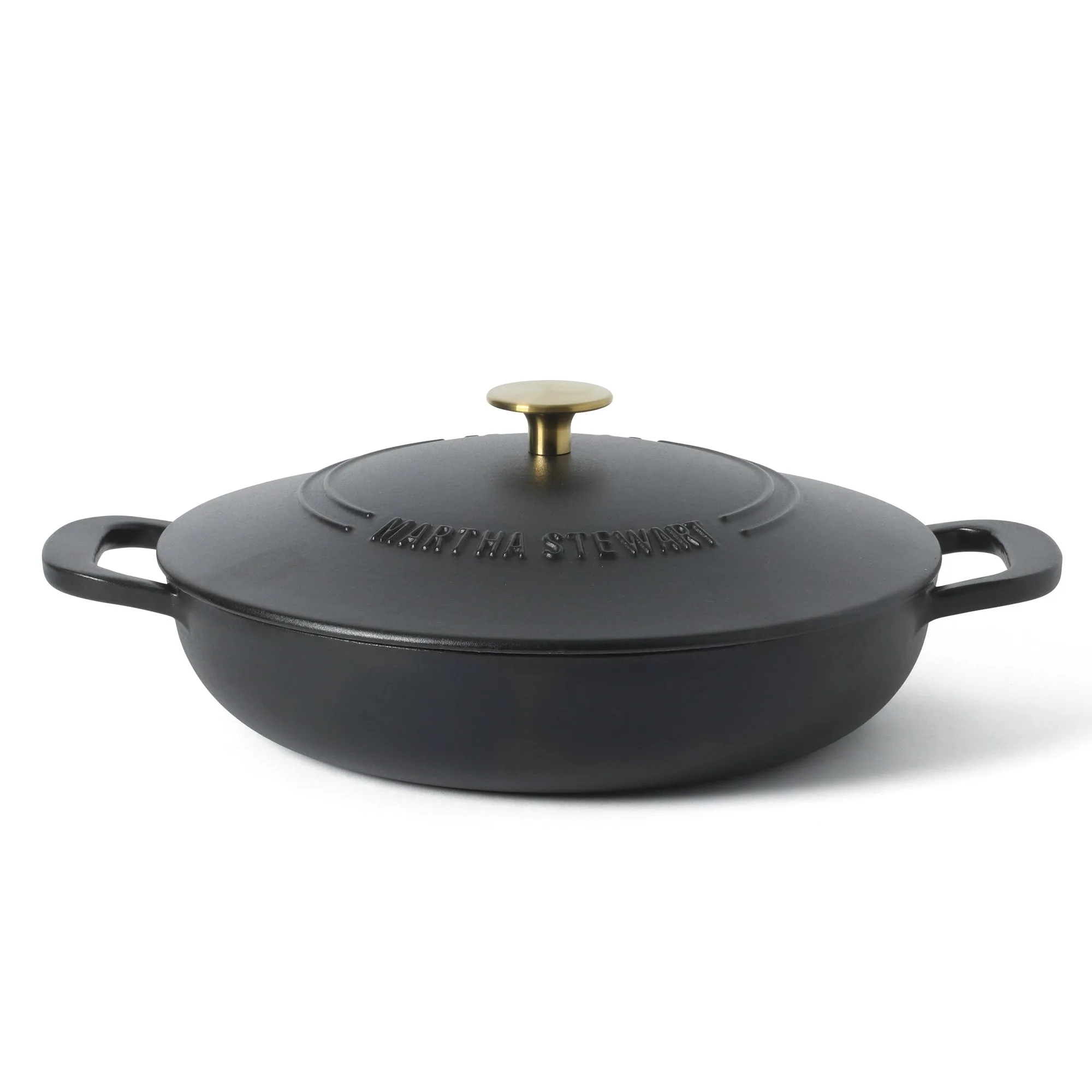
Martha Stewart Gatwick Enameled Cast Iron Braiser with Lid, 3.5-Quart Braiser Pan for Stovetop & Oven, Cast Iron Braising Pan with Gold Knob
Which One Fits Your Kitchen?
Best for
- Home cooks who braise large roasts or batch-cook soups and stews
- Anyone who wants one pot that can handle deep braises, boiling pasta, or frying
Not ideal for
- Cooks who primarily sear and braise smaller portions with shallow liquid
- Those with limited storage space or who prefer a lighter, more maneuverable pan