
Quick answer
Start with the DZOFILM Vespid 25mm T2.1 if you shoot in tight interiors, gimbal, or handheld and need a wide establishing view. Choose the 100mm T2.1 first only if your work depends on compressed backgrounds and isolated subjects from a distance.
Framing changes the story more than the aperture
Both lenses share a T2.1 maximum aperture and a compact manual cinema housing, so the practical difference is what each focal length does to the frame. A 25mm full-frame view pulls in the room, exaggerates depth between foreground and background, and keeps more of the scene in focus at a given stop. A 100mm view narrows the frame, compresses background elements, and makes subject isolation easier without moving closer.
That means the first-lens decision is really a question about your shooting geography. If you often work in spaces where you cannot back up, the 25mm earns its place faster. If you have distance and want clean separation, the 100mm does more of the visual work.
The PL/EF mount flexibility is the same on both
Both the 25mm and 100mm are listed with PL/EF mount capability, so you are not choosing between mount systems when you pick a focal length. The decision stays about framing, working distance, and how the lens fits your existing kit. Confirm the specific mount configuration you need with the store before ordering, since the catalog does not list separate option types for these two records.
Matched mechanics matter if you plan to add the second lens
The VESPID family is described as compact matched mechanics for narrative, commercial, documentary, gimbal, handheld, and rental packages. That matters if you intend to pair the 25mm and 100mm later: similar housing and handling reduce the time spent re-rigging between focal lengths. If you only plan to own one prime for now, the practical weight of that family consistency is lower, and you should choose purely on the framing you need most.
Trade-offs to weigh before you buy
- 25mm: space and context vs. subject isolation: The 25mm keeps more of the environment in frame and is easier to use in small rooms, but it gives you less background compression and less separation between subject and background at the same stop. Choose it if your scenes are location-driven and you rarely have room to back up.
- 100mm: compression and reach vs. working distance: The 100mm compresses backgrounds and isolates subjects cleanly, but it requires more distance between camera and subject, which can be a real constraint in interiors and crowded spaces. Choose it only if you can reliably create the distance the frame needs.
- One lens now vs. a matched pair later: Buying the 25mm first covers more general situations; buying the 100mm first is a specialist choice. If you plan to add the second focal length, the shared VESPID housing and handling make the pair easier to work with than mixing brands. Decide whether you are building toward a set or solving one specific shot problem.
Product facts
-
DZOFILM Vespid Full Frame Cine Prime 100mm T2.1 Lens (PL/EF): 100mm full-frame framing with a T2.1 maximum aperture in a compact manual cinema housing with PL/EF mount capability. Useful when you need compressed backgrounds and subject isolation from a distance without switching to a zoom.
DZOFILM Vespid Full Frame Cine Prime 100mm T2.1 Lens (PL/EF)
DZOFILM Vespid Full Frame Cine Prime 100mm T2.1 Lens (PL/EF)
-
DZOFILM Vespid Full Frame Cine Prime 25mm T2.1 Lens (PL/EF): 25mm full-frame framing with a T2.1 maximum aperture in a compact manual cinema housing with PL/EF mount capability. A practical first prime for tight interiors, gimbal work, and wide establishing shots where backing up is not an option.
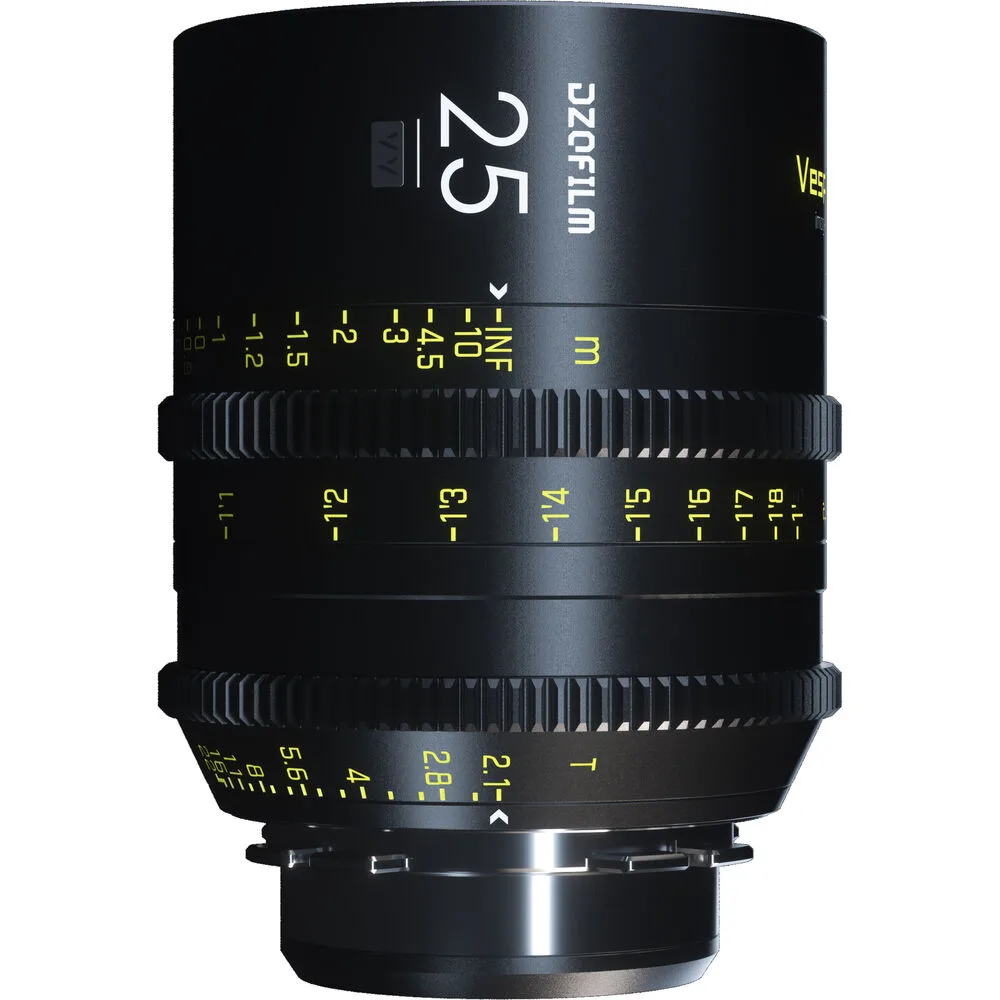
DZOFILM Vespid Full Frame Cine Prime 25mm T2.1 Lens (PL/EF)
Who each lens fits
Best for
- Shooters working in tight interiors, gimbal, or handheld who need a wide establishing view
- Documentary and narrative packages that value compact matched mechanics
- Buyers who want one versatile full-frame cine prime before adding a second
Not for
- Work that depends on compressed backgrounds and long-lens subject isolation
- Shooters who cannot create distance between camera and subject
- Buyers who need a focal length outside the 25mm or 100mm range