Start with the leaf: what makes this blend different
Earl Grey Masala Chai from Welcome to The Indian Chai is a loose leaf fusion: classic Earl Grey bergamot meets traditional Indian spices. The catalog describes it as a desi take on Earl Grey, balancing floral, citrusy notes with earthy, heaty spice.
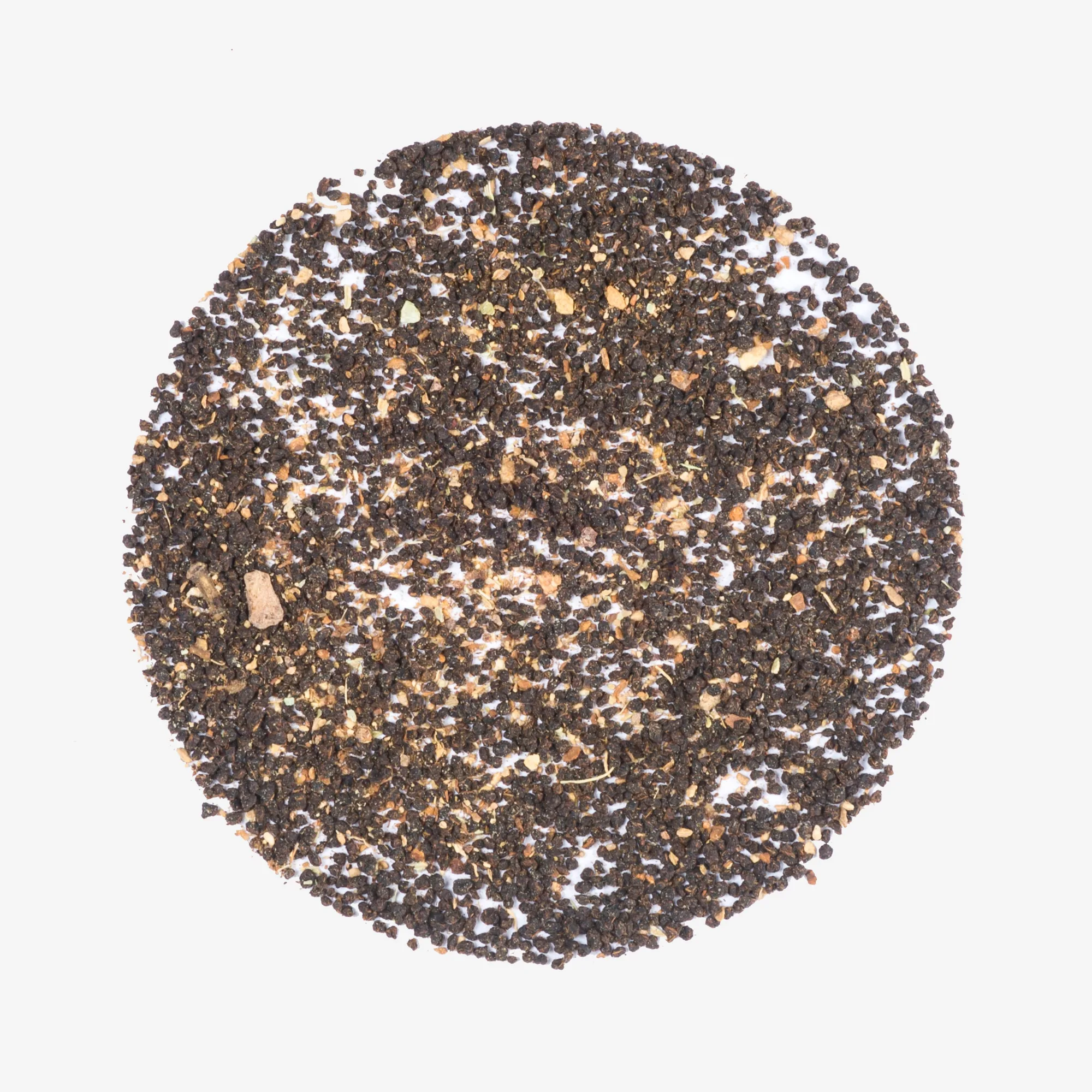
The ingredient list confirms Assam CTC black tea, ginger root, cloves, green cardamom, cinnamon, and pure bergamot oil. That combination gives you a citrus-forward cup with warmth from the spices—not a standard masala chai and not a plain Earl Grey.
Catalog facts for Earl Grey Masala Chai
-
Earl grey masala chai: Ingredients: Assam CTC Black Tea, Ginger Root, Cloves, Green Cardamom, Cinnamon, Pure Bergamot Oil. Knowing the base tea and spices helps you anticipate the flavor and adjust steeping to avoid bitterness.
Earl grey masala chai
-
Earl grey masala chai: Tasting notes: Floral, Citrusy, Woody, Earthy, Heaty. These notes guide whether to add milk or keep the cup light—milk softens citrus and heat, while water alone keeps the bergamot sharper.
-
Earl grey masala chai: Available in 100g, 300g, and 1Kg packs. Pack size lets you match your purchase to how often you brew this blend.
The pack's brewing steps for a simple cup
- Measure the leaf: Put 1 teaspoon of tea leaves in a cup.
- Add hot water: Pour hot water over the leaves. The catalog does not specify a water temperature, so use your usual hot-water routine for black tea.
- Cover and steep: Cover the cup and let it steep for three to five minutes.
- Remove the leaves: Strain or remove the leaves when the steep time is up to stop extraction.
Making it an Earl Grey chai with milk
The supplied instructions describe a water-only steep, and the catalog does not include a separate milk-based recipe. If you want an Earl Grey chai with milk, you can still use the same leaf-to-water ratio as a starting point, then replace part of the water with milk and warm the mixture gently. Keep an eye on the pot so it does not boil over.
Because Assam CTC is a strong black tea, milk will soften the bergamot and round out the spices. Start with a small amount of milk and increase until the cup suits you. The catalog does not confirm a specific milk quantity or a simmering time, so treat this as an adjustment rather than a fixed rule.
Tuning the cup to your taste
The three-to-five-minute steep is your main control. Within that range, a shorter steep keeps the citrus and floral notes brighter; a longer steep draws out more woodiness and spice heat. If you add milk, you may prefer the fuller end of the range.
- For a lighter, more citrus-forward cup: Steep closer to three minutes and skip milk.
- For a stronger, spicier cup: Steep closer to five minutes. The ginger, cloves, and cardamom will come forward.
- If the cup tastes bitter: Shorten the steep next time. The catalog does not provide a bitterness fix beyond steeping time, so adjust gradually.
What the catalog does not specify
The supplied information does not give a water temperature, a milk quantity, or a stove-top simmering method. It also does not confirm whether the blend is intended for traditional masala chai preparation with milk and sugar. Use the pack's steeping steps as your baseline and make small adjustments. If you need a precise milk-based recipe, the catalog does not provide one—so experiment cautiously and rely on your own taste.