Quick answer
Choose the 24 cm EASY CERAMIC Recycling frying pan if you cook for one or two people most days; go for the 28 cm when you regularly fry for three or more or want room for big batches, and pick the 20 cm for small jobs such as eggs, single portions or a compact hob.
Why pan diameter changes more than portion size
A wider pan spreads food thinner, so moisture escapes faster and browning improves, but the same heat setting can scorch delicate items near the edge. A smaller pan keeps food deeper and more crowded, which steams rather than sears.
The 28 cm model also needs a wider burner and more cupboard space than the 24 cm or 20 cm versions. Measure your largest hob ring and your storage slot before choosing the biggest pan.
When the 24 cm pan is the safer everyday choice
The 24 cm size sits between the two extremes: large enough for two generous portions of vegetables or protein, small enough to heat evenly on a standard burner and to store without rearranging the kitchen. For many households it replaces the need for two separate pans.
If you often cook one-pan meals for two, the 24 cm size gives you a workable surface without the weight and footprint of the 28 cm model. It is also the easier size to handle when lifting or tossing.
The 20 cm pan earns its place as a second pan
A 20 cm pan is not a scaled-down family pan; it is a specialist for eggs, single servings, reheating and small sides. Its small surface heats quickly and keeps oil or butter concentrated, which suits delicate foods.
Buy it as an addition rather than your only frying pan unless you consistently cook for one. For a single-person household with limited storage, the 20 cm and 24 cm pair covers most meals without taking over the kitchen.
The 28 cm pan: capacity versus control
The 28 cm model gives you the most room for family portions, batch vegetables or a whole pan of protein. That extra surface is useful when you want food in a single layer, but it demands a burner that can heat the full base evenly.
It is the least forgiving size for small quantities: a single egg or a handful of nuts can slide to the edge and cook unevenly. Choose it only if large batches are a regular habit, not an occasional one.
Decision rules for choosing your frying pan size
- Cooking for one or two most days: Start with the 24 cm pan. It handles two portions without crowding and fits standard burners and cupboards.
- Cooking for three or more, or batch frying: Choose the 28 cm pan if your hob has a wide enough ring and you have storage space for it. Check your largest burner diameter before ordering the 28 cm size.
- Eggs, single servings or a compact kitchen: Choose the 20 cm pan as a second pan or as your only pan if you rarely cook for more than one.
- Building a two-pan set: Pair the 20 cm and 24 cm pans for most everyday cooking, or the 24 cm and 28 cm pans if you often cook for a family.
- Limited storage or a small hob: Avoid the 28 cm unless you have measured the space; the 24 cm is the safer upper limit for compact kitchens.
EASY CERAMIC Recycling pans at a glance
-
EASY CERAMIC Recycling frying pan Ø 28 cm: Ø 28 cm EASY CERAMIC Recycling frying pan, catalog price USD 32.09 (comparison price USD 51.75). The largest of the three sizes gives the most cooking surface for family portions or batch frying.
EASY CERAMIC Recycling frying pan Ø 28 cm
EASY CERAMIC Recycling frying pan Ø 28 cm
-
EASY CERAMIC Recycling frying pan Ø 24 cm: Ø 24 cm EASY CERAMIC Recycling frying pan, catalog price USD 26.38 (comparison price USD 42.55). The middle size is the most versatile single pan for one- or two-person households.
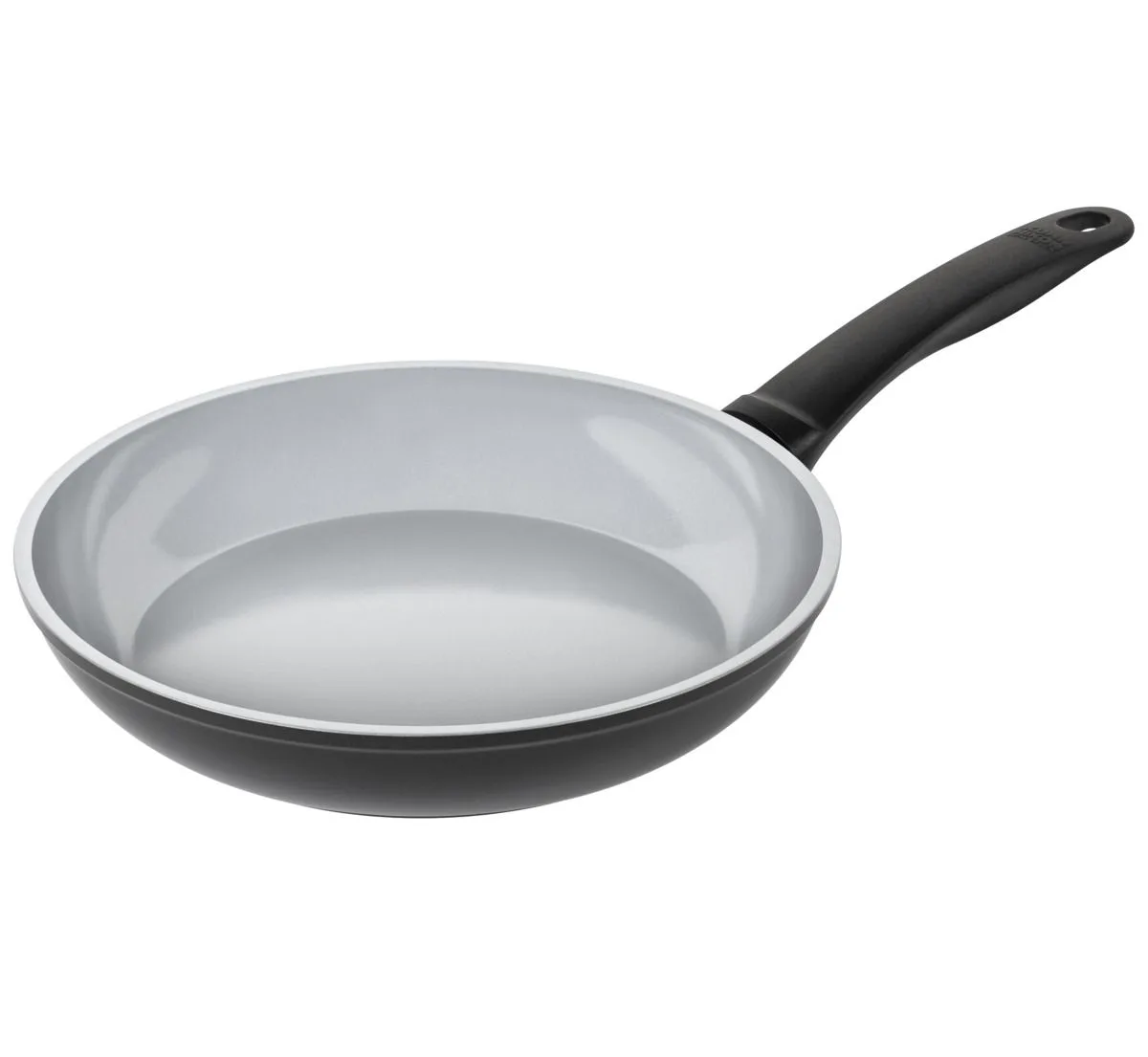
EASY CERAMIC Recycling frying pan Ø 24 cm
-
EASY CERAMIC Recycling frying pan Ø 20 cm: Ø 20 cm EASY CERAMIC Recycling frying pan, catalog price USD 20.01 (comparison price USD 33.35). The smallest size is a low-cost way to add a dedicated egg or single-portion pan.
Who each size suits
Best for
- Single cooks and couples who want one versatile pan (24 cm)
- Families and batch cooks with a wide burner and storage room (28 cm)
- Egg lovers and small-kitchen cooks adding a second pan (20 cm)
Not for
- Large families trying to cook everything in the 20 cm pan
- Small kitchens or narrow hobs where the 28 cm pan will not sit or store easily
- Cooks who want one pan to cover both single eggs and family batches