Quick answer
Install the Evenflo Easy Infant Carrier by threading the waist belt through the buckles, adjusting the shoulder straps, and securing your baby in an inward or outward facing position. Always check that the carrier is snug and your baby's airway is clear.
Why proper installation matters
A correctly installed baby carrier keeps your baby secure and comfortable while preventing strain on your back and shoulders. The Evenflo Easy Infant Carrier is designed for babies 7 to 26 lb., so it's important to adjust the fit as your baby grows. A common mistake is leaving the carrier too loose, which can cause your baby to slump and block their airway.
Step-by-step installation and usage guide
- 1. Thread the waist belt: Unbuckle the waist belt and thread it through the side buckles on the carrier. Position the belt at your natural waistline, not your hips, and fasten it snugly. The carrier should feel secure without digging into your sides. Common mistake: wearing the waist belt too low shifts your baby's weight and causes back strain.
- 2. Adjust the shoulder straps: Put the shoulder straps on like a backpack. Pull the adjustment straps downward to tighten until the carrier sits close to your chest. Your baby should be high enough that you can kiss the top of their head without leaning forward. Checkpoint: if you have to hunch forward, the straps are too loose.
- 3. Position your baby inward facing: For newborns and young infants, place your baby facing inward, with their legs in a natural froggy position (knees higher than bottom). Ensure their face is visible and their chin is off their chest to keep the airway open. Common mistake: tucking your baby's legs straight down can strain their hips.
- 4. Switch to outward facing when ready: Once your baby can hold their head and neck unassisted, you can face them outward. Adjust the carrier so the seat panel supports from knee to knee, and the top edge sits below your baby's ears. Checkpoint: always support your baby's head with one hand when leaning forward.
- 5. Perform a final safety check: After securing your baby, do a quick check: you should be able to slide one finger between your baby's chin and chest, the carrier should be snug with no loose fabric, and your baby's back should be in a natural C-curve. Common mistake: over-tightening can restrict your baby's breathing, while under-tightening can cause slumping.
Product facts
-
Easy Infant Carrier: The Evenflo Easy Infant Carrier supports babies 7 to 26 lb. and offers two carrying positions: inward facing for close bonding and outward facing when your baby can hold their head and neck unassisted. This means you can use the same carrier from the newborn stage through the first year, switching positions as your baby develops head and neck control.
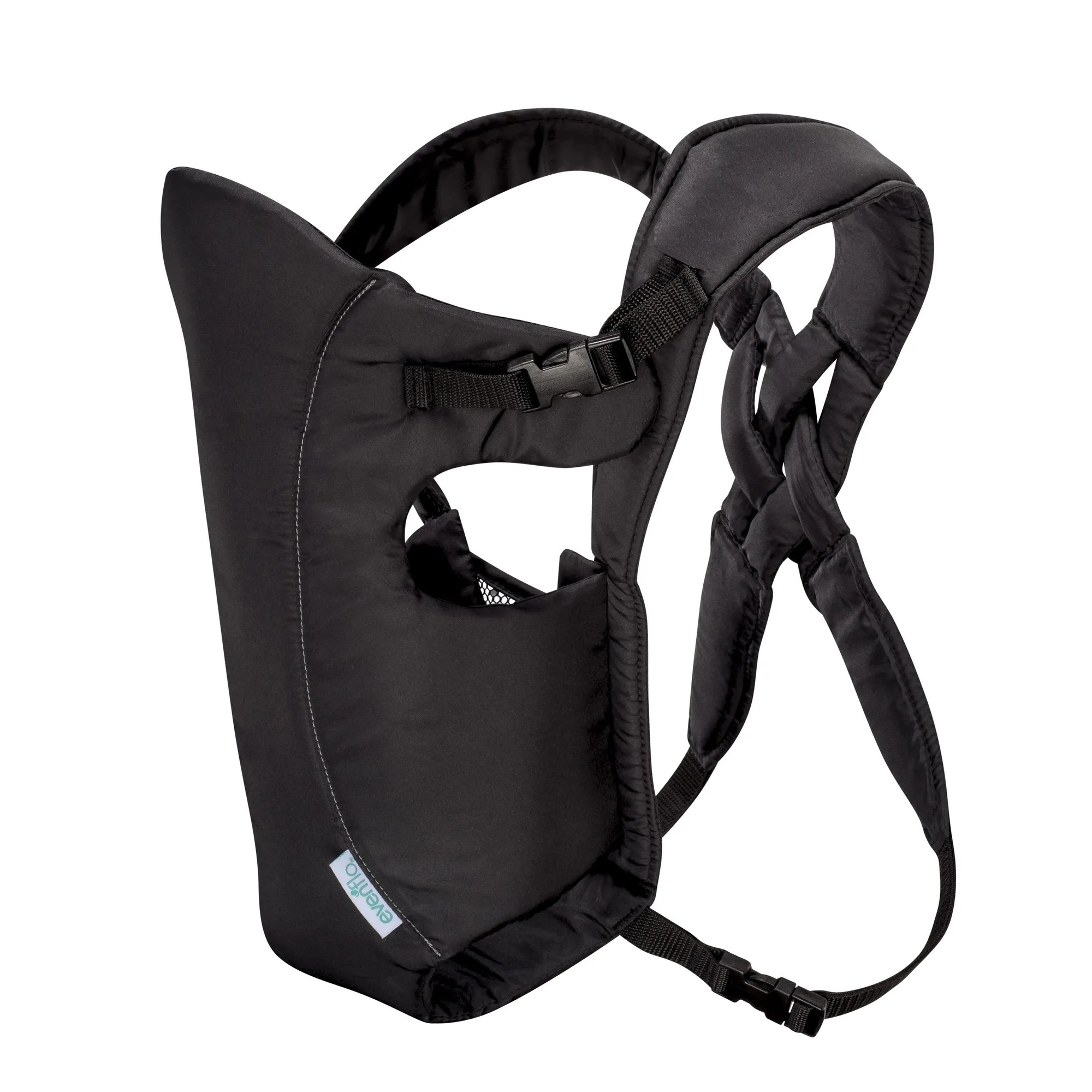
Easy Infant Carrier