Start with the optical zone, not the color
If you are considering Coleyes Echo Blue Yearly Prescription Colored Contacts for a vivid blue eye look, the first number to check is the optical zone. The Echo Blue lens has a 3.5mm optical zone, and the catalog notes that when the optical zone is 3.9mm or smaller, your vision may be blocked partially, with the effect varying from person to person. That does not automatically rule the lens out, but it does mean you should think about how much clear central vision you need during wear.
The lens also has a 14.2mm diameter and a 13.6mm graphic diameter, so the colored pattern covers most of the lens surface. A larger graphic diameter can create a more dramatic color change, but it also means less clear lens area around the pupil. If you need sharp, unobstructed vision for driving or detailed work, this is a trade-off to weigh before ordering.
Echo Blue specs that shape the buying decision
-
Coleyes Echo Blue Yearly Prescription Colored Contacts: Optical zone: 3.5mm A small optical zone may partially block vision for some wearers, so consider your daily visual needs.
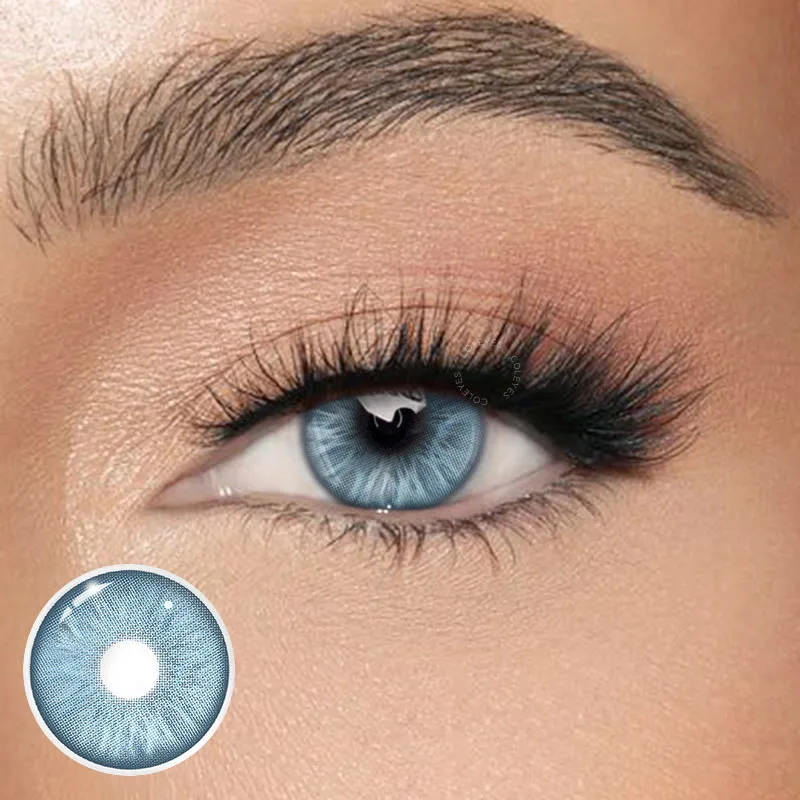
Coleyes Echo Blue Yearly Prescription Colored Contacts
-
Coleyes Echo Blue Yearly Prescription Colored Contacts: Diameter: 14.2mm; Graphic diameter: 13.6mm The large graphic diameter gives a strong color presence but leaves less clear central area.
-
Coleyes Echo Blue Yearly Prescription Colored Contacts: Base curve: 8.6mm This is the only base curve listed, so fit should be confirmed with your eye care professional.
-
Coleyes Echo Blue Yearly Prescription Colored Contacts: Power range: (0.00) to (-8.00) Plano and prescription options are available, but the range stops at -8.00.
-
Coleyes Echo Blue Yearly Prescription Colored Contacts: Material: HEMA + NVP; Water content: 40% These are the supplied material and hydration specs; they are not a promise of comfort for every wearer.
-
Coleyes Echo Blue Yearly Prescription Colored Contacts: Period of use: 1-Year This is a yearly lens, so replacement and care routines matter for the full wear cycle.
What the bright blue color can and cannot tell you
The Echo Blue name suggests a vivid blue effect, but the catalog is clear that lenses on different eye colors will show different effects, and pictures are for reference only. That means the final look depends on your natural iris color and lighting. If you have dark brown eyes, expect the blue to read differently than it would on lighter eyes. The 13.6mm graphic diameter is large enough to make the color noticeable, but the actual brightness is not guaranteed by the name alone.
If you want a bright blue colored contact look, Echo Blue is a candidate, but treat the product images as a starting point rather than an exact preview. The supplied information does not include a color chart or wearer photos beyond the reference images, so the safest approach is to order with realistic expectations and check the return policy before opening the packaging.
How to order the right prescription for each eye
The catalog states that different correction for each eye requires two separate boxes: one with your left eye correction and one with your right eye correction. The store cannot open original packagings or mix prescriptions, so plan for two boxes if your eyes need different powers.
- Check your current prescription: Confirm your sphere power for each eye, including whether you need 0.00 plano lenses. The Echo Blue range covers 0.00 to -8.00.
- Decide if you need one or two boxes: If both eyes have the same power, one box of 2 lenses is enough. If the powers differ, order two boxes, one per eye.
- Select 0.00 if you do not need correction: The catalog explicitly says to choose 0.00 power for plano lenses.
- Keep the packaging sealed until you confirm the order: Because the store cannot open or mix packaging, check the labels before opening to avoid mix-ups.
Echo Blue vs a smaller-graphic blue lens: what changes
Without a second product record, the most useful comparison is between Echo Blue and a hypothetical smaller-graphic lens. The trade-off is color impact versus clear central vision. Echo Blue's 3.5mm optical zone and 13.6mm graphic diameter lean toward stronger color coverage.
- Echo Blue (3.5mm optical zone, 13.6mm graphic): More color coverage and a bolder blue presence, but the catalog warns that vision may be partially blocked for some wearers.
- A lens with a larger optical zone (not supplied here): Potentially more clear central vision, but likely less graphic coverage. The supplied catalog does not include a specific alternative, so use this as a general trade-off to discuss with your eye care professional.
Fit, comfort, and what the catalog does not settle
The Echo Blue lens has an 8.6mm base curve and a 14.2mm diameter, which are the only fit specs supplied. The catalog does not include a recommended wearing schedule, replacement frequency beyond the 1-year period, or cleaning instructions. Those details should come from your eye care professional and the manufacturer's full instructions, not from this guide.
The material is HEMA + NVP with 40% water content, and the center thickness is listed as 0.06mm to 0.12mm. These are technical specs, not a comfort guarantee. If you have not worn yearly lenses before, ask your eye care professional whether this material and fit are appropriate for your eyes. The catalog also does not confirm whether the lens is suitable for extended wear or overnight use, so do not assume it is.