Quick answer
Eco-weave is a webbing made from recycled plastic bottles, not a plant-based or biodegradable material. It can still be a solid eco-friendly dog collar choice because it diverts plastic waste and is built to last, but it is not compostable and will not break down in a landfill. Judge any green dog product by what it is actually made from, how it is assembled, and how long it will stay out of the waste stream.
Myth: Eco-weave is a natural fiber
Eco-weave webbing is made from recycled plastic bottles. That is a recycling story, not a farming story. If you picture hemp, cotton, or bamboo when you see the word eco, you are picturing a different material.
That matters because the care and end-of-life rules are different. A recycled-plastic webbing collar is durable and water-resistant in the ways plastic is, but it is still plastic. It will not compost, and it should not go in a garden or a home compost bin.
Myth: Recycled content means weak hardware
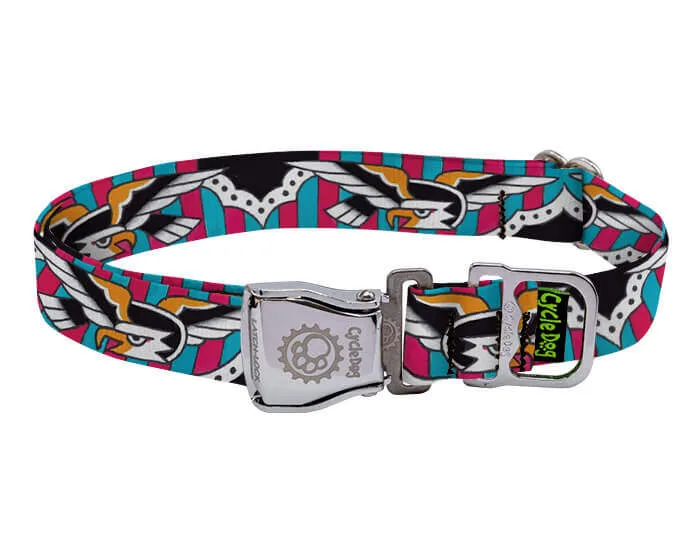
A collar is only as good as its weakest point, and that point is usually the hardware or the seams, not the webbing. Cycle Dog's Eco-weave collars use super strong bartacks on every seam, which the brand describes as the strongest assembly method available. The Ecoweave Tattoo Art Series-Eagles Dog Collar is built this way.
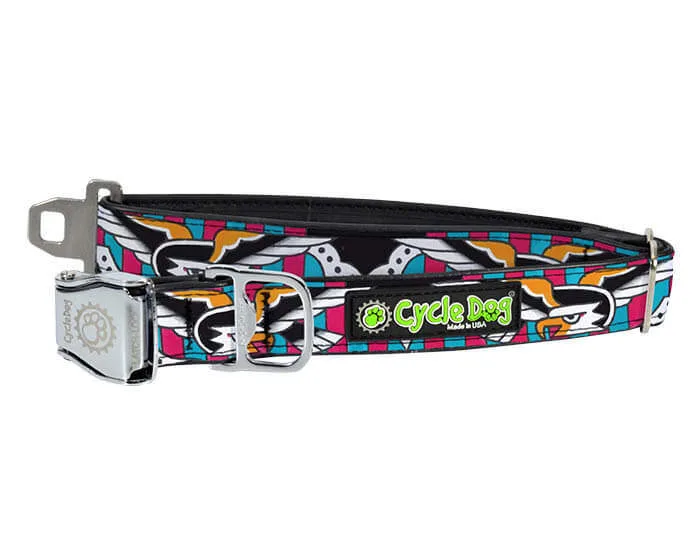
Tattoo Art Series-Eagles Dog Collar
The brand also eliminated plastic slider hardware, which it identifies as the weakest element of other dog collars. If you are comparing an eco dog collar material against a standard one, ask what the buckle and adjuster are made of before you assume the greener option is flimsier.
Myth: All eco collars get smelly when wet
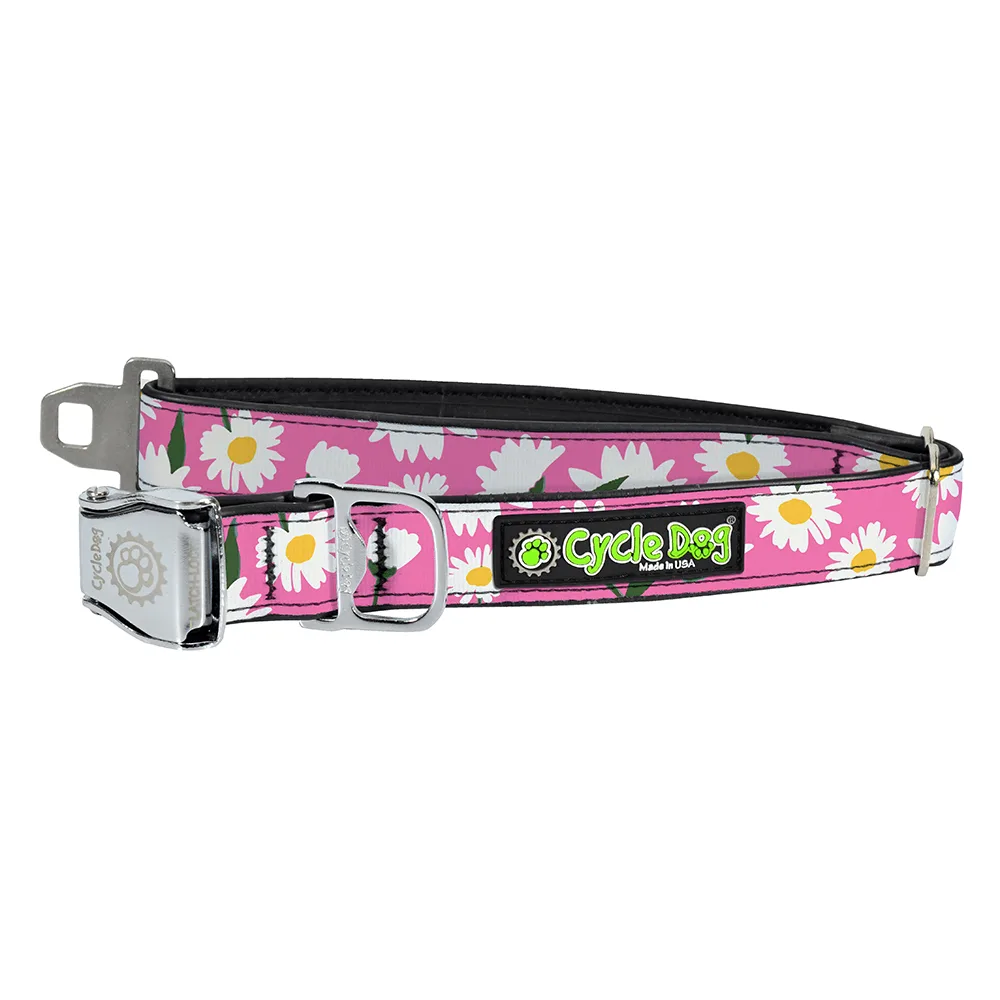
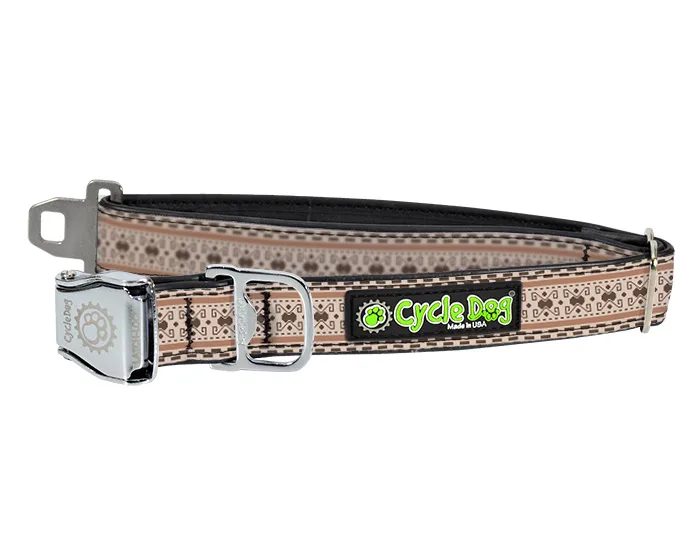
Nylon collars have a reputation for holding odor, and that reputation is often fair. But it is not a rule for every eco option. The Daisy Dog Collar and the Dude Sweater Dog Collar use an upcycled backing that is naturally anti-bacterial, so it will not get stinky the way typical nylon collars can. They are also waterproof, which makes them a practical pick for a romp on the beach, a dip in the river, or getting caught in the rain.
This is the useful distinction: an environmentally friendly dog collar can be the better choice for a wet, active dog if the backing is designed to resist odor, not just if the webbing is recycled.
Myth: Eco-friendly means disposable or short-lived
The greenest collar is often the one you do not have to replace. Cycle Dog's Eco-weave collars use a sublimated process that outlasts standard printed collars, so the pattern is less likely to fade or peel with heavy use. The Daisy and Dude Sweater collars are handmade in the USA, specifically handcrafted in Portland, Oregon, and they include a Latch-Lock metal buckle for secure fastening.
Durability is the part of sustainability you can actually verify over time. A collar that holds its color, hardware, and shape for years keeps plastic out of the waste stream longer than a cheap collar replaced every season.
What to check before you buy any eco dog collar
Read the material description literally. Recycled plastic bottles and upcycled backing are specific claims you can evaluate. Vague terms like green or natural are not.
Then check the construction details that decide whether the collar survives daily walks: seam reinforcement, buckle type, and whether the adjuster is metal or plastic. Finally, match the material to your dog's habits. A waterproof, anti-bacterial backing suits a dog that swims or gets rained on, while a recycled-webbing collar with bartacked seams suits a dog that pulls or wears a collar every day.
Verdicts on common eco-collar claims
- Eco-weave is a plant-based or biodegradable fiber: Eco-weave webbing is made from recycled plastic bottles. It is a recycled material, not a compostable one. Verdict: myth. Expect plastic durability and plastic end-of-life, not composting.
- Recycled webbing means weak construction: Cycle Dog uses super strong bartacks on every seam and eliminated plastic slider hardware, which the brand calls the weakest element of other collars. Verdict: myth, as long as you check the seams and buckle rather than assuming.
- Eco collars always get smelly when wet: The Daisy and Dude Sweater collars use an upcycled backing that is naturally anti-bacterial and will not get stinky like typical nylon collars. Verdict: myth for collars with an odor-resistant backing. Check the backing, not just the webbing.
- Eco-friendly means short-lived: Eco-weave collars use a sublimated process that outlasts standard printed collars, and the USA-made collars are handcrafted in Portland, Oregon with a Latch-Lock metal buckle. Verdict: myth. Long wear is the most measurable form of sustainability.
Eco-weave collars in the catalog
- Ecoweave Tattoo Art Series-Eagles Dog Collar: Ecoweave collars and leashes feature webbing made from recycled plastic bottles, super strong bartacks on every seam, no plastic slider hardware, and a sublimated process that outlasts standard printed collars. This is the clearest example of what eco-weave actually is: recycled plastic webbing reinforced at the seams and printed to resist fading, with the weakest hardware element removed.
- Daisy Dog Collar: Daisy Dog Collar has a no-stink, waterproof design, an upcycled backing that is naturally anti-bacterial, is handmade in the USA in Portland, Oregon, includes a Pup-Top Bottle Opener at the leash attachment, and a Latch-Lock metal buckle. A good pick if odor and wetness are your main concerns, since the anti-bacterial backing targets the smell problem that typical nylon collars have.
- Dude Sweater Dog Collar: Dude Sweater Dog Collar has a no-stink, waterproof design, an upcycled backing that is naturally anti-bacterial, is handmade in the USA in Portland, Oregon, includes a Pup-Top Bottle Opener at the leash attachment, and a Latch-Lock metal buckle. Same odor-resistant, waterproof construction as the Daisy collar in a different pattern, so you can choose based on looks without giving up the practical features.