Quick answer
For most babies, a silicone dummy clip is the easiest everyday choice: it is flexible, wipeable, and comfortable against the skin. A wooden dummy chain looks beautiful and is durable, but it is firmer and needs more careful cleaning. Many parents choose a mixed chain with a wooden or silicone clip and a silicone or fabric strap, then check that the clip grips clothing securely without pinching.
Dummy chains are small, but the material you choose affects how the chain feels against your baby's skin, how often you clean it, and how long it lasts. The three common builds are all-silicone, all-wood, and mixed-material chains that pair a clip with a strap. Each has a clear trade-off, so the right pick depends on your daily routine rather than a single best material.
This comparison looks at silicone, wood, and clip hardware using the facts we can verify from our catalog. It also covers dummy chain safety checks you can do at home, plus when a different style might suit your baby better.
Silicone dummy clips: flexible, wipeable, and skin-friendly
Silicone dummy clips are usually the most practical option for newborns and babies who chew. The material is soft and flexible, so it bends rather than digs in when your baby lies on it. Food-grade silicone is also easy to wipe clean with warm soapy water, which matters because dummy chains pick up drool, milk, and floor dust throughout the day.
The trade-off is that silicone can attract lint and pet hair, and very soft silicone straps may stretch over time with heavy use. If you want a chain that doubles as a teether, silicone is the safer bet because it is designed for mouthing. Check that any silicone part is labeled food-grade and free from BPA and phthalates before you buy.
- Wipe silicone after every outing; wash with warm soapy water when visibly soiled.
- Avoid silicone straps that are so thin they could loop tightly around a wrist or finger.
Wooden dummy chains: durable and natural, with more care
Wooden dummy chains appeal to parents who want a natural look and a material that ages rather than wears out. Wood is firm, so it holds its shape and does not stretch. It also feels cool and smooth, which some babies find soothing against sore gums.
The trade-off is maintenance. Wood should not be soaked or put in a dishwasher, because repeated moisture can crack the surface. It also feels harder if your baby rolls onto it during sleep. If you choose wood, look for a smooth, splinter-free finish and check the chain regularly for rough spots or cracks.
- Wipe wooden parts with a damp cloth and dry immediately; never submerge them.
- Retire any wooden chain that develops cracks, splinters, or a sticky finish.
Clips and straps: the part that decides whether the chain stays put
The clip is the hardest-working part of any dummy chain. A good clip opens wide enough to grip a bib, onesie, or blanket without tearing the fabric, then closes firmly so the chain does not drop onto the floor. Metal clips with a smooth, rounded edge tend to hold best on thicker fabrics, while plastic clips are lighter but can lose tension over time.
The strap length is just as important. A shorter strap keeps the dummy close to your baby's chest and reduces the chance of it dragging. A longer strap gives more reach but can catch on stroller wheels or crib rails. Whatever the material, the chain should be short enough that it cannot loop around your baby's neck.
- Test the clip on the fabric you actually use: thin onesies, thick bibs, and muslin wraps all behave differently.
- Never attach a dummy chain to a cord, ribbon, or anything that could tighten around the neck.
Dummy chain safety: what to check before first use
Dummy chain safety comes down to three checks: length, attachment, and condition. Hold the chain up and make sure it is short enough that it cannot go over your baby's head. Tug the clip gently to confirm it stays fastened to the fabric. Then inspect the whole chain for loose beads, frayed straps, or cracked parts.
Supervise dummy chain use, especially during sleep. A chain is a convenience for waking hours, not a sleep accessory. If your baby is unattended or in a crib, remove the chain and keep the dummy separate. Replace the chain at the first sign of wear rather than waiting for it to fail.
- Check the clip and strap weekly for wear, especially if the chain is used daily.
- Stop using any chain with loose parts, exposed filling, or a clip that no longer grips.
Material trade-offs at a glance
- Silicone: Soft, flexible, wipeable, and comfortable for mouthing babies; can attract lint and may stretch with heavy use. Best everyday pick for newborns and chewers.
- Wood: Durable, natural-looking, and firm; cannot be soaked or dishwashed and feels harder if your baby lies on it. Best for parents who prefer a natural look and will hand-wipe after use.
- Clip and strap: The clip decides whether the chain stays attached; strap length decides whether it stays close to the body. Test the clip on your actual fabrics and keep the strap short.
Product facts from our catalog
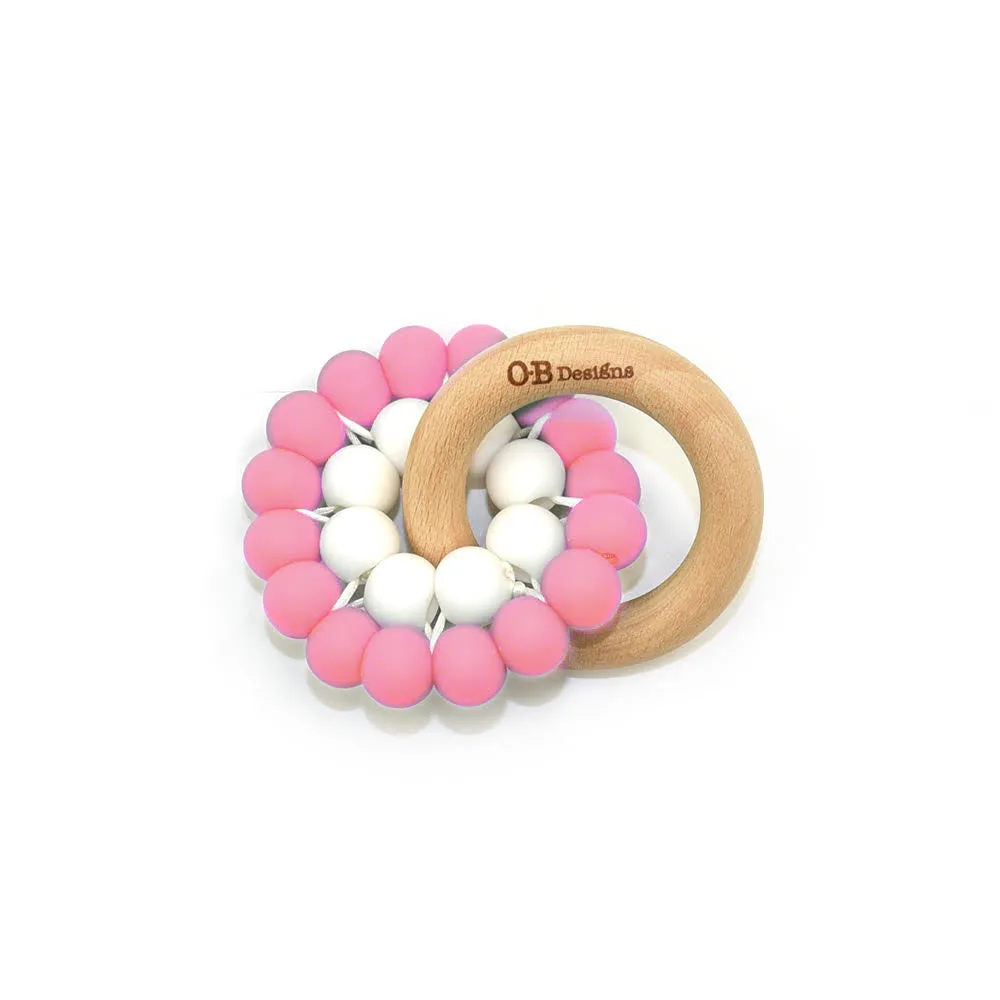
- Hot Pink Eco-Friendly Teether Toy: Made of sustainable beechwood timber and food-grade silicone; BPA and phthalate free; independently safety tested; ships from our US warehouse. A mixed wood-and-silicone build gives you a firm wooden section plus a soft silicone area, so it can double as a teether while still being easy to wipe clean.
- Gloria Flamingo Bag Charm 7"/ 18 cm (New Style): Designed to adorn kids' backpacks; made with premium, ultra-soft materials; independently safety tested; ships from our US warehouse. If you want a clip-on accessory that is soft rather than hard, a plush charm is a gentler alternative for older children who no longer need a dummy chain.
Which dummy chain material fits your baby?
Best for
- Babies who chew constantly and need a soft, wipeable chain
- Parents who want one chain that works as both a dummy holder and a teether
- Everyday use where the chain will be cleaned often
Not for
- Parents who want a chain they can toss in the dishwasher without checking the material
- Babies who are unattended or sleeping, since no dummy chain should be used in a crib
- Children old enough to use a plush bag charm instead of a dummy chain
Choose silicone if you want the easiest daily clean and the softest feel, and choose wood if you prefer a natural look and do not mind hand-wiping. Whichever you pick, check the clip grip, keep the strap short, and inspect the chain often. A dummy chain is a small tool, and the best one is the one that stays clean, stays attached, and comes off before sleep.