Quick Answer
For advocacy campaigns, choose postcards printed on 100% post-consumer recycled paper with soy-based inks—like the risograph postcards from Heartell Press—to combine visual impact with environmental responsibility.
Why Paper Choice Matters for Advocacy
The paper your postcard is printed on sends a message before anyone reads a word. Recycled paper, especially 100% post-consumer recycled content, signals that your campaign walks its talk. It also reduces demand for virgin pulp, lowering the environmental footprint of your mailing.
Card weight recycled paper is ideal for postcards because it survives the mail system without bending or tearing. Look for this specification when comparing products, as lighter paper may not hold up in transit.
Understanding Risograph Printing
Risograph printing is a cold-process method that uses less energy than traditional digital or offset printing. It also creates minimal waste, making it a lower-impact choice for short-run advocacy materials.
The process uses soy-based inks and screens made from plant fibers, which are more renewable than petroleum-based alternatives. If you're printing a small batch for a local campaign, risograph can be both cost-effective and eco-conscious.
One trade-off: risograph printing produces a distinctive, slightly textured look with vibrant colors. If your campaign needs photorealistic images, this may not be the right fit. But for bold graphics and text, it's a strong choice.
Balancing Cost and Impact
Eco-friendly postcards can cost slightly more than conventional options, but the price difference is often small. For example, a single risograph postcard might retail for around $2, which is reasonable for a targeted advocacy piece.
When budgeting, consider the total cost per postcard, including printing and postage. Buying in bulk can reduce per-unit costs, but only if you actually need that many. Overprinting waste undermines the sustainability of your campaign.
Decision Rules for Choosing Eco-Friendly Advocacy Postcards
- Check the paper content: Look for postcards made from 100% post-consumer recycled paper. If the product doesn't specify, contact the seller or choose another option. Recycled content is the first filter.
- Confirm the printing method: Prefer risograph or other cold-process printing that uses soy-based inks and minimal energy. Avoid conventional printing if you can. Printing method affects both eco-friendliness and visual style.
- Match the card to your message: If your campaign uses bold text and graphics, risograph postcards work well. For photo-heavy designs, consider alternative eco-friendly printing. Choose a card that fits your design, not just the label.
- Calculate total cost per piece: Include printing and postage in your budget. For small campaigns, a $2 postcard is acceptable; for large mailings, look for bulk discounts. Know your all-in cost before ordering.
Product Highlights
-
Vote to Keep Kids Safe Postcard: This 4” x 6” risograph postcard is printed on card weight recycled paper using soy-based ink and screens made from plant fibers. The recycled card weight ensures durability in the mail while the soy-based ink reduces environmental impact, making it a reliable choice for advocacy mailings.
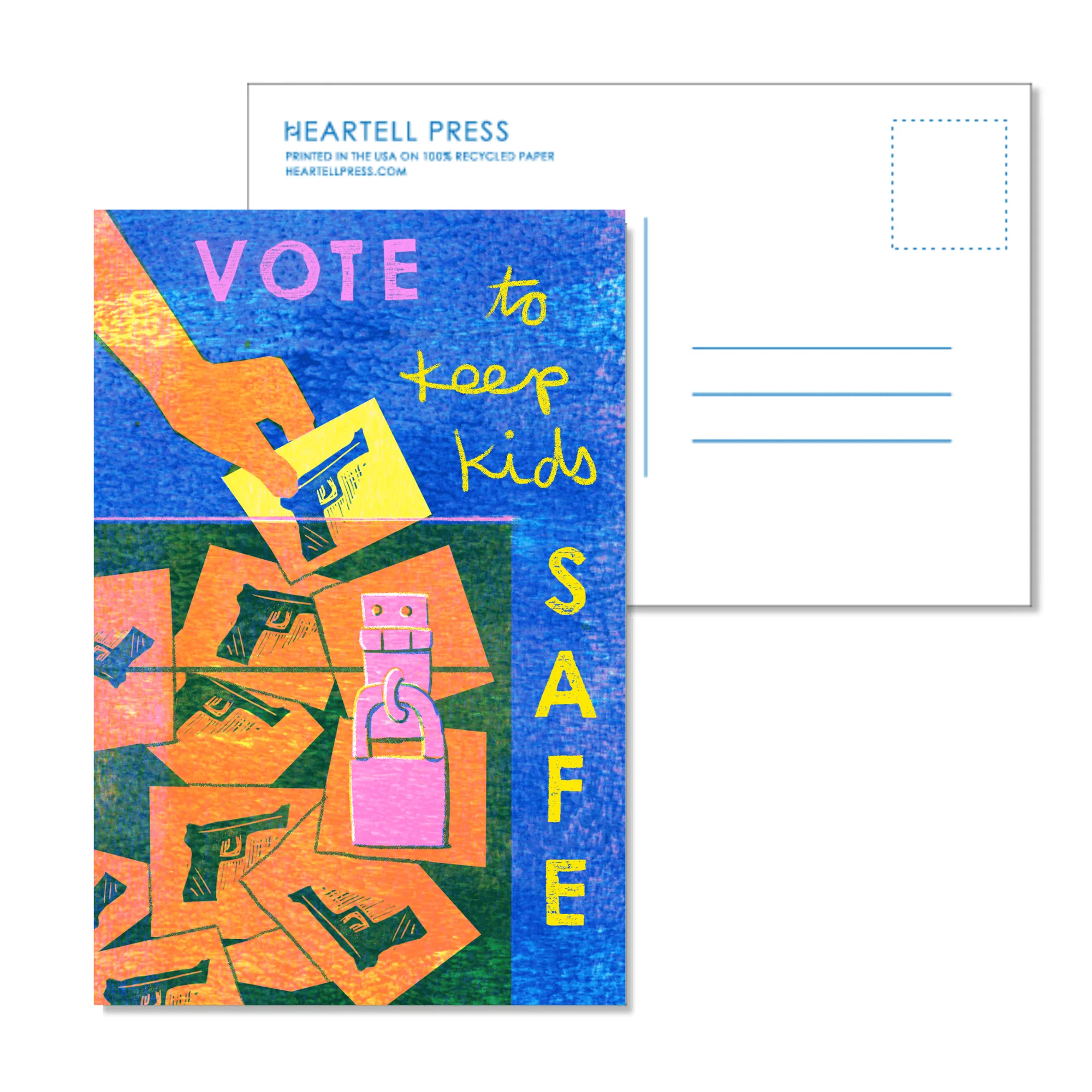
Vote to Keep Kids Safe Postcard
-
Vote to Fight Climate Change Postcard: This 4” x 6” risograph postcard is printed on 100% post-consumer recycled paper with three-color risograph printing. The 100% post-consumer recycled paper maximizes the sustainability of your campaign, and the three-color design offers vibrant visuals to capture attention.
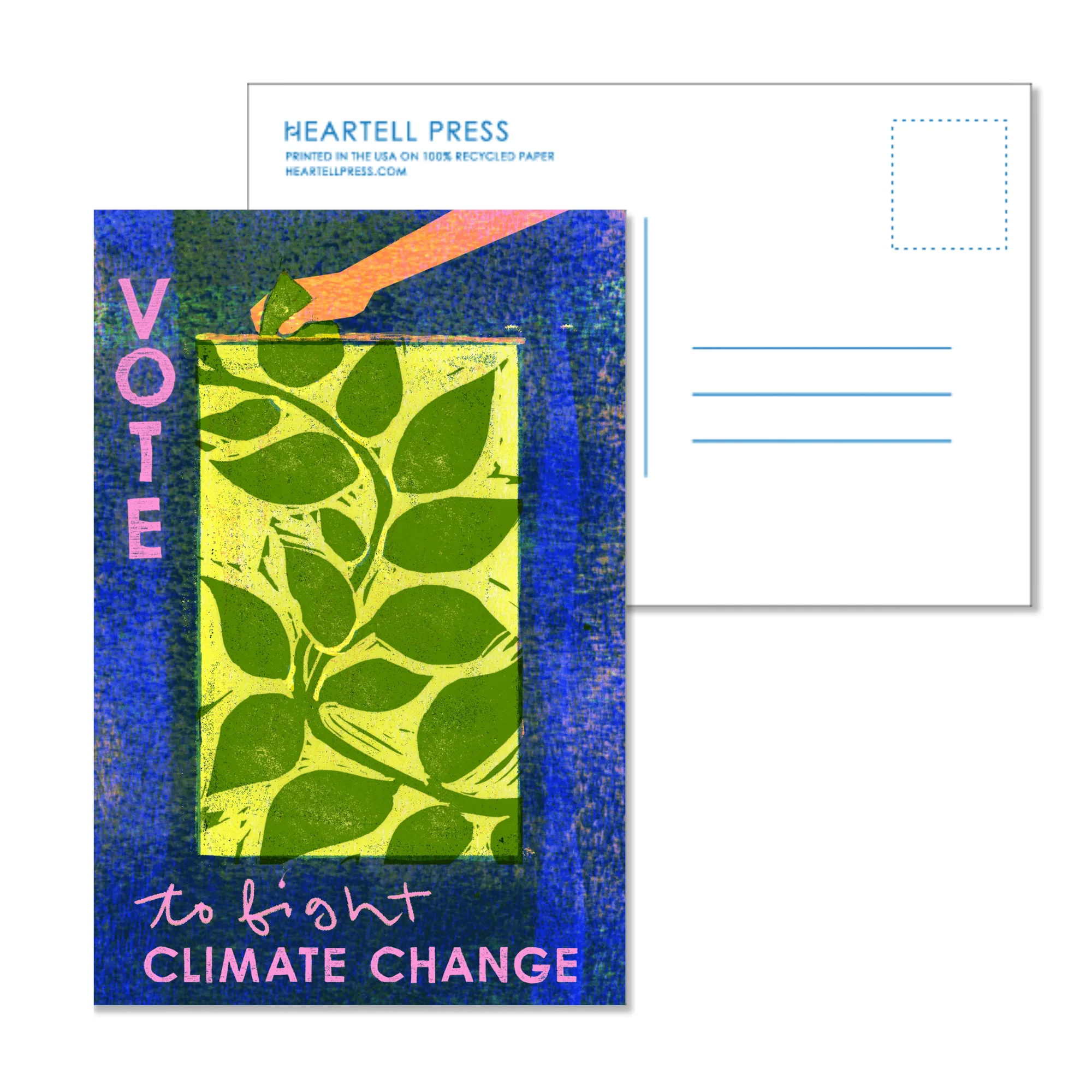
Vote to Fight Climate Change Postcard
Who Should Choose These Postcards
Best for
- Grassroots advocacy groups sending a few hundred targeted postcards
- Campaigns focused on environmental or social justice themes where sustainability reinforces the message
Not for
- Large-scale mailings needing photorealistic images or ultra-low per-unit costs
- Campaigns that require glossy, coated paper finishes