Quick answer
An eco-friendly teether ball made from 100% food-grade silicone is a safe, multi-purpose choice for teething babies. It soothes sore gums, encourages grasping and rolling, and meets independent safety standards.
Why material safety is the first priority
When choosing any teething toy, the material that touches your baby's mouth matters most. Food-grade silicone is non-toxic, free from BPA and phthalates, and does not contain the latex or PVC found in some older-style teethers. It also withstands frequent chewing without breaking down or leaching chemicals.
Independent safety testing adds another layer of confidence. Look for teether balls that have been tested by a recognized third-party lab, not just the manufacturer's own claims. This ensures the product meets global safety standards for small parts, durability, and chemical composition.
How a ball shape supports motor skill development
A teether ball does more than soothe gums. Its round shape and textured surface invite babies to reach, grasp, and transfer the toy between hands. These actions build fine motor skills and hand-eye coordination during the critical 4- to 12-month window.
Unlike flat teethers or rings, a ball also rolls when dropped, encouraging your baby to crawl or pivot to retrieve it. This adds an element of gross motor practice to everyday play. The lightweight silicone design makes it easy for small hands to hold and manipulate.
Trade-off: silicone vs. natural rubber
Both silicone and natural rubber are popular for teether balls, but they have different strengths. Silicone is more durable, heat-resistant, and dishwasher-safe, which makes cleaning simpler. Natural rubber is biodegradable and has a slight natural grip, but it can degrade faster and may cause a mild latex allergy in sensitive babies.
If you prioritize easy cleaning and long-term durability, silicone is the better choice. If you prefer a fully plant-based material and your baby has no latex concerns, natural rubber can work well. Either way, verify that the product is labeled food-grade and free from fillers.
Decision rules for choosing an eco-friendly teether ball
- Check the material label: Look for 100% food-grade silicone or natural rubber. Avoid products that list PVC, latex, or unspecified plastics. The product should clearly state it is BPA and phthalate free. If the material is not listed or is vague, choose a different product.
- Verify independent safety testing: Prefer teether balls that mention third-party testing by a recognized lab (e.g., ASTM, CPSIA, or EN71). This is more reliable than a generic 'safe for babies' claim. A tested product gives you confidence that it meets global safety standards.
- Consider size and texture: The ball should be large enough not to be a choking hazard (at least 1.5 inches in diameter) but small enough for your baby to hold. Raised bumps or ridges add sensory stimulation and help soothe gums. A ball with varied texture engages multiple senses and encourages longer play.
- Evaluate ease of cleaning: Silicone teether balls are dishwasher-safe and can be boiled for sterilization. Natural rubber varieties usually need hand washing with mild soap and air drying. Choose based on your cleaning routine. If you prefer quick, high-heat cleaning, silicone is the more practical option.
Two eco-friendly teether ball options
-
Eco-Friendly Teether Ball | Ocean: Made from 100% food-grade silicone, BPA and phthalate free, and independently safety tested. You can let your baby chew and play without worrying about harmful chemicals or choking hazards.
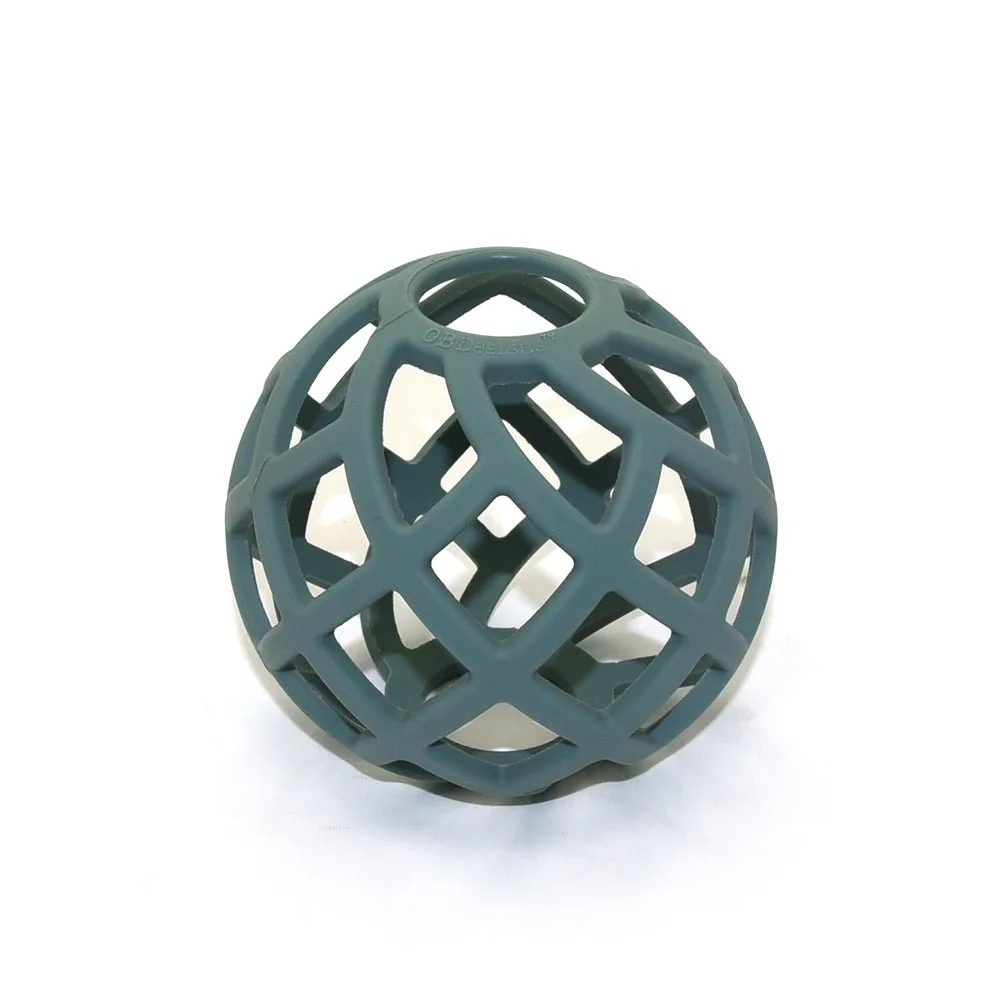
Eco-Friendly Teether Ball | Ocean
-
Eco-Friendly Teether Ball | Turmeric: Ships from a US warehouse within 48 hours and comes with a 30-day return policy. Fast shipping and a risk-free trial make it easy to test the teether ball without a long wait or commitment.
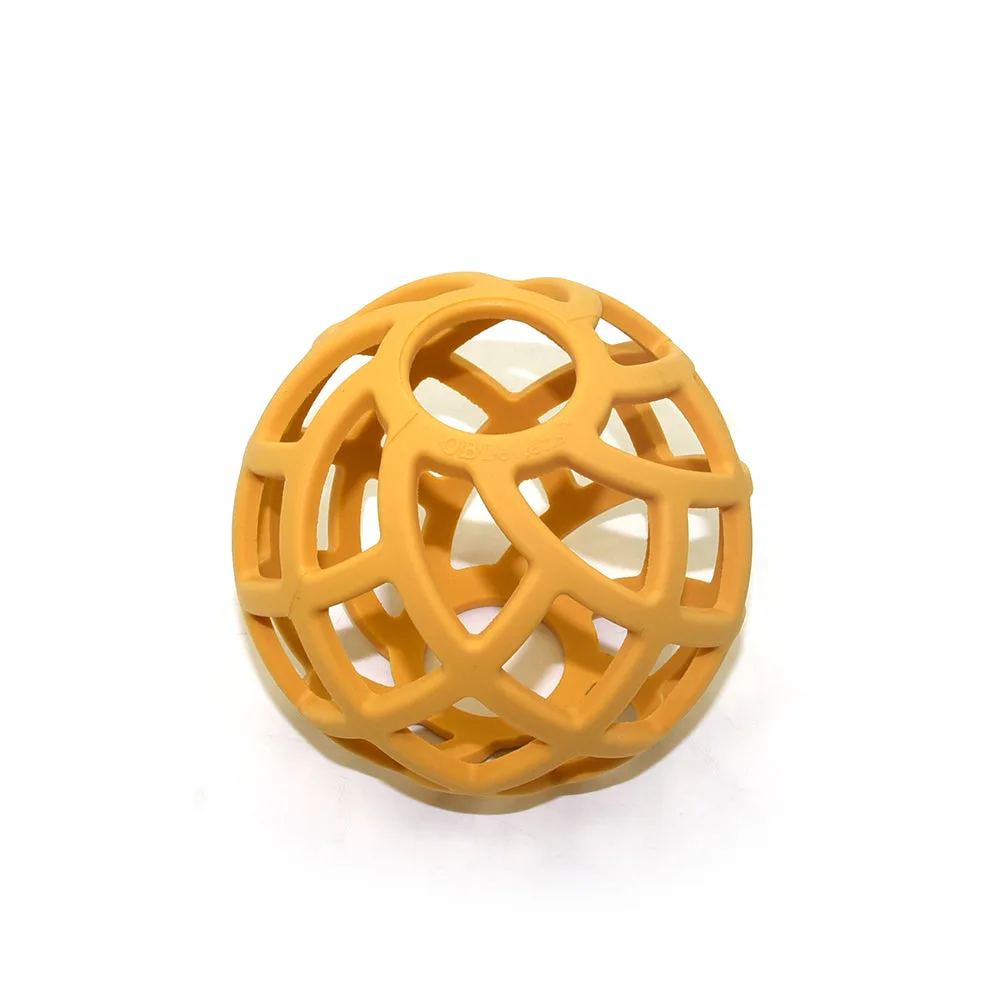
Eco-Friendly Teether Ball | Turmeric
Which teether ball is right for you?
Best for
- Parents who want a multi-purpose toy that soothes teething and builds motor skills
- Babies who enjoy grabbing, mouthing, and rolling objects during playtime
Not ideal for
- Babies with a known latex allergy (choose silicone instead of natural rubber)
- Parents who prefer a soft, fabric-based teether (consider a silicone teether with a handle or a wooden ring)