Quick answer
Place the EdQ Reading Nook with Storage on a level floor against a low-traffic wall, add a soft seat and one layer of cushioning, then load only the lower shelves with books so the top remains clear for display or pretend play.
Why the nook's storage layout changes your setup order
The EdQ Reading Nook combines storage, comfort, and pretend play in one footprint. That means you should decide the storage zones before adding cushions or books. If you fill shelves first, you may block the seating area or make the nook feel cramped.
Treat the lower shelves as the child-accessible library and keep the upper area visually light. This is especially important in a classroom reading nook, where multiple children need to reach books without climbing.
When a reading nook with storage is not the right fit
This piece is designed for classrooms, homeschool environments, and kids' play areas. If you need a temporary setup that moves weekly, a freestanding nook with storage may be heavier than a folding book display. Also, the catalog does not list a weight limit or wall-anchoring requirement, so check the assembly instructions for those details before placing it in a high-traffic play zone.
Step-by-step setup for the EdQ Reading Nook
- Choose a low-traffic wall: Place the nook against a wall away from door swings and main walkways. Leave enough clearance to open and reach the storage compartments. Common mistake: pushing it into a corner so tightly that the side storage becomes unusable. Check that a child can stand beside the nook without stepping into a walkway.
- Set the storage zones before loading books: Decide which shelves hold books and which hold pretend-play items. Put the most-used books on the lowest accessible shelf. Common mistake: filling every shelf immediately, which leaves no room for the child's current favorite books. Leave at least one empty compartment for rotating selections.
- Add a thin, washable seat cushion: Use a cushion that lies flat and does not bunch up against the storage edges. Common mistake: stacking thick pillows that push children away from the book display and reduce floor space. Sit on the cushion yourself to confirm the nook still feels open.
- Display books face-out on the top or back ledge: If your nook has a display ledge, face a few covers outward and rotate them weekly. Common mistake: displaying too many books at once, which hides titles and makes the nook look cluttered. Limit face-out books to three or four so each cover is visible.
- Create a simple pretend-play bin: Use one storage compartment for a small basket of puppets, play food, or dolls. Common mistake: mixing tiny play pieces with books, which makes cleanup slow and can damage pages. Keep pretend-play items in a closed bin that fits the compartment.
- Check reach and stability with a child: Ask a child to sit, reach for a book, and stand up without pulling on the nook. Common mistake: assuming the setup works without testing it at the child's height. If the nook shifts or tips when the child stands, relocate it or follow the assembly guide's anchoring advice.
Product facts
-
EdQ Reading Nook with Storage: The EdQ Reading Nook with Storage is part of Guidecraft's EdQ collection, which is designed for classrooms, homeschool environments, and kids' play areas. That intended use supports placing it in a shared learning space, not only a bedroom corner.
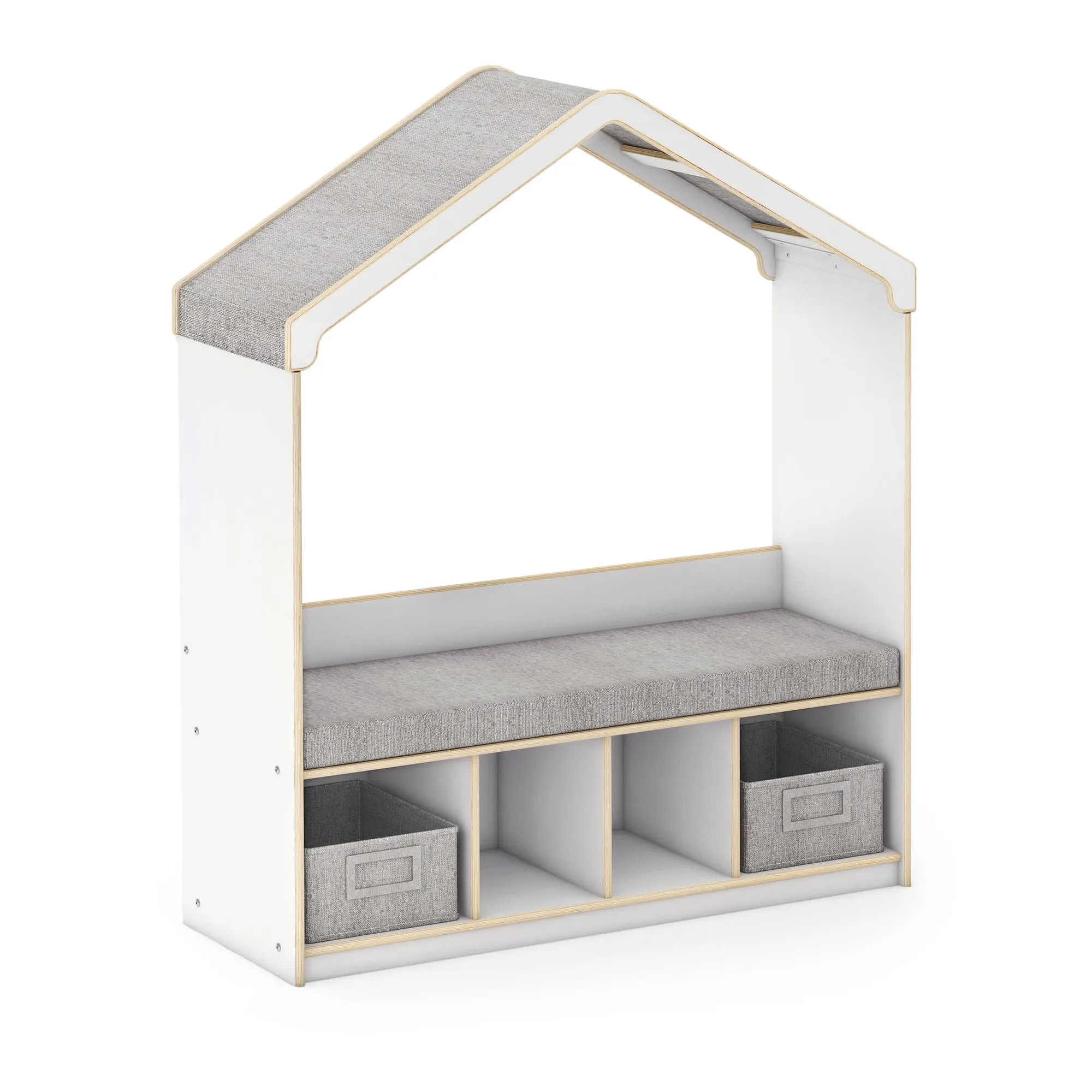
EdQ Reading Nook with Storage