Start with the sequence, not the cards
A visual schedule works because it makes the day predictable. Before you print, laminate, or velcro anything, map out the actual sequence of your classroom day. Write down every regular transition—arrival, circle time, centers, snack, recess, dismissal—and note which ones cause the most uncertainty for your students.
The goal is not to display every minute. It is to show enough of the day that students, especially pre-readers, can anticipate what comes next. The Educator Visual Schedule is designed for this purpose: it gives you a daily routine visual schedule to bring structure and predictability into students' lives.
How to set up your classroom visual schedule
- Choose the routine blocks you will display: Select the parts of the day that repeat daily and that students need to anticipate. Keep the sequence in the order it actually happens.
- Decide where the schedule will live: Place it at students' eye level in a spot they pass or gather at regularly. The schedule needs to be visible during transitions, not just during morning meeting.
- Introduce the schedule before you rely on it: Walk students through the sequence once while pointing to each card. For pre-readers, pair the picture with a short spoken phrase so the visual and the words connect.
- Reference it during transitions: When moving from one activity to the next, point to the upcoming card and name it. This turns the schedule into a tool students can use independently over time.
- Adjust as the day changes: If a special activity replaces a regular block, update the schedule to reflect it. A schedule that no longer matches the day loses its predictability.
What the Educator Visual Schedule gives you
-
Educator Visual Schedule: Educators can proactively support all of their students by using a daily routine visual schedule to bring structure and predictability into their students' lives. This is the core purpose of the product: a proactive tool for the whole class, not a reactive fix for one student.
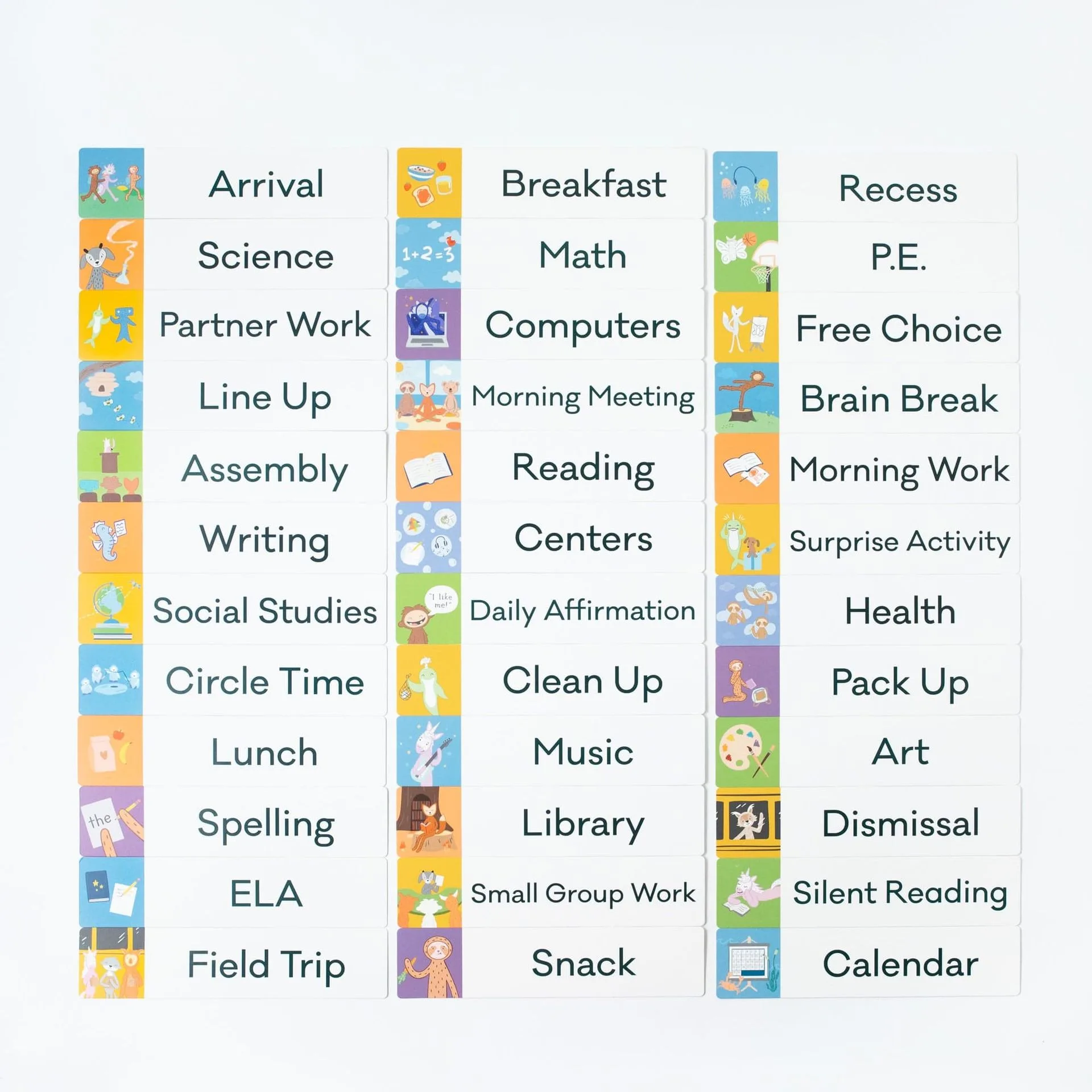
Educator Visual Schedule
-
Educator Visual Schedule: Visualizing the sequence of the day can help students, especially pre-readers, reduce anxiety and build confidence and independence. This tells you who benefits most and what outcome to aim for when you introduce the schedule.
-
Educator Visual Schedule: Note: This does not include the canvas wall hanging. Plan your display space accordingly. The schedule itself is what you are setting up; the wall hanging is a separate item.
Classroom visual schedule ideas that fit early elementary and preschool
For preschool and pre-reader classrooms, lean on pictures and short spoken labels. The schedule does the heavy lifting of showing what comes next, while you narrate the sequence in simple language.
For early elementary students, you can add brief text to each card as reading skills grow. The same schedule then supports both independence and emerging literacy.
Keep the number of visible cards manageable. A schedule with too many steps can overwhelm rather than reassure. Focus on the transitions that matter most for your group.
Using the schedule as an SEL routine
A visual schedule is also a social-emotional tool. When students know what is coming, they spend less energy managing uncertainty and more energy engaging with learning and with each other.
- Name the feeling, not just the transition: When a change is coming, point to the card and acknowledge that changes can feel wobbly. This pairs the visual with emotional vocabulary.
- Let students check the schedule themselves: Independence grows when students can look at the schedule and answer their own question about what comes next.
- Use it to build confidence: The stated benefit of visualizing the day is reduced anxiety and greater confidence and independence. Notice and name those moments when they happen.
What to check before you buy
The catalog does not specify the number of cards, card size, material, or whether the schedule is magnetic or velcro-compatible. If your classroom setup depends on those details, confirm them before purchasing.
The product is listed as not including the canvas wall hanging, so plan a display method that works with your existing wall space. The Standard variant is the available option.
At USD 17.25 (catalog comparison price USD 25.00), the Educator Visual Schedule is a low-cost way to add predictability to your day. The value depends on whether you will actually reference it during transitions—not just display it.