Quick answer
Choose a taller cedar bed if bending is your main obstacle; the 17.5-inch 4 ft x 8 ft bed (RC6S6T35B) puts the soil surface within easier reach. Choose a ground-level bed if you want the most soil volume and planted area for the money, such as the 7-inch 4 ft x 8 ft bed (RC48967).
What 'elevated' actually means for a cedar bed
In this comparison, elevated refers to a bed that stands taller off the ground, not a table-height planter on legs. The supplied Greenes Fence cedar beds range from 7 inches to 17.5 inches tall, and the 2-tiered model stacks two levels. That height difference changes how far you bend, how much soil you buy, and how the bed drains. A taller bed raises the working surface; a shorter bed keeps more of the growing volume close to the ground.
Compare the supplied cedar beds on height and footprint
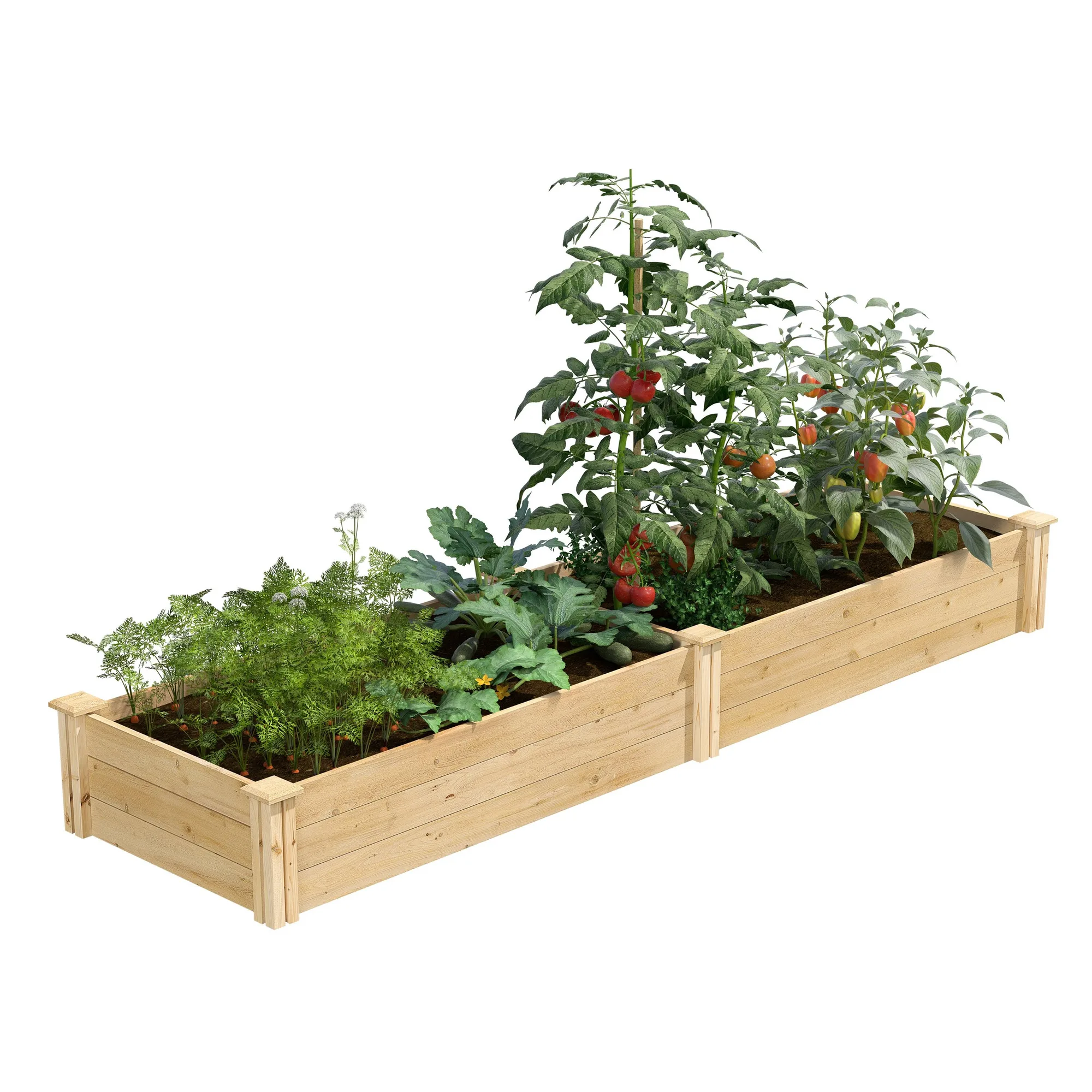
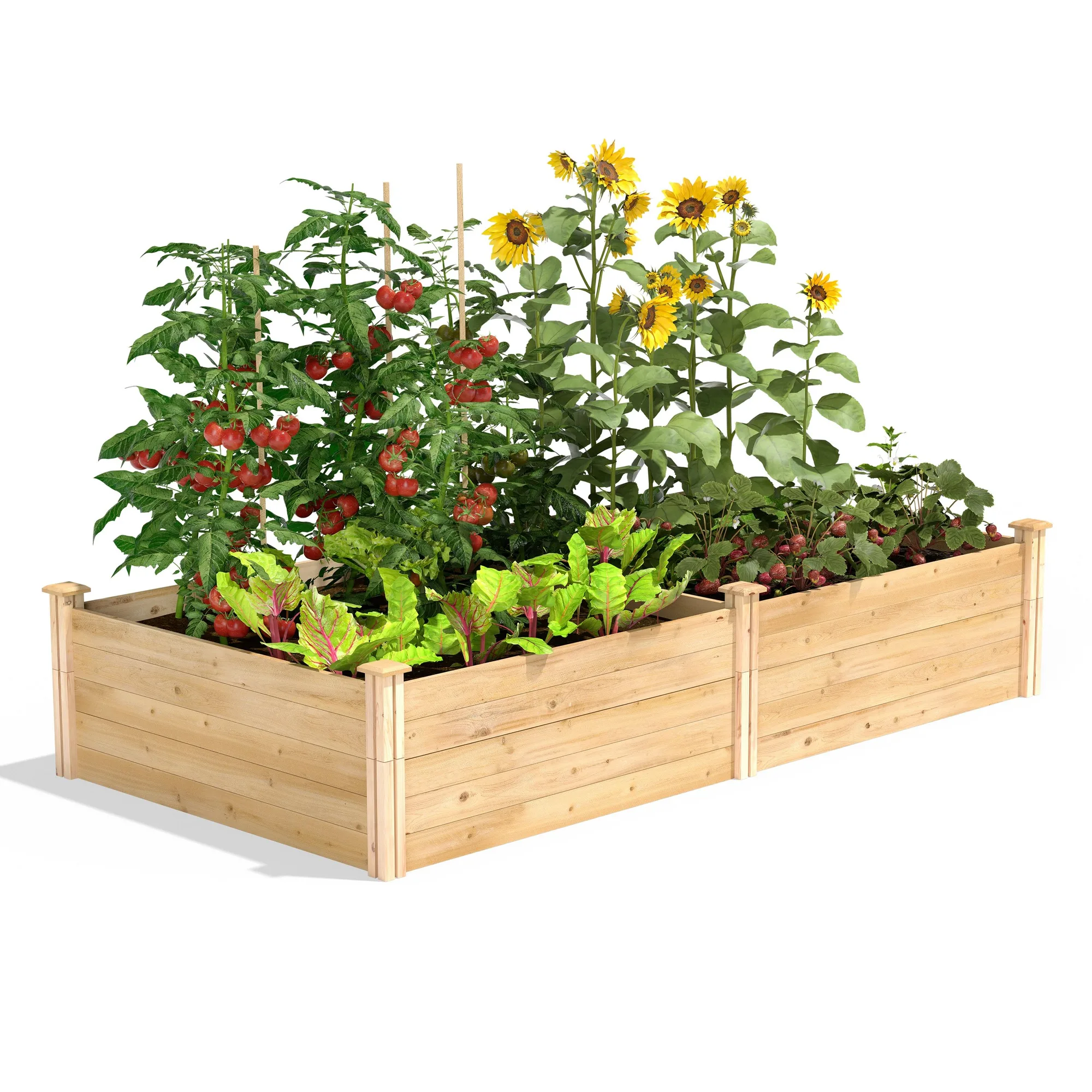
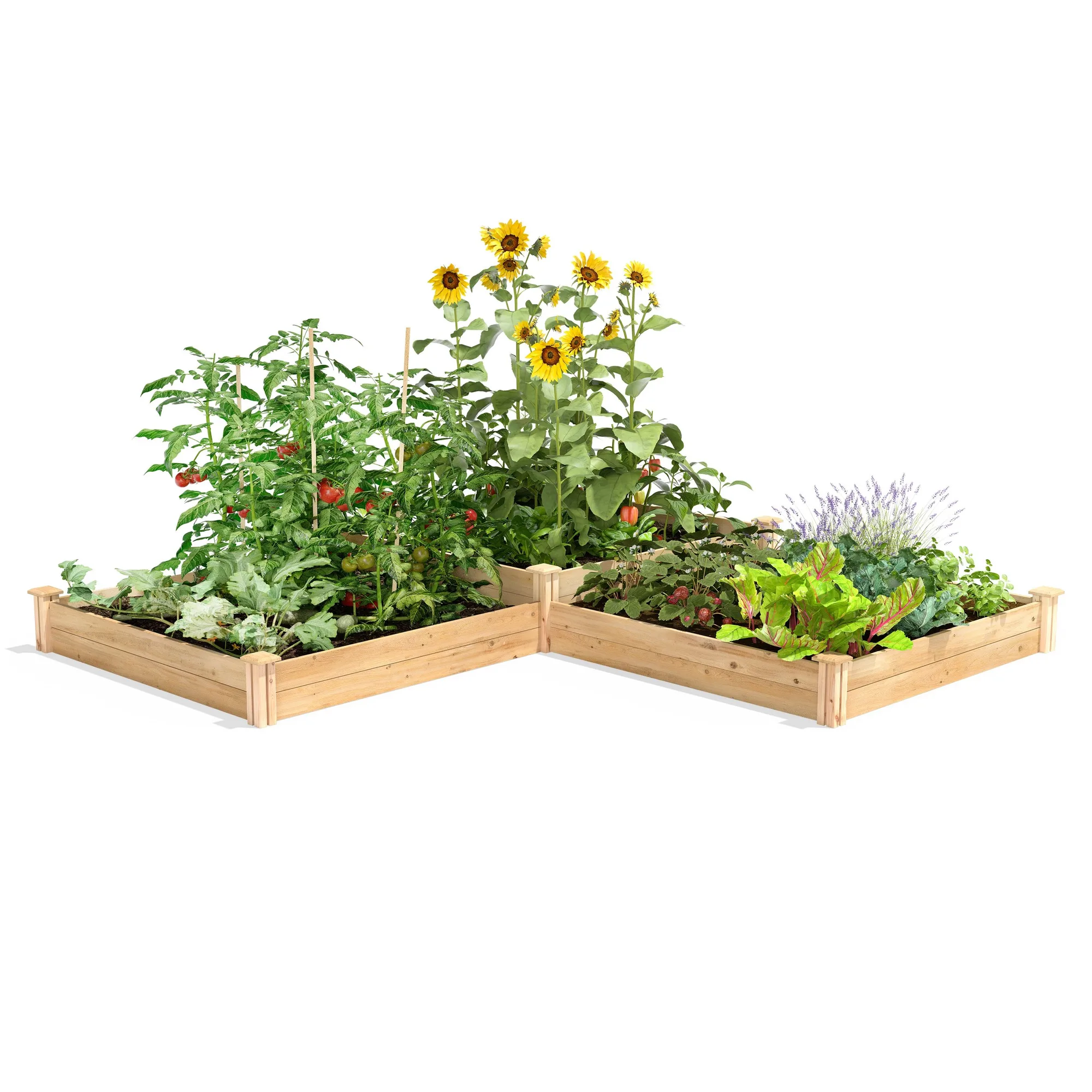
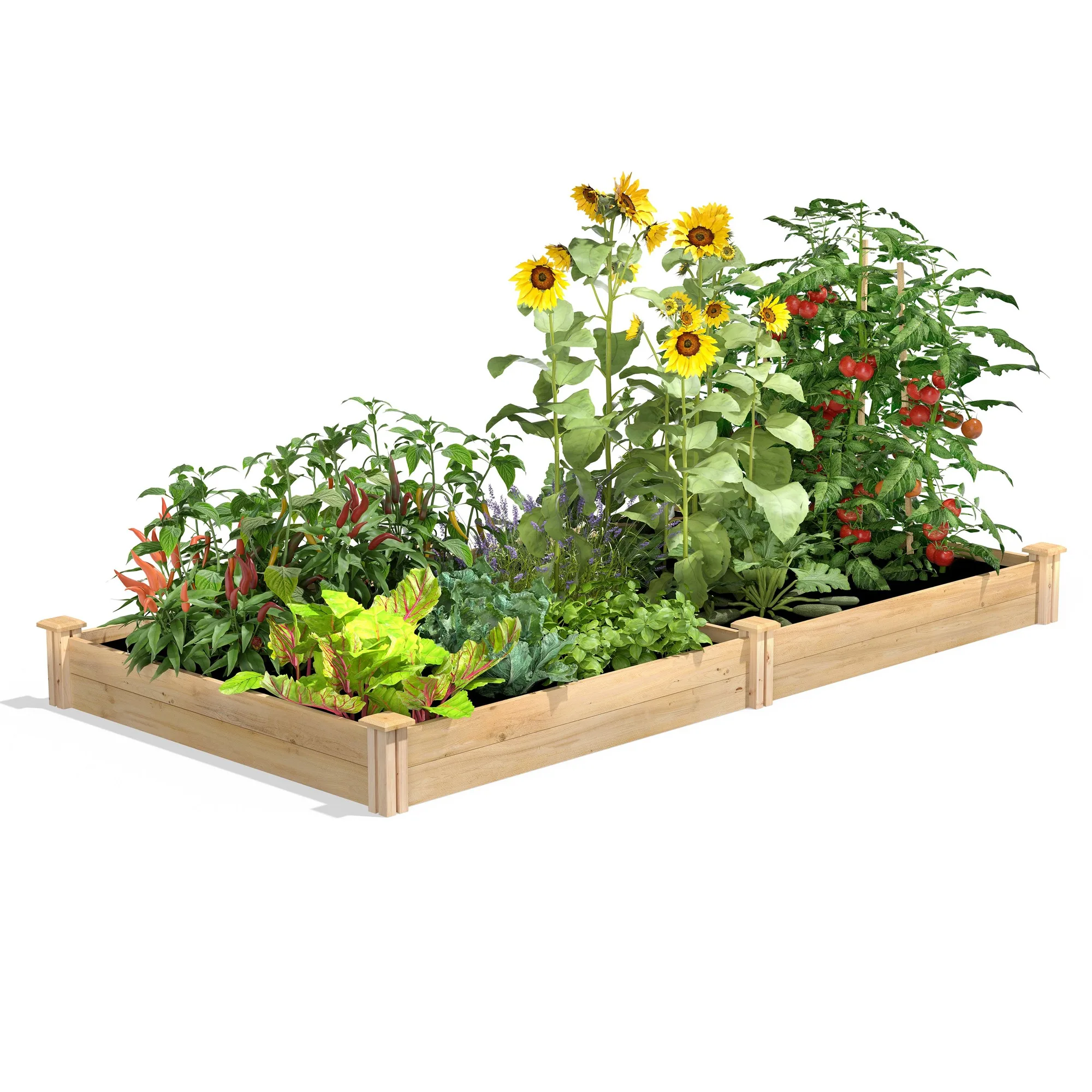
The 4 ft x 8 ft x 7 in bed (RC48967) is the lowest and least expensive option here, so it suits gardeners who want a large planted area without paying for extra height. The 2 ft x 8 ft x 10.5 in bed (RC24966T) narrows the footprint to 2 feet, which fits along a fence, driveway, or narrow side yard. The 4 ft x 8 ft x 17.5 in bed (RC6S6T35B) is the tallest single-level choice and keeps the soil surface higher for less bending. The 2-tiered 4 ft x 12 ft bed (RC4T4S24B) adds a second level across a 12-foot run, which creates more planting surface but also more soil to fill.
Soil volume and cost trade-offs
Height and footprint both drive how much soil you need. A taller bed holds more soil per square foot than a shorter bed of the same footprint, and a 12-foot tiered bed holds more than an 8-foot bed. More soil means a higher upfront fill cost and more watering demand, but it also gives roots deeper room. If you are filling a tall bed, mixing in compost and topsoil is usually more economical than buying only bagged mix. If budget is the priority, the 7-inch 4 ft x 8 ft bed gives you the most square footage at the lowest catalog price in this set.
Assembly, expansion, and cedar care
All four supplied beds share the same build approach: untreated North American cedar, sanded 3/4-inch-thick boards, routed corner posts, no tools required, and expandable design. That consistency means your choice comes down to height and footprint rather than assembly difficulty. Cedar is naturally rot-resistant and chemical-free, but it still benefits from seasonal checks. Tighten or reseat boards after the first season, keep soil from pressing directly against the outside face, and avoid treating the wood with anything you would not want near edible plants.
Trade-offs at a glance
- Height vs. soil cost: A 17.5-inch bed reduces bending but needs more soil per square foot than a 7-inch bed of the same footprint. Budget for fill before you choose the tallest option.
- Footprint vs. space: The 2 ft x 8 ft bed fits narrow spots, while the 4 ft x 12 ft tiered bed needs a long, open run. Measure your site first; the best height is useless if the bed does not fit.
- Tiered design vs. simplicity: The 2-tiered bed creates more planting surface and a second level, but it takes more soil and more watering attention than a single-level bed. Pick the tiered bed only if you want the extra surface and can fill it.
Product facts
- Premium Cedar Raised Garden Bed 2 ft x 8 ft x 10.5 in (3/4 in Thick) RC24966T: Premium Cedar Raised Garden Bed 2 ft x 8 ft x 10.5 in (3/4 in Thick) RC24966T; made in the USA from untreated, chemical-free North American cedar with sanded 3/4-inch boards and routed corner posts. The narrow 2-foot width fits tight side yards and fence lines, while the 10.5-inch height is a middle ground between low beds and tall beds.
- Premium Cedar Raised Garden Bed 4 ft x 8 ft x 17.5 in (3/4 in Thick) RC6S6T35B: Premium Cedar Raised Garden Bed 4 ft x 8 ft x 17.5 in (3/4 in Thick) RC6S6T35B; made in the USA from untreated, chemical-free North American cedar with sanded 3/4-inch boards and routed corner posts. The 17.5-inch height is the tallest single-level option here, so it reduces bending for gardeners with back or knee limitations.
- Premium Cedar Raised Garden Bed 4 ft x 8 ft x 7 in (3/4 in Thick) RC48967: Premium Cedar Raised Garden Bed 4 ft x 8 ft x 7 in (3/4 in Thick) RC48967; made in the USA from untreated, chemical-free North American cedar with sanded 3/4-inch boards and routed corner posts. The 7-inch height and 4 ft x 8 ft footprint give you the most planted area for the lowest catalog price in this comparison.
- Premium Cedar Raised Garden Bed 2-Tiered 4 ft x 12 ft (3/4 in Thick) RC4T4S24B: Premium Cedar Raised Garden Bed 2-Tiered 4 ft x 12 ft (3/4 in Thick) RC4T4S24B; made in the USA from untreated, chemical-free North American cedar with sanded 3/4-inch boards and routed corner posts. The 2-tiered 12-foot design adds planting surface and a second level, but it requires more soil and a longer, more open site.
Which bed fits you?
Best for
- Gardeners with back, knee, or mobility limits who want less bending: choose the 17.5-inch 4 ft x 8 ft bed (RC6S6T35B).
- Small side yards, fence lines, or patios where a 2-foot-wide bed fits: choose the 2 ft x 8 ft x 10.5 in bed (RC24966T).
- Budget-focused gardeners who want the most planted area for the lowest price: choose the 7-inch 4 ft x 8 ft bed (RC48967).
- Gardeners with a long, open site who want extra planting surface and a second level: choose the 2-tiered 4 ft x 12 ft bed (RC4T4S24B).
Not for
- Gardeners who cannot fill or water a taller bed: a 7-inch bed is easier to fill and keep evenly moist.
- Sites narrower than 2 feet: none of these beds will fit without adjusting the layout.
- Anyone who wants a table-height planter on legs: these are ground-standing cedar beds, not elevated planters with legs.