Quick answer
Choose Ellington Pot Racks when you have a clear wall or ceiling area near the stove and want to free cabinet space by hanging pots, pans, or utensils. Skip them if your only open area is a low-traffic ceiling or a wall too narrow for the rack's size option.
What a hanging rack changes in a small kitchen
In a small kitchen, the main benefit is not display; it is reclaiming cabinet and drawer space that cookware currently occupies. A hanging pot rack moves daily-use pans out of cupboards and into reach, which can make a tight cooking zone work more smoothly.
The trade-off is vertical clearance and visual weight. A rack filled with cookware occupies airspace you may otherwise use for lighting, a range hood, or open movement. Measure the rack's footprint and the hanging depth of your largest pan before committing.
Placement choices: ceiling mount versus wall area
A pot rack ceiling mount suits kitchens with a solid ceiling above a work zone, but it is the least forgiving option if the ceiling is low or the rack would hang over a walkway. Wall placement can work better in narrow rooms because it keeps the rack out of head clearance, provided the wall is close enough to the stove to be useful.
Do not treat placement as a style decision alone. The rack must be reachable without a stool, clear of cabinet doors that swing open, and far enough from the cooking surface that you are not reaching through steam or flame.
When the size option is the deciding factor
Ellington Pot Racks are offered by size, so the practical question is which size matches your available wall or ceiling area and the number of pans you actually use each week. A larger rack on a small wall can crowd the room; a smaller rack may not hold the cookware you intended to move out of cabinets.
The catalog does not list load ratings or mounting hardware details, so treat those as questions to confirm before purchase rather than assumptions. If you cannot verify ceiling structure or hardware, choose a wall placement you can inspect.
Decision rules for choosing an Ellington pot rack
- Rule 1: Measure before you choose a size: Measure the width and height of the wall or ceiling area you would use, then subtract the swing of nearby cabinet doors and the depth of your largest hanging pan. Choose the Ellington size that fits inside that clear zone. If your clear zone is smaller than the rack's footprint, do not size up.
- Rule 2: Pick ceiling mount only with confirmed structure: Use a pot rack ceiling mount only when you can confirm a solid fixing point above the rack and enough head clearance for the loaded rack. Otherwise, choose a wall area you can inspect and reach comfortably. Unverified ceiling structure is a reason to change placement, not a detail to solve after purchase.
- Rule 3: Place for cooking, not display: Put the rack within arm's reach of the stove but outside the direct steam and splash zone, and away from walkways. Check that hanging pans do not block light, cabinet doors, or the range hood. If the only open spot fails one of these checks, use a different cookware storage idea.
- Rule 4: Count the pans you will actually hang: List the pots, pans, and utensils you use weekly, then compare that count with the rack size you selected. Leave spare capacity rather than filling every hook on day one. A rack that only holds half your daily cookware will not free the cabinet space you planned.
- Rule 5: Confirm hardware before ordering: Because mounting hardware and load limits are not listed in the catalog, ask about them before purchase or plan a professional installation. Do not assume the rack includes fixings for your wall or ceiling type. Budget for installation if you are not confident drilling into your ceiling or wall.
Product facts
-
Ellington Pot Racks: Ellington Pot Racks use a baked-on finish steel construction with slender curves, and are available by size. The slim profile suits tight kitchens, while the size option lets you match the rack to your open wall or ceiling area.
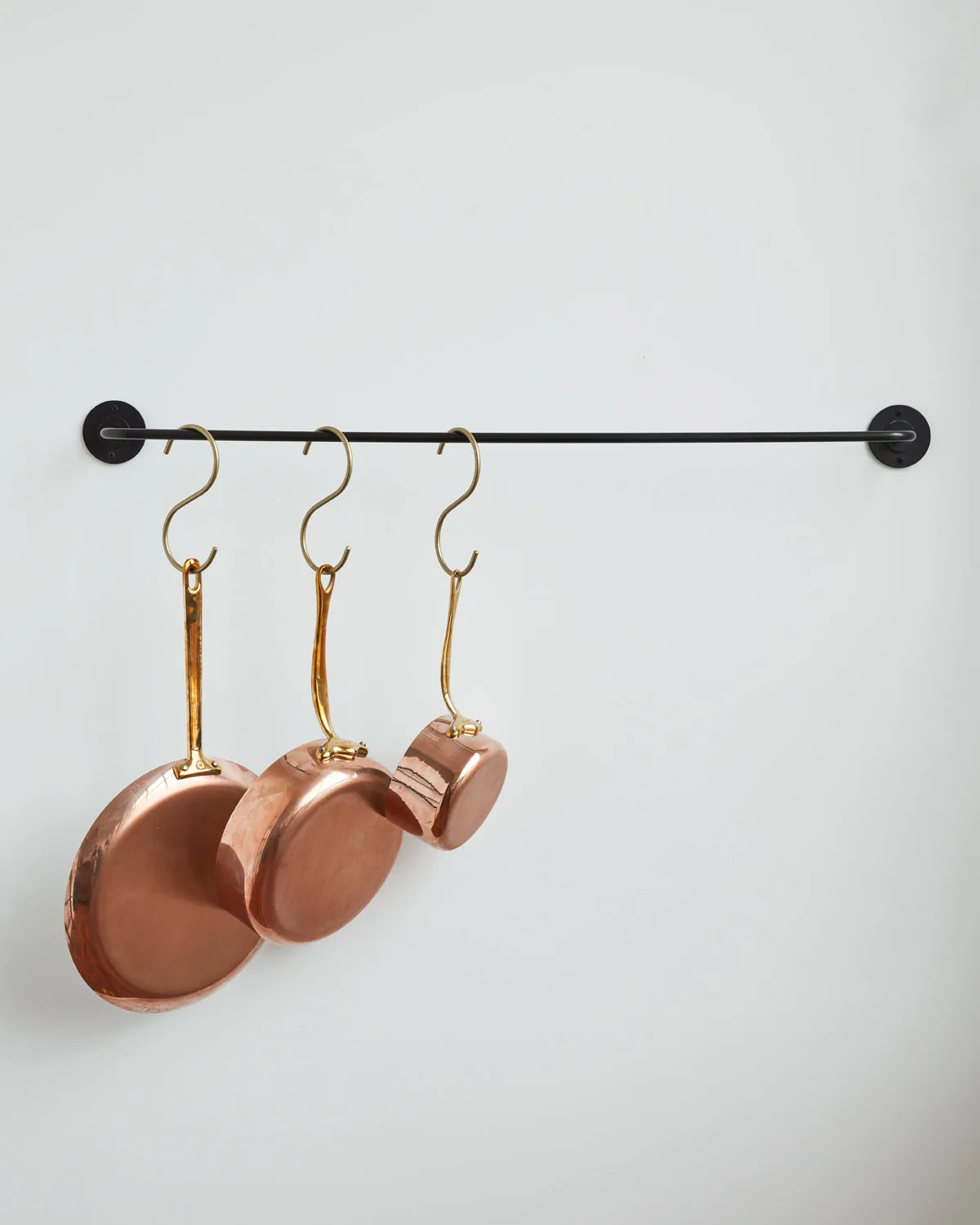
Ellington Pot Racks
Who should choose Ellington Pot Racks
Best for
- Small kitchens with a clear wall or ceiling area near the stove
- Cooks who want to move daily-use pots, pans, or utensils out of cabinets
- Rooms where a slender, curved rack suits the available space
Not for
- Kitchens with low ceilings or walkways where a hanging rack would obstruct movement
- Cooks who cannot confirm a solid mounting point or arrange installation
- Anyone who needs a rack with published load ratings before buying