Packing starts with the bag's actual design intent
The EMS Rapid Deployment Bag in Orange is built around one idea: getting to essential medical supplies quickly in an emergency. Its high-visibility orange exterior is there to help you identify the bag fast, and the rapid deployment design is meant to support efficient organization and access. Packing works best when you treat those two traits as the backbone of your loadout rather than as decoration.
That means your first decision is not which pouch goes where. It is what has to be reachable without digging. Everything else in the bag should support that priority.
What the catalog confirms about this bag
-
EMS Rapid Deployment Bag - Orange: High-visibility orange exterior for fast identification Visibility is the bag's first job. In a crowded vehicle, a dim hallway or a shared response cache, the orange exterior helps you locate the bag quickly.
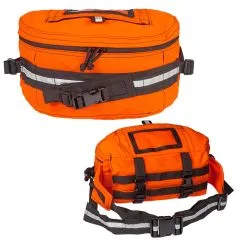
EMS Rapid Deployment Bag - Orange
-
EMS Rapid Deployment Bag - Orange: Rapid deployment design for efficient organization and access This is the feature your packing plan should exploit. Organize around access order, not around filling space evenly.
-
EMS Rapid Deployment Bag - Orange: Durable construction suited for demanding environments The bag is intended for hard use, so your packing method can prioritize practical access over protecting the bag itself.
-
EMS Rapid Deployment Bag - Orange: Compact and portable for easy transport Portability matters when you are carrying the bag plus other equipment. Keep the loadout lean enough that you can still move with it.
A practical packing routine for the orange bag
This routine uses only what the supplied product information supports: visibility, rapid access and organization. It does not assume internal pocket layouts, divider counts or specific storage compartments, because those details are not confirmed in the supplied record. Adapt each step to the bag in front of you.
- 1. Sort your supplies by access speed: Divide what you carry into three groups: items you expect to reach first, items you need soon after, and items that support the response but are not time-critical. This sorting is the foundation of rapid deployment bag setup.
- 2. Place the fastest-access group where your hand naturally lands: Open the bag as you would in use and identify the zone you reach without looking. Put the first group there. Keep that zone reserved so it does not fill with other gear over time.
- 3. Group related items together: Orange EMS bag organization works better when items that are used together stay together. Grouping reduces the number of places you have to search during a response and supports the bag's efficient-access design.
- 4. Keep the exterior role clear: The orange exterior is for fast identification. Avoid covering it with gear or labels that reduce visibility, and store the bag where the color can do its job.
- 5. Leave room to close and carry: The bag is described as compact and portable. If you have to force it closed, the loadout is working against the bag's portability. Remove or repack until it closes without strain.
- 6. Walk through the access order once: Before you rely on the loadout, open the bag and reach for your first-group items in the order you would need them. If any step makes you search, repack that zone.
Loadout tips that fit the bag's design
- Pack for the response, not for the shelf: A tidy bag that looks organized but slows your first reach is not set up for rapid deployment. Judge every placement by how it performs when you open the bag under pressure.
- Use the visibility trait deliberately: Store the orange bag where it can be seen and reached, not buried under other equipment. The high-visibility exterior only helps if it is not hidden.
- Keep the loadout stable between shifts: Rapid access depends on consistency. Return items to the same place after each use so your hand learns the layout.
- Resist overpacking: A compact bag packed beyond its practical capacity becomes harder to carry and slower to open. If the bag feels strained, the loadout needs editing.
- Check the bag before you depend on it: Confirm that the bag closes, carries comfortably and that your first-access items are still where you put them. This is a loadout check, not a manufacturer inspection procedure.
What the supplied information does not settle
The supplied product record does not list internal compartment dimensions, divider configurations, pocket counts or a recommended contents list. It also does not include preparation or operating instructions. That means any specific claim about which item fits in which pocket, or how many supplies the bag holds, would be a guess.
Treat those gaps as decisions you make with the bag in hand. Test your loadout physically, confirm that the bag closes and carries the way you need, and adjust based on what you observe rather than on assumed capacity.
Who this packing approach suits
This approach fits anyone using the EMS Rapid Deployment Bag in Orange as a quick-access bag for essential medical supplies, whether in a vehicle, a response station or a shared cache. It is less useful if you need a bag with documented internal organization before you buy, because the supplied record does not confirm those details.
If you are comparing options, the orange bag's case rests on visibility, rapid access, durable construction and portability. Pack around those strengths and verify the rest in person.